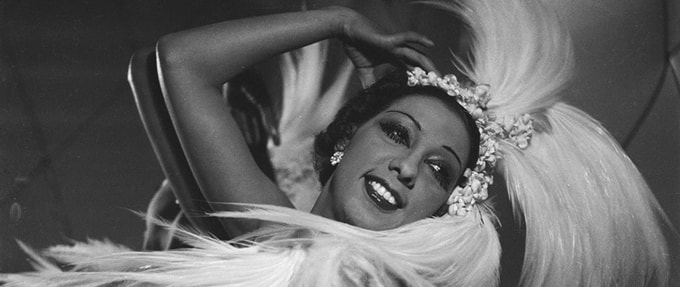
Before gaining international recognition for her performances and beauty, Josephine Baker grew up in harsh conditions that shaped her beliefs. Therefore, throughout her life, she routinely sought to dismantle systemic racism and rigid societal structures.
From her origins in St. Louis to taking the stage in France, Baker continually redefined what was possible for Black women in the 20th century. Leaning into satire and sharp comedic timing, she created a unique, innovative style that still influences contemporary dance.
Beyond attracting global audiences, she capitalized on her celebrity, serving as a spy for French military intelligence and later standing alongside Martin Luther King Jr. at the March on Washington. Baker was truly the ultimate jack-of-all-trades.
Discover how she moved from the stage to wartime intelligence, all while challenging racial and social boundaries across continents.
Early Upbringing
Before she stepped into her glamorous life, Josephine Baker was born in 1906 and grew up in St. Louis, Missouri, amid poverty and violence. Her mother worked endlessly, while her father left shortly after she was born.
As a young girl, she witnessed the East St. Louis massacre, a series of violent anti-Black attacks carried out by white mobs, from late May to early July 1917. The memory stayed with her, shaping her staunch advocacy and future role in the Civil Rights Movement.
Starting at 8, she worked as a live-in domestic for white families, along with other menial jobs, to ease her mother’s financial burden. When she wasn’t working, she took to the streets dancing for money, and by her early teens, she was performing her comedic routines in restaurants.
She began working with a trio of dancers, the Jones Family Band, where she honed her strength as a dancer. Soon after, the Dixie Steppers, a touring African American vaudeville troupe, came across a young Baker when she jumped onstage during a performance in St. Louis.
It became an on-the-spot audition, the audience cheering her on, and she secured a spot in the troupe the following day. At 15, she ran away to tour with them and found a path that would take her beyond the limits placed on her.
A Star is Born
While touring, she met her second husband, a railroad worker named William Baker. She married at 13, but the marriage lasted less than a year after her mother intervened. Their union was also short-lasting, but she kept his last name for the remainder of her professional career.
Eventually, Baker moved to New York City in 1922, where she landed a dream spot in the chorus line of a successful Broadway revue called Shuffle Along. She quickly stood out with her comedy, which was integrated into the show. She also went on to dance in Chocolate Dandies on Broadway and the floor show of the Plantation Club.
The Harlem Renaissance was in full swing, and Josephine was among other African American luminaries, like Duke Ellington. However, the opportunities available to Black performers remained narrow, and stages were still segregated. So, when she had the chance to dance at the Théâtre des Champs-Élysées in La Revue Nègre, Baker boarded a ship to Paris—a journey that would ultimately make her an international icon.
Taking France by Storm
In Paris, Baker was welcomed in a way America never did. There, she became a star. To the audiences she met, Baker embodied the Roaring Twenties—and they wanted more. In 1926, she solidified the act she became known for: the danse sauvage. She took the jungle-themed stage, wearing a skirt made of artificial bananas and moving in an energetic, uninhibited way.
By playing into westernized, colonial tropes of “primitive,” she reclaimed her image—doing away with expectations of what a Black woman should be. Her performance was and is legendary: at the 2006 Fashion Rocks concert, Beyoncé commemorated the 100th anniversary of Josephine Baker’s birth by wearing a replica of the performer’s iconic banana skirt.
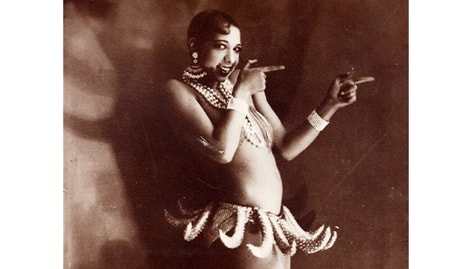

Josephine Baker in her famous banana skirt in 1927.
Photo Credit: Wikimedia CommonsThe show was touted as a must-see for all of Paris, with writer Ernest Hemingway calling Baker “the most sensational woman anyone ever saw.” She became one of France’s most sought-after and highest-paid performers. According to Vogue, “Thousands of dolls in banana skirts were sold all over Europe.”
In 1927, she debuted in her first movie, the French silent film La Sirène des Tropiques (Siren of the Tropics). With her newfound fame, Baker hoped to solidify her stardom in her home country by performing in the Ziegfeld Follies on Broadway in 1936. But instead, she was met with hostility and racism by white audiences, and ultimately decided to return to France and become a citizen in 1937—with no plans to ever come back to America.
Venture into Espionage
When World War II broke out, Baker refused to leave a place that gave her the freedom to be who she wanted to be. She loved her country and performed to raise money for the French army, and rejected Germany’s racist Nazi regime. Baker told counterintelligence officer Jacques Abatey that she wanted to help France’s war effort, saying, according to History.com, “The Parisians gave me their hearts, and I am ready to give them my life.”
Abatey decided to capitalize on her celebrity, knowing it gave her access to rooms they otherwise couldn’t enter. Attending diplomatic parties at the Italian and Japanese embassies, Baker began her espionage career, gathering intelligence on Axis powers. She took notes on her palms and under her sleeves.
She continued her performances in Paris, lifting the city’s spirits, while singing on the radio and comforting soldiers on the front lines. But when the Germans closed in on Paris, at the insistence of Abatey, Baker sheltered in the South of France and opened her home to other refugees and the French resistance.
In November 1940, Baker accompanied Abatey on a “South American Tour,” a cover to get documents to General Charles de Gaulle and the Free French government in exile. She hid photographs and sheet music with information about German troop movements, written in invisible ink. Crossing Spain on the way to neutral Portugal, she was not questioned—her fame let her work in plain sight.
In January 1941, she moved to North Africa, establishing a liaison and transmission center in Casablanca, with Abatey. There, she continued to work with the French Resistance, securing passports for Jews escaping the Nazi regime, until she was hospitalized for over 18 months with peritonitis. Even while incredibly sick—the Chicago Defender even mistakenly ran her obituary, written by Langston Hughes—she continued meeting with the resistance at her bedside.
When Paris was liberated in October 1944, she finally returned, wearing her military uniform. More than just a celebrity, she was now a hero to the French people and received two of France’s highest military honors in 1961.
Civil Rights Activism
Despite spending most of her life in France, Baker was still a strong advocate for the Civil Rights Movement. Visiting America in the 1950s, she walked into a country that still refused to see Black women as citizens. In protest, she performed only for integrated, unsegregated audiences and was named the NAACP’s Woman of the Year. But still, her fame didn’t carry the same weight in the United States, and she left after facing discrimination.
Nevertheless, she came back again in 1963, invited as the sole official female speaker alongside Martin Luther King Jr. at the March on Washington. During her speech, she wore her French military uniform to show that none of her honors had protected her from racism in America.
When Martin Luther King Jr. was assassinated in 1968, his wife, Coretta Scott King, asked Baker to take his place as the leader of the movement. But she declined, wanting to make sure she supported her 12 children at home.
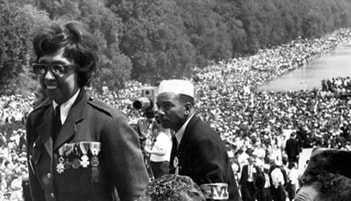
Josephine Baker at the 1963 March on Washington.
Photo Credit: Sipa/ShutterstockThe last time Josephine Baker returned to the United States was in 1973, to perform at Carnegie Hall around her 67th birthday. It was a celebrated, sold-out event, where she covered songs like Bob Dylan’s “The Times They Are a-Changin’.”
Only days after opening a major revue celebrating her 50-year career in show business, Baker died on April 12, 1975, in Paris from a stroke. The French honored her with a full military funeral, making her the first American-born woman to receive such a distinction.
Her influence on the performing arts, as well as French and American culture, has endured. Achieving many firsts for Black women, she is remembered as a multifaceted trailblazer.
References
“Josephine Baker: From Poverty to Stardom to Espionage” by the CIA
“Josephine Baker’s Daring Double Life as a World War II Spy” by History.com
French Women & Feminists in History by Library of Congress
“Josephine Baker” by National Women’s History Museum
“90 Years Later, the Radical Power of Josephine Baker’s Banana Skirt” by Vogue
Featured image: Gaston Paris


