History is filled with dramatic reversals and desperate coups that shifted the fates of individuals, nations, and the world. However, for every successful coup that altered the course of history, there is an attempt that failed to overturn the status quo.
Often, these failed coups had catastrophic consequences for those involved. Other times, they proved exactly what was needed to maneuver someone into a position where they could realize their goals in a different way.
In each case, however, these coups can be seen either as failing to change history or as changing it irrevocably—just not in the ways that their instigators may have intended…
Here are five of history's most notably failed coups.
The Cylonian Affair (c. 636-632 BCE)
Taking place in archaic Greece more than 600 years before the start of the Common Era, records of Cylon’s attempted coup of the city of Athens are spotty and incomplete. What we know about Cylon is that he was a member of the city’s nobility and a previous winner of the Olympic Games.
According to some accounts, the oracle at Delphi advised Cylon to attempt to seize control of the city, possibly during the Olympic Games themselves. While Cylon had his supporters, however, the people of the city didn’t take kindly to his attempted coup, and he and his followers were forced to take refuge in the temple of Athena.
Eventually, they were persuaded to leave by the city’s rulers, who promised them that they would not be put to death. Plutarch writes that they tied a rope to the statue of Athena, a symbolic representation of this promise of clemency, but that as they were leaving the temple, the rope “broke of its own accord.”
The townsfolk took this as a sign that the goddess herself had withdrawn her protection. “Those who were outside of sacred precincts were stoned to death,” Plutarch writes, “and those who took refuge at the altars were slaughtered there.”
The Gunpowder Plot (1605)
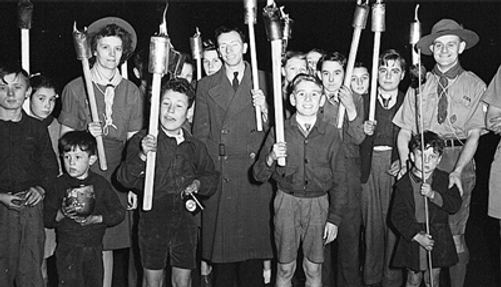

Torchlight procession to celebrate Guy Fawkes night (1947).
Photo Credit: Wikimedia Commons“I know of no reason why the Gunpowder Treason should ever be forgot.” So goes part of at least some versions of a popular English folk verse concerning a plot to blow up the House of Lords with some 36 barrels of gunpowder. Intended to spark a larger populist uprising, this attempted coup was allegedly a reaction to religious intolerance under King James VI.
One member of Parliament received an anonymous letter of warning on October 26th and turned it over to the authorities. On the evening of November 4th, they captured one of the conspirators, Guy Fawkes, who had been put in charge of the explosives. He and several of his co-conspirators were sentenced to be hanged, drawn, and quartered.
The rhyme suggests that the events of the plot should always be remembered, and so far they have been. Each year on November 5th, the thwarting of the conspiracy is still celebrated throughout England as Guy Fawkes Night, where effigies of the eponymous conspirator are burned on bonfires.
The Wilcox Rebellion (1895)
In 1893, American plantation owners staged a successful coup to overthrow Queen Lili’uokalani of Hawaii, accomplishing this partly by convincing the United States to literally send in the Marines. During the short term, the insurgents established the Republic of Hawaii. However, their ultimate goal was the annexation of the island nation to the United States, which did not fully come to fruition until Hawaii became the 50th state in 1959.
Not everyone was happy with the new arrangement, though. In 1895, royalists staged a failed counter-revolution to restore Queen Lili’uokalani to the throne. The so-called Wilcox Rebellion, named after conspirator Robert W. Wilcox, consisted mostly of a few pitched battles across a handful of days.
Unfortunately, the royalists were outmanned and outgunned by the provisional government, which had spent much of the treasury to prepare for such a contingency. At the end of the fighting, Lili’uokalani herself was arrested and charged with “misprision of treason”—essentially knowing about the treason, even if not participating in it—and imprisoned in her home. Shortly thereafter, she officially abdicated the throne in order to prevent further bloodshed.
The Beer Hall Putsch (1923)
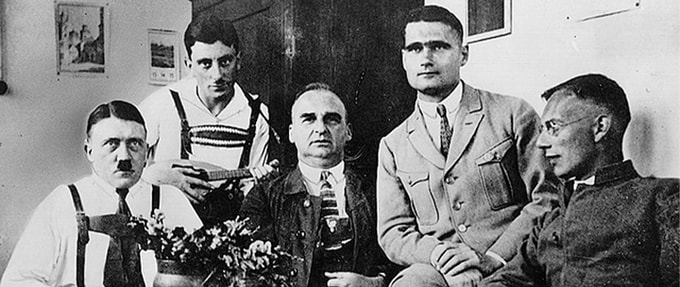
In November of 1923, Hitler was already the leader of Germany’s Nazi Party, but he had thus far failed to attain the national dominance he desired. Inspired by Benito Mussolini’s March on Rome the previous year, Hitler and around 600 of his followers marched on a beer hall in Munich where the Minister-President of Bavaria, in what was then Germany’s Weimar Republic, was giving a speech.
Hitler entered, fired a shot into the air, and declared that the national revolution had begun. However, the attempted coup did not go quite as he had planned. Within a few days, Hitler had been arrested and charged with treason. Although the Beer Hall Putsch may have failed in its goals, in this case, it was really the beginning, rather than the end, of the attempted coup.
The resulting trial gave Hitler a national platform, and while he was sentenced to five years in prison, he served only nine months. Upon his release, he altered his tactics, using legal maneuvers and propaganda efforts rather than brute force to climb the rungs of power. Within a decade, Hitler’s Nazi Party had seized control of the country after all.
The South Korean Martial Law Crisis (2024)

National Assembly Speaker Woo Won-sik inspects the damage caused by martial law troops entering the National Assembly (2024).
Photo Credit: Wikimedia CommonsLest we think that failed coups are a relic of the past, we have several immediate reminders from the last few years. On December 3, 2024, South Korean President Yoon Suk Yeol declared martial law during a televised address in which he accused members of the National Assembly of “anti-state activities.”
This power grab has largely been seen as an attempt at what is known as a “self-coup,” in which an elected leader seeks to circumvent governmental processes to gain more power. Though the declaration ostensibly suspended all political activities, including meetings of the National Assembly, the members of that governing body acted quickly.
Within hours, legislators reached the National Assembly Proceedings Hall by evading police and military barricades, and even climbing over walls. Once there, they voted 190-0 to end martial law. Impeachment proceedings against Yoon Suk Yeol began almost immediately. He was arrested within a month, and is currently being charged with insurrection, which could carry the penalty of life imprisonment, or even execution, if he is convicted.


