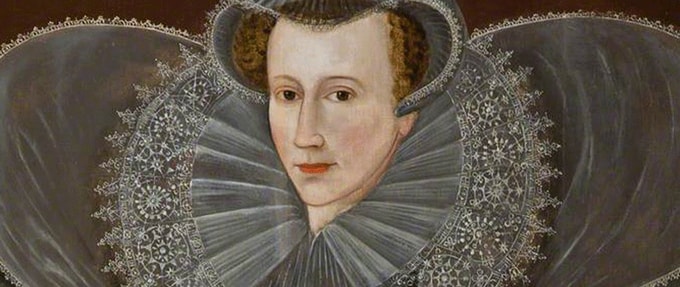
The youngest queen to ever inherit the throne, at just six days old, Mary Queen of Scots went on to reign for 25 years, until her forced abdication and subsequent execution in 1587.
Many notable actresses have played Mary across film and television—from Vanessa Redgrave in the 1971 Oscar-nominated film Mary, Queen of Scots to Adelaide Kane in the hit show Reign. Her dramatic life lends itself well to the screen, whether considering her role in uniting the Scottish and English crowns or her involvement in the assassination of Queen Elizabeth I.
Remembered across contemporary media as something of a romanticized historical figure, who really was Mary, Queen of Scots? What was her legacy?
Unpack her life as one of the most controversial monarchs in British history, from her time holding a dual throne as queen of Scotland and France to her nearly 20-year imprisonment by her cousin.
An Early Ascension
Mary’s parents, King James V of Scotland and her mother, Mary of Guise, had two sons, but both died in infancy. Despite hoping for a boy, Mary, the couple’s only surviving child, was born in 1541. Her father, who feared women couldn’t rule, took a high fever and died only six days later, making Mary the Queen of Scotland.
Since Mary was only an infant, as is customary, Scotland was governed by regents—first by the Protestant Earl of Arran, and then by Mary’s mother, after she successfully removed him. Both Protestant England and Catholic France wanted Mary to marry one of their royals, in the hopes of controlling Scotland.
Mary’s uncle, Henry VIII of England, took this opportunity to facilitate a marriage between Mary and his son Edward. However, many Scots opposed—notably Cardinal Beaton, who was pushing for a pro-Catholic, pro-French arrangement. The agreement was thus broken, and Henry, furious, sent an army to attack Scotland, in what would become known as the “Rough Wooing.”
In response, France sent troops to support Scotland, and Mary was betrothed to the Dauphin, the eldest son of the French King. At five, she was sent to live in France by her mother and was brought up at the court of King Henry II and his queen, Catherine de Médicis. There, Mary’s education became a priority—learning Latin, Italian, Spanish, and some Greek—while surrounded by great luxury. She began to identify more with her French side, making French her first language, and becoming less of a Scotswoman.
Who Will Claim the English Throne?
In April 1558, the 15-year-old Mary and the 14-year-old Dauphin Francis were married at Notre Dame Cathedral in Paris. Around the same time, Elizabeth Tudor took the English throne, meaning that Mary, given her Tudor blood, was next in line for the English crown.
Even Roman Catholics, who considered Elizabeth illegitimate because they regarded Henry VIII’s divorce from Catherine of Aragon and his marriage to Anne Boleyn invalid, sought to see Mary as queen. Mary’s father-in-law, Henry II of France, thus claimed the right to rule England on her behalf.
A year later, when King Henry died, Mary became the Queen of both Scotland and France. Although, her reign in France was short-lived. Francis died in 1560, and the throne was assumed by his younger brother. In the same year, her mother, who had been ruling Scotland as regent, died, and Mary returned to Scotland and a cheering crowd.
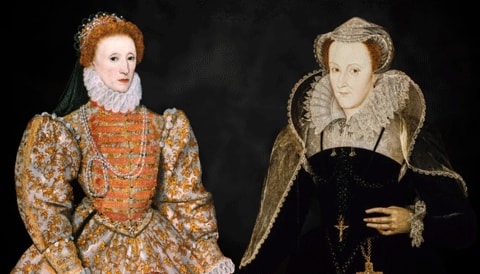

Portraits of Elizabeth I and Mary, Queen of Scots.
Photo Credit: Wikimedia CommonsAlthough Mary initially received a warm welcome, things quickly soured. She found that Henry II’s previous claim to the throne on her behalf had led to her incurring Elizabeth’s hostility. As such, Elizabeth refused to acknowledge Mary as her heiress. Meanwhile, since Mary, who was Roman Catholic, had been gone, the official religion of Scotland had become Protestantism. Many, including the leading Calvinist preacher, thus rejected her position as a foreign queen with a different religion.
Despite these circumstances, Mary managed to hold the throne, traveling throughout Scotland with her royal court and meeting with lairds and other officials. When it came time for Mary to take a husband and secure an heir for the throne, princes, lords, and nobles all sought to secure her hand. But it was Lord Darnley, her cousin, who ultimately won her over with his ambition and good looks. She quickly fell in love.
But her choice would mark her downfall. When Elizabeth learned of the marriage, she saw it as another attempt by Mary to strengthen her claim to the English throne, as Darnley was another descendant of her aunt. Soon enough, it became clear that Darnley’s charm was just a front, and that what he truly sought was the Scottish throne. Mary thus gave him the title of king, but kept all royal duties to herself, further infuriating him.
A Murder (or Two)
Tensions came to a head when Lord Darnley, jealous of Mary’s close friend and advisor, David Riccio, hatched a plan. In March 1566, Mary and Riccio were eating dinner at Mary’s home, Holyroodhouse, when Darley entered her room with Lord Ruthven, among others. Riccio tried to hide behind Mary, but they quickly dragged him out, stabbing him 56 times. Just three months later, Mary and Darnley’s son, James, was born.
In the months that followed, Darnley was recovering from an illness at his house in Edinburgh when Mary visited him in February 1567. She went out, and, shortly after, the house was blown up. Darnley and his servant were found strangled in the garden nearby. Although some believed that Mary or the Earl of Bothwell, the man she was said to be having an affair with, was involved in the murder, nothing was proved. To this day, his killer, or killers, remains unidentified.
Soon after, Mary lost whatever favor she held in Scotland by marrying the Earl of Bothwell, who had only just divorced his wife. However, it is said that Mary may have been abducted and forced to marry Bothwell when she was returning from her final visit with her son to Edinburgh. Either way, the public received the union with much shock and disgust. While Catholics viewed the marriage as unlawful, not recognizing Bothwell’s divorce, Protestants and Catholics alike were appalled that Mary could marry a man accused of killing her husband.
Mary’s Final Refuge—and Imprisonment
On June 15th, 1567, Mary and Bothwell were confronted by 26 Scottish peers, otherwise known as the confederate lords, and taken prisoner. Mary went to the Lochlevel Castle, where she eventually escaped, and Bothwell to the Danish fortress of Drashmol, where he remained until his death 10 years later.
While in the island-locked fortress of Lochleven, Mary was forced to abdicate in favor of her son, who became King James VI of Scotland. Given his age, James was under the regency of the Earl of Mar, who had also been Mary’s guardian. Mary managed to escape, the second time around, with help from a servant, but failed to regain support in Scotland. In a last attempt, she fled to England, hoping to appeal to her cousin, Queen Elizabeth I.
But her efforts were in vain when Mary was imprisoned, following Elizabeth’s inquiry into Darnley’s murder. For over 19 years, she was transported between numerous castles and grand houses, and yet the two women were never to meet. During her time, she was treated well, with her own servants, enjoying embroidery, games, and visitors.
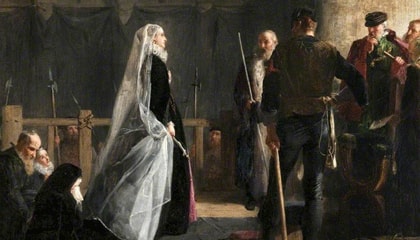
Execution of Mary, Queen of Scots by Robert Herdman (circa 1850).
Photo Credit: Robert Herdman / Wikimedia CommonsStill, she made numerous attempts to escape and was therefore no longer allowed to communicate by letter. But in 1585, Mary found a way to smuggle in letters. Sir Anthony Babington wrote to Mary, suggesting that Elizabeth should be killed, and that Mary should instead ascend the throne, to which she agreed. Unbeknownst to Mary, it was a ruse set up by Elizabeth’s spymaster, Sir Francis Walsingham, and she was found guilty of high treason on October 15, 1586.
On February 1587, at 44 years old, Mary was executed in the great hall at Fotheringhay Castle. When removing her dress, Mary revealed a red petticoat, the color of martyrdom, solidifying her status among historians as the ultimate femme fatale. Today, her body remains in Westminster Abbey, in a dazzling monument her son with Lord Darnely, James I, erected in her honor.
Mary’s hopes of consolidating power would ultimately come to fruition with James, who became the first monarch of all three kingdoms of England, Scotland, and Ireland in 1604. In an event known as the Union of the Crowns, he ascended to the thrones, following the death of Queen Elizabeth I.
Featured image: National Trust for Scotland, Falkland Palace & Garden


