Working largely behind the scenes throughout history, code breakers have been crucial to ensuring the safety of nations—and in some cases, the world. However, despite their many contributions, most cryptographers remain unsung, often to protect national security.
From pioneering frequency analysis to helping build the Bombe, we’re giving these code breakers their flowers, with a particular spotlight on those whose achievements were originally overlooked.
Whether uncovering hidden enemy plots or ensuring secure communication, the five code breakers on this list saved countless lives while helping create the systems we still rely on today.
al-Kindi
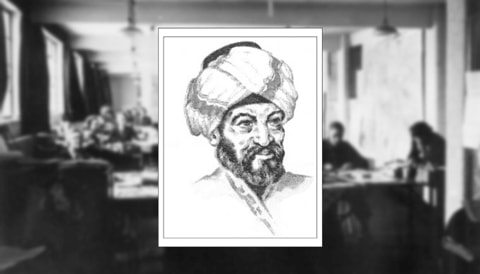
 Photo Credit: Wikimedia Commons
Code-breaking is often associated with the world of spies and military operations, but over 1,000 years ago, long before computers, there was al-Kindi. A scholar of the House of Wisdom, a royal academy established in Baghdad during the Abbasid Caliphate, he is known today as the “father of Arab philosophy”.
As described by British linguist Nigel Vincent and scholar of European integration Helen Wallace in the British Academy Review, the term cipher actually derives from the Arabic word sifr, meaning ‘zero, empty,’ which Europeans learned from Arab intellectuals. One of such pioneers was, in fact, al-Kindi. He is widely considered the founder of cryptography, which, in simple terms, is the process of hiding or encoding information so that only the intended recipient can decipher the message.
Al-Kindi was a jack-of-all-trades, with a background as a mathematician, philosopher, and theoretician of music, among other pursuits. His particular contribution to codebreaking, though, was his use of frequency analysis, which still remains one of the most significant breakthroughs. The process uses linguistic data, including the frequency of certain letters or letter pairings, sentence structure, and more, to, as Josh Schneider, Senior Writer of Infastructue and Quantum Computing at IBM, puts it, “reverse engineer private decryption keys.”
While modern encryption is far more complex, with its various algorithms and programs, its principles still remain essential. He also, by proving ciphers could be mathematically broken, initiated the constant pull between code makers and breakers that still exists to this day.
Marian Rejewski
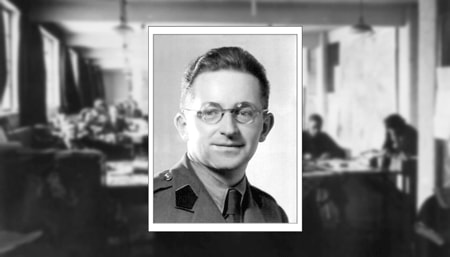 Photo Credit: Wikimedia Commons
Marian Rejewski’s achievement in initially cracking the Enigma cipher machine is largely overshadowed by the work of Alan Turing and his team (who will be covered shortly). But, as the National Security Agency states, “without his breakthroughs, which he provided to the French and British in 1939, the U.K. and U.S. may have never been able to exploit Enigma.”
He began his work for the Polish Defense Ministry in October 1932, and began applying his unconventional methods of statistical analysis. For security reasons, he had to work after hours while all other employees were home, and thus reconstructed the Enigma’s internal workings alone, without ever laying eyes on the machine.
His work was not only foundational to the breakthroughs that later took place at Bletchley Park, but to the world of cryptography as a whole. Joining forces with two colleagues, they developed a way to recover the Enigma’s daily settings and created the Bomba machine, a precursor to the British Bombe, which would shorten the war.
Alan Turing
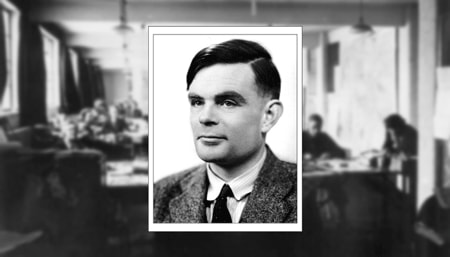 Photo Credit: Wikimedia Commons
Widely considered to be the most famous codebreaker—and famously portrayed by Benedict Cumberbatch in the movie The Imitation Game—Alan Turing is known for cracking a code cryptanalysts originally thought was unbreakable: the ‘Enigma’ code. Before the advent of World War II, Turing had been working for the British Government’s Code and Cipher School, but in 1939, he began working at Bletchley Park in Buckinghamshire—the principal center for Allied code-breaking.
Turing, along with his team of mathematicians, cryptanalysts, and engineers, was primarily charged with breaking the Enigma—a machine used by the Germans to encipher messages. By this time, Polish mathematicians had figured out how to read the communications—thanks largely to fellow famous code breaker, Marian Rejewski—and shared them with the British. Unfortunately, German troops soon realized that some of their coding had been hacked and began updating their system daily.
The invention of the Bombe by Turing, along with Gordon Welchman, helped to drastically reduce the work of codebreakers. Using the approach of ‘cribs,’ which the National Museum of Computing describes as “comparing patterns of the encrypted message and a known portion of plain text,” the machine proved to be immensely successful in breaking the daily keys. While at Bletchley Park, Turing also helped to decrypt complex naval communications, which was crucial in avoiding German U-boats.
He created the ‘Banburisms’ technique, “a cryptanalysis procedure that took advantage of operator shortcomings in the Enigma encoding that could reveal the position of the rotor by noticing overlaps of letters in two messages” (I Programmer). Heading the ‘Hut 8’ team—a vital member of which was Joan Clarke, the only woman in the center, who was brought to recognition by Kiera Knightley in The Imitation Game—Turing was able to interpret all German naval signals, apart from a brief period in 1942, and helped direct the Allies away from U-boats.
Although Turing had, as it’s estimated, shortened the war by many years, saving countless lives, his contributions weren’t declassified by the British government until the 70s. Charged with “gross indecency” in 1952 due to his homosexuality, his conviction was only overturned in 2013 by Queen Elizabeth II, after, in 2009, the then-Prime Minister issued a public apology for the “appalling” treatment of Turing.
Genevieve Grotjan
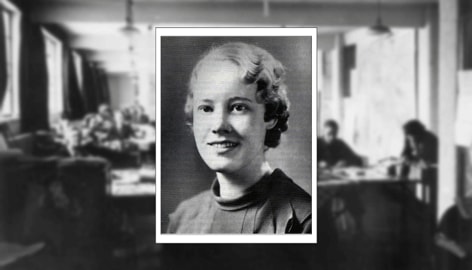 Photo Credit: Wikimedia Commons
Often, as throughout history, the most famous code breakers are the ones whose stories are told. Likely, if you’re familiar with the world of cryptography, you’ve heard of the name William Friedman. With his leadership in the research division of the Army’s Signal Intelligence Service (SIS), he is credited with one of America’s greatest code-cracking achievements: the ‘Purple’ cipher.
But less well known is that the breakthrough—which ultimately helped American forces understand Japan’s diplomatic strategy before Pearl Harbor—wouldn’t have been possible without Genevieve Grotjan. In the mid-1930s, cryptanalyst Frank Rowlett—one of the original employees hired by William Friedman for SIS—broke the Red cipher, the first Japanese system for enciphering diplomatic communications.
But the success was only short-lived, as the Japanese forces began transmitting messages on a new system called Purple. For 18 months, the code remained unbroken, until in September 1940, cryptanalyst Genevieve Grotjan—who had been hired by William Friedman for the SIS in 1939—discovered the key. Through meticulous work, including “noting patterns, repetitions, and cycles used in intercepted encrypted transmissions,” Grotjan’s breakthrough ultimately enabled her team to build a machine capable of decrypting Japanese diplomatic messages, a crucial step toward the eventual Allied victory (ASIS International).
By October 1943, she was assigned to the Venona project, a U.S. counterintelligence program that translated coded communications between Soviet intelligence agencies. Her discovery in 1944 that the Soviets had reused pages of their “one-time pad” cipher keys led to the decryption of KGB messages, and was considered by the SIS to be “the most important single cryptanalytic break in the whole history of Venona.”
Elizebeth Smith Friedman
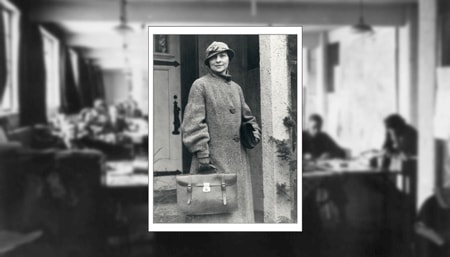 Photo Credit: Wikimedia Commons
While Elizebeth Smith Friedman’s husband, William Friedman (yes, the same man who employed Genevieve Grotjan), was lauded for leading the team that broke the Purple code, her achievements were only declassified in 2008. Known today as “America’s first female cryptanalyst", Smith Friedman got her start breaking the fabled Shakespearean codes, alongside her then-team member, later-husband. Together, they worked to prove that Sir Francis Bacon had no involvement in writing Shakespeare’s plays.
During World War I, the couple continued to work as a team and ran a secret organization for the national government, decrypting messages sent to them by the Navy. From there, they worked for the Army Signal Corps, though Smith Friedman felt undervalued when learning that she was making significantly less than her husband. She took time off and only returned to code-breaking in 1925, where she single-handedly broke the codes used by narcotics and alcohol smugglers during the Prohibition era. Famously, Smith Friedman was a key witness in convicting Al Capone.
At this point, Smith Friedman had already cemented her name as a hallmark in cryptology history, but her crowning achievement still had yet to come. Having previously run a code-breaking unit in the 20s and 30s, she was frustrated by her position, monitoring communications between German operatives in South America, during World War II. She had to report to a male officer, and felt that, according to TIME, the FBI held her in “a sexist light.”
Nevertheless, her immense talents shone through when she was able to decrypt messages sent by the German Enigma Machines, ultimately leading her to dismantle the entire spy network in South America, and thus eliminating any threat of Nazi takeover in the Western Hemisphere. She was also able to decode a plan by Nazi spies, intent on sinking a large Allied ship called the Queen Mary, saving the lives of all 8,000 soldiers on board.
Despite her numerous contributions, Smith Friedman would not receive credit in her lifetime. Under oath to stay silent on her accomplishments until death, she watched as Edgar Hoover, the then-FBI Director, claimed responsibility for her and her team’s wartime success. As put by journalist Jason Fagone, author of The Woman Who Smashed Code, “It was a lie, but it was a lie that worked, and it was the lie that ended up getting written into the history books.”
Featured image: Wikimedia Commons


