
It’s safe to say the boot-shaped republic of Italy has undergone many eras. For centuries, the peninsula thrived amid fragmentation, with a system of cities and states—known, you guessed it, as city-states, outlined in Fernand Braudel’s Out of Italy. The very competition among these city-states in the arts, culture, politics, and more effectively brought on the Renaissance.
To many, early modern Italy is considered the epitome of cultural brilliance, with “Golden Age” artists like Leonardo da Vinci, Michelangelo, and Botticelli producing iconic masterpieces we still flock to see today. Behind these geniuses was Italy’s most powerful family, the Medicis—whose legacy of transforming Florence into the center of European culture is outlined in The House of Medici.
Today, Italy is still renowned as the heart of the Roman Empire, despite the empire's fall over 1,550 years ago. That said, it is crucial to understand a country not only through its present but also through its past. Over time, the nation has been marked by political instability, beginning with the rapid turnovers of emperors, then the rise of Mussolini, who ushered in a dark era.
Covering over 2,500 years of history, this list is for those longing to build a foundation in Italian history—or perhaps for Italians wishing to make better sense of their far-reaching heritage.
The Romans
To understand modern Italian history, we first need to build a foundation in ancient Rome, with its far-reaching legacy. Described by the Wall Street Journal as “a sweeping historical survey that spans two millennia,” anyone “intrigued by the ebb and flow of political power [...] will find in this book a cornucopia.”
Acclaimed scholar Edward J. Watts moves away from the limited picture of toga-clad figures like Cicero and Caesar to the ancient civilization in all its complexity—from the Punic Wars to the Crusaders.
The Roman Empire was a place of diversity, and with the coming of Christianity and the rise of Islam, those who called themselves Roman built the most resilient state the world had ever known.
Out of Italy
From 1450 to 1550, Italian city-states not only shaped the budding nation but also the continent of Europe. The cultural, economic, and political dominance of the city-states is crucial today to our understanding of world history.
In Out of Italy, scholar Fernand Braudel considers Italy, or more accurately, many Italies of the time period, piecing together fragments to make a cohesive, complex history. Spanning from the Renaissance to the Baroque, he considers the coalescence between art, science, politics, and more.
The House of Medici
It wouldn’t be an Italian history listicle without the Medicis. In the House of Medici, academic Christopher Hibbert offers a definitive narrative of the family that ultimately defined Renaissance Florence. Considering the family's rise and fall, this all-encompassing history is an excellent starting point for anyone looking to build a foundation in the Medicis.
At the pinnacle of Renaissance Florence, the city was a powerhouse where wealth, influence, and, above all, art flourished. The latter was significantly funded by the Medicis—think Michelangelo’s David, Sandro Botticelli’s The Birth of Venus, and much more.
But of course, the Medicis were more than patrons, and went on to become Grand Dukes and even Popes. Unpack the history of the Medici line: Italy’s most famous and influential family.
The Last Judgment
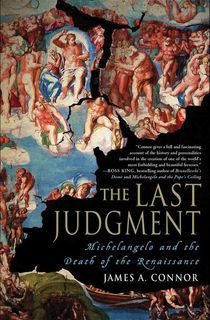
In this focused, vivid retelling, James A. Connor offers a portrait of Michelangelo and the artistic tensions of the era. Using his famous fresco, The Last Judgment, which covers the entire altar wall of the Sistine Chapel, as a lens, Connors considers the end of the Renaissance.
With a mix of storytelling and historical analysis, the book delivers “an indispensable perspective for the general reader as well as fresh insights for the specialist” (Publishers Weekly). Ultimately, detailing how Michalengo’s art reflected the religion and political upheavals that ended the Renaissance, and made way for the Counter-Reformation.
The Pursuit of Italy
One of The Economist’s Books of the Year in 2011, The Pursuit of Italy is a compelling narrative of how a fragmented peninsula became a nation. Blending politics, culture, and identity, David Gilmour considers Italian life over the centuries, from Cicero and Virgil to modern, controversial figures of the twentieth century.
In a rather unique take, Gilmour observes how the greatness of Italy has always been reserved in its distinct regions. Indeed, across history, Italy’s inhabitants identified themselves as Tuscans and Venetians, Sicilians and Lombards, Neapolitans and Genoese.
As put by Jonathan Keates of The Literary Review, The Pursuit of Italy is “the best one-volume history of Italy now available [...] [and] has the same tonic, exhilarating impact as the thigh-slapping overture to a Verdi opera.”
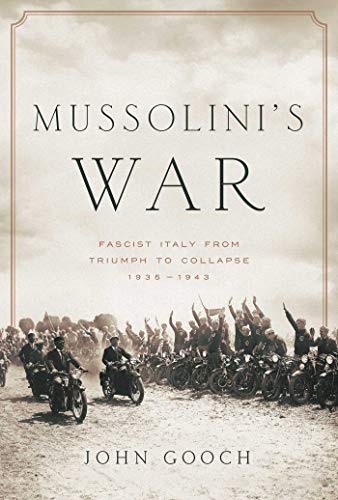
Mussolini's War
In this sharp analysis, John Gooch outlines Italy’s war experience across history, particularly with Benito Mussolini’s leadership and the nation’s role in World War II. Staying closely aligned with Hitler, Mussolini ultimately brought Italy into an extensive, unwinnable war—and a terrifying era.
Beginning with the 1935 invasion of Ethiopia through the Spanish Civil War and WWII, Mussolini’s War highlights the contrast between the dictator’s ambitions and the realities of an under-equipped military.
The Italians
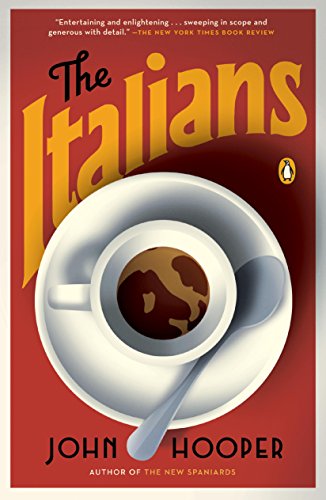
A Washington Post and Los Angeles Times bestseller, The Italians takes us to contemporary Italy, while considering the enduring influence of the past. Told by John Hooper, the foreign correspondent, considers how a nation capable of the Renaissance, also produced the Mafia.
Above all, Hooper goes beyond stereotypes and considers the character of Italians, considering the impact of football, food, opera, and so much more. Both “entertaining and enlightening,” The Italians is “sweeping in scope and generous with detail,” outlining how traditions have shaped the nation's citizens (New York Times).
Featured image: Lerin Arts / Canva


