
It was February 1997, and only one topic was under discussion at the dinner table: cloning. The cover illustration of Nature that month announced the birth of Dolly, a lamb that was cloned from an adult sheep in Scotland. Although the scientific community was cheering, much of the breakthrough was accompanied by widespread paranoia.
When considering the legality and ethics of cloning, human-based reproductive and therapeutic cloning often surface first in discussion—even if you’ve never heard of these terms before.
While reproductive cloning involves the genetic engineering of an individual organism, therapeutic cloning can produce a new embryo, used to create embryonic cells with the same DNA as the donor cell. The latter has the potential to generate tissue, and even whole new organs, for patients in need of a transplant, or, more controversially, to slow the effects of aging in humans.
Over the 100-year history of cloning, many successes and setbacks have occurred, each inching scientists towards another breakthrough. There are over ten key milestones highlighted below in the process of cloning, yet many more experiments conducted by scientists around the globe led to the conception of Dolly, the first mammal cloned from an adult cell.
Perhaps more than any other scientific realm, cloning is really a history of collaboration—built upon decades of shared discoveries and the accumulation of knowledge among teams rather than individuals. From early embryology in the 1950s to the development of molecular cloning and the creation of Dolly the sheep in 1996, this history highlights the necessity of collaboration as the standard in science.
The 411 on Cloning
First, let's cover our bases: What is cloning? Cloning is the process of creating a genetically identical copy of a cell, gene, or organism. These copies, or “clones,” can occur naturally—such as in twins and plants spreading—or artificially through the use of biotechnology.
The term “cloning” was coined in 1903 by plant physiologist Herbert J. Webber from the Greek word klon, referring, as the NPR describes, to the “technique of propagating new plants using cuttings, bulbs or buds.” Over time, the term came to encompass a range of genetic engineering techniques.
The most common form of natural cloning is asexual reproduction—a process with many variations that have been studied by scientists to produce artificial cloning methods. This type of reproduction is unique because it does not involve the fusion of gametes (sperm and egg) to produce offspring. Rather, the single parent is able to solely produce offspring that are genetically identical to itself, known as clones.
There are many kinds of asexual reproduction, including binary fission (one cell splits into two identical cells), budding (a small part grows off the parent and becomes a new organism), fragmentation (the body breaks into pieces and each piece grows into a new organism), vegetative propagation (new plants grow from parts like stems, roots, or leaves), and parthenogenesis (an offspring develops from an unfertilized egg).
On the other hand, there are several types of artificial cloning, including gene cloning, reproductive cloning, and therapeutic cloning. As defined by the National Human Genome Research Institute: “Gene cloning produces copies of genes or segments of DNA. Reproductive cloning produces copies of whole animals. Therapeutic cloning produces embryonic stem cells for experiments aimed at creating tissues to replace injured or diseased tissues.”
To better understand these methods of artificial cloning, it’s useful to trace their origins and evolution, which scientists have ultimately attained through experimentation.
Key Milestones: Dolly the Sheep and More
The roots of cloning stretch back to the 19th century, to the work of German biologist Hans Driesch. Using a sea urchin—a relatively simple organism for study—he proved that artificial embryo splitting was possible. By shaking the two cells of an early embryo, he showed that each cell already contained a complete set of genetic instructions. As a result, each cell had the potential to develop into a full organism.
Then, in 1902, German embryologist Hans Spemann employed the same method to clone salamanders. A little more complicated than a sea urchin, he, rather experimentally, fastened a baby hair between the two cells of the salamander embryo, tightening until they separated. The main takeaway was that more complex organisms could be cloned, but only up to a certain stage of development.
In an experiment in 1928, Hans Spemann reached another breakthrough when analyzing a fertilized salamander egg: The nucleus from an early embryonic cell—the very first cells formed after a sperm fertilizes an egg—is responsible for and directs the complete growth of a salamander.
In 1952, the first successful nuclear transfer experiment was completed by American developmental biologists Robert Briggs and Thomas King. Nuclear transfer is a cloning technique involving creating a new embryo by taking the nucleus (DNA) from a donor cell and then placing it into an egg cell that has its own DNA removed. Using tadpoles, they confirmed earlier observations that embryonic cells are more amenable to successful cloning than those at more advanced developmental stages.
Then, in 1958, British developmental biologist John Gurdon proved that it was possible to create a fully developed clone using a nucleus from a somatic, or non-reproductive, cell. Gurdon proved that, regardless of whether cells are split or divided, they maintain their genetic information.
Building on earlier findings from scientist J. Derek Bromhall—who demonstrated that embryos could be produced through nuclear transfer, even in mammals—Steen Willadsen created the first mammal using this method in 1984. Willadsen isolated a single cell from an 8-cell embryo, then applied an electric shock to the cell, fusing it with a nucleus-free egg cell. Once combined, the new cell began dividing as a normal embryo would. In doing so, he proved that cloning a mammal through nuclear transfer was not only possible, but that the resulting cloned animal could fully develop.
Then came the birth of two cloned calves, Fusion and Copy, resulting from experiments by American scientists Neal First, Randal Prather, and Willard Eyestone in 1987. Although a success, the cloning was still limited to the use of donor nuclei from cells in an early embryo. Still, cloning using the nucleus from a fully developed body cell had yet to be achieved—but not for long.
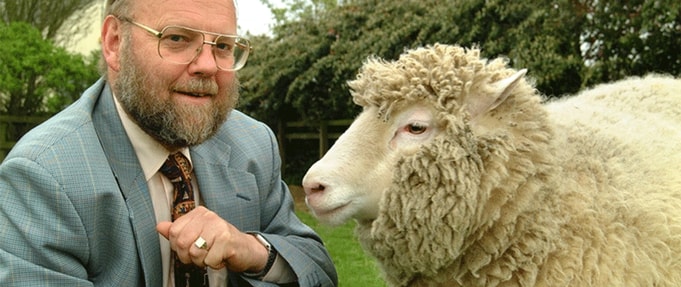
That’s where the landmark experiment that is Dolly the Sheep comes in. At the Roslin Institute at the University of Edinburgh in Scotland, scientists Ian Wilmut and Keith Campbell had finally achieved something that years of failed attempts had thought would never be possible. Despite popular belief, Dolly was not the first mammal to be cloned, but rather the first to be cloned from an adult cell—meaning she was a direct copy of her donor “parent.” But why is this significant?
The Stark Science Learning Center at Utah University puts it best: “Every cell’s nucleus contains a complete set of genetic information. However, while embryonic cells are ready to activate any gene, differentiated adult cells have shut down the genes that they don't need for their specific functions. When an adult cell nucleus is used as a donor, its genetic information must be reset to an embryonic state. Often the resetting process is incomplete, and the embryos fail to develop.”
After 227 attempts, only one resulted in an embryo that matured into Dolly the Sheep. The key, scientists realized, was to extract the nucleus from adult cells during the cell’s dormant phase, when it’s not actively dividing.
Later cloning possibilities from this breakthrough include: the first primate, the closest relatives to humans, using embryonic cell nuclear transfer, and later the cloning of mice, cows, and goats, all through somatic cell nuclear transfer. It also led to the first attempt to clone an extinct animal, a Spanish mountain goat called the bucardo, though the clone died shortly after birth.
Modern Cloning: Bans, Discourse, and Popular Culture
When the news of Dolly the Sheep hit the newsstands on February 22, 1997, a researcher at the Roslin Institute, where Dolly was cloned, described the ensuing mania as “bonkers.” With inquiries from media outlets around the world, the phones were ringing off the hook, and the team, rather sheepishly, had to explain that Dolly was named after the iconic singer, Dolly Parton.
Right away, the conversation turned to the potential for human cloning, only intensified by the TIME magazine headline: “Will There Ever Be Another You?” In June of 1997, President Bill Clinton signed legislation banning human cloning, with President George W. Bush following suit and effectively halting embryonic stem cell research in 2001.
The latter was controversial for two main reasons—firstly, embryonic stem cells were often derived from aborted embryos, which led to ethical debates around abortion, and secondly, a belief that the technology could lead to, once again, cloning humans. However, today, there is no federal law explicitly banning human cloning in the entire nation.
Beyond the United States, over 40 countries, including Germany, Russia, and France, have outright banned human cloning. Meanwhile, 15 countries, including the United Kingdom and Japan, banned human reproductive cloning, but allow therapeutic cloning—the process that creates cloned embryos to harvest stem cells for medical treatment.
Fictional books and movies only reinforced the panic, including Never Let Me Go, which, spoiler warning, ran with the notion of clones as disposable, and Jurassic Park, spotlighting the unintended consequences of scientific advancements.
At the end of the day, Dolly, whose DNA came from a 6-year-old Finn Dorsett sheep, died prematurely from cancerous tumors. Although other cloned animals have not consistently shown the same health issues, the science is still far from the possibility of cloning humans.
Until that day, cloning humans will remain part of the “what if” in public discourse and will be pursued in labs. But one thing is certain: It will not be possible without the combined efforts of future scientists and the reliance on what has already been established by scientists of the past.
Featured image: Roslin Institute, University of Edinburgh


