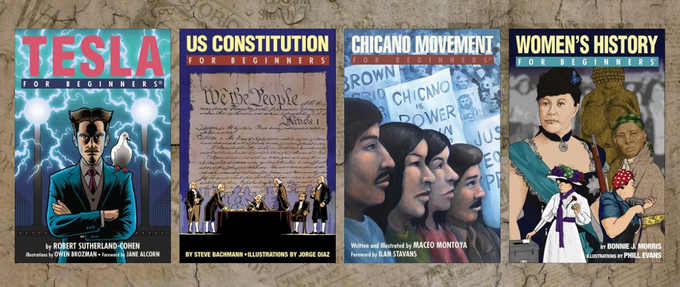

Everyone knows the quote about history repeating itself. But how many people take the time to really examine history so that they can learn from it? History, it turns out, can be fairly complicated. Where do you start?
That’s where the For Beginners series comes to the rescue. Each book focuses not just on an era, event, or person, but on the myriad elements that shaped that moment in time. They’re broken down into easy to digest chunks, complete with illustrations to help break up the text and make the information accessible to a wide audience.
Here are 11 history books for beginners to get you started on your historical journey.
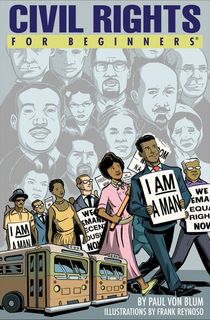
Civil Rights For Beginners
Many books on the Civil Rights movement tend to focus on a specific period of American History. But the truth is, by only focusing on this narrow historical period and famous leaders, there is a lot of context and information that gets lost.
Civil Rights for Beginners broadens the focus to movements before and after the 50s and 60s, expands upon the impact of the ordinary people who were the backbone of the movement, and discusses how these protests and demonstrations paved the way for other liberation movements to gain momentum and success.
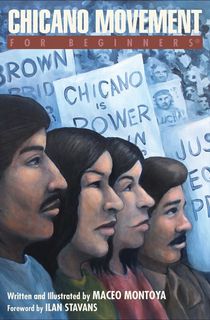
Chicano For Beginners
Known as “El Movemiento," the Chicano Movement sought to give a political voice to Mexican Americans in the 60s and 70s. Their goals were to correct the educational disadvantages of their kids, alleviate the endemic poverty many in their community suffered, eliminate political exclusion, and eradicate social bias.
While they made progress, many of these issues are still relevant today. To help bolster a new generation in the fight to combat prejudice and inequality, Chicano Movement for Beginners ensures that the history of this important movement isn’t forgotten.
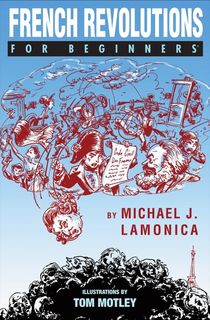
French Revolutions For Beginners
Have you heard of the Bourbon Monarchy? Is everything you know about the French Revolution from Les Mis? Michael J. LaMonica has you covered. He’s here to guide you through the revolutions and counter-revolutions—15 changes in less than a century—that shaped modern France.
From proclamations about cake, the brutal fall of guillotines, and what it was like for both the leaders and the people of the time, French Revolutions for Beginners is an engrossing read for anyone looking for an accessible deep dive into one of the pivotal moments of Democratic history.
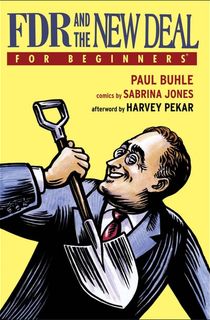
FDR and the New Deal For Beginners

Complete with original comic art, this book goes back nearly a century to this historic time.
It might seem like economic crises’ are new, but FDR and his administration had to create expansive programs never before tackled by the American government in order to overcome a bitter depression. It ended up being one of the biggest social experiments in American history, but at the time, it wasn’t without its struggles or criticisms—both vital in our quest to understand the past so we can forge ahead towards a better future.
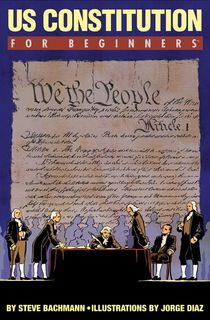
US Constitution For Beginners
Drafted during the Constitutional Convention in 1787, the US Constitution is considered America’s most important legal document. It laid the foundation for our government and remains a living, breathing document that upholds the democratic framework that the country was built on. But outside of the Bill of Rights, not many people know or understand what went into creating it.
Starting with the Magna Carta and moving throughout history, Bachmann introduces the people who wrote it, how their personalities influenced it, the ways it’s been used and misused over time, and how it’s managed to survive war, expansion, industrialization, and political manipulation for over two and a half centuries.
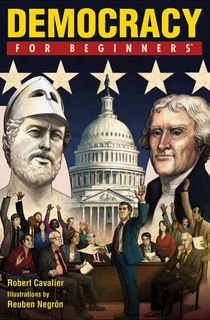
Democracy For Beginners
Before America, before the French Revolution, stretching all the way back to Athens, was the birth of democracy. Understanding what it was and where it came from is important as it evolves to fit within our ever-changing modern society. But just because it’s so familiar to us today, doesn’t mean that it was always popular.
Cavalier shows the struggles and triumphs of democracy throughout history so that we might better understand the challenges that we might still face in the coming years.
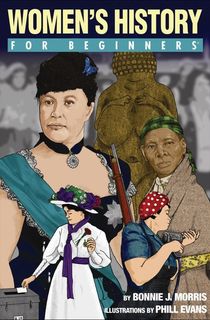
Women's History For Beginners
If bra burning and the feminist movement are all you know about women’s struggle for equal rights, Women’s History for Beginners is for you.
Despite history books focusing on the achievements of men, women have always played a significant role in shaping history. Morris explores that history through a female lens, dissecting why women’s history isn’t taught more prolifically and how women have always quietly and profoundly been a part of that history.
It turns out, there isn’t a one-size-fits-all narrative for the multitude of women across the globe and throughout history. Instead, Morris contends each version is necessary and paints a stunning picture of women’s achievements, strengths, and contributions.

American Presidency For Beginn
The office of President has been held by farmers, scholars, lawyers, and everything in between. The position is outlined in Article II of the Constitution, and has evolved since George Washington first took the oath.
American Presidency for Beginners walks through the powers and privileges that the office affords the few who have been elected, highlighting how it has changed, and what each President has done to shape the office that has led to the role we know today.
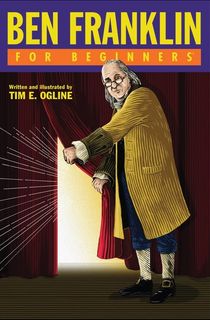
Ben Franklin For Beginners
Benjamin Franklin was known for many things throughout his career. He was a printer, an inventor, a postmaster, a diplomat, and more. And many of his contributions still influence our world today. He founded the University of Pennsylvania, invented bifocals, and was instrumental in the creation of the United States. But most people only associate him with his kite experiment and his work as a politician.
Ben Franklin for Beginners takes readers through his extraordinary life, revealing the whimsy of Franklin’s life with a wry humor the polymath would have thoroughly enjoyed.
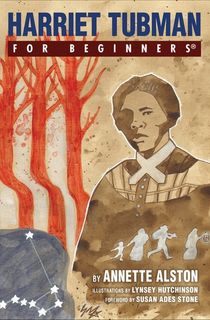
Harriet Tubman For Beginners
Harriet Tubman is most well-known for being a “conductor” on the Underground Railroad after she escaped as a slave. She was so prolific in helping slaves reach freedom she became known as the “Moses of her people." But her contributions to freedom didn’t end there.
She was a nurse in the Civil War, helped refugee slaves acclimate to their new lives in the North, and was even a spy for the Union. And once slavery was abolished, she turned her focus and efforts into the fight for women’s suffrage. Tubman dedicated her life to the fight for justice and left her mark on history.
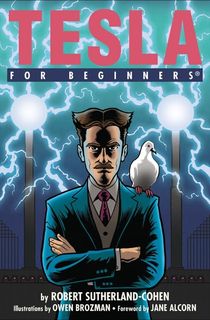
Tesla For Beginners
Before Tesla became synonymous with electric vehicles, the name belonged to a man many considered a mad scientist while he was alive. Born in Serbia, Nikola Tesla came to the US with only four cents to his name. A scientist, mathematician, and electrical engineer, he became the father of modern-day electricity who filed over 300 scientific patents over the course of his life, many that resulted in functioning inventions and others that still show potential today.
Ahead of his time, his legacy runs deep through modern inventions. But for all that he contributed, he died penniless and alone. Tesla for Beginners explores the life and enduring impact of this complicated inventor.
Feature Image: Pixabay


