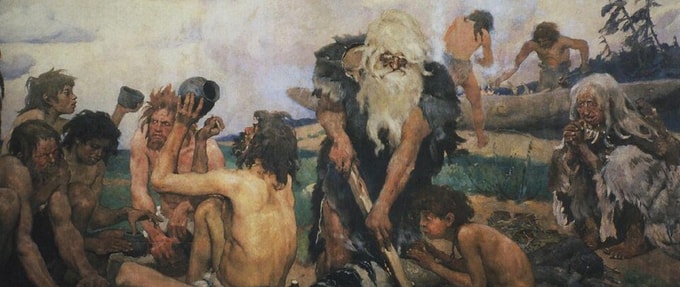

Spanning more than three million years, the Stone Age saw early humans adapt to changing climates, create breathtaking cave art, hunt Ice Age megafauna, and lay the foundations for civilization long before the invention of metalworking.
Traditionally, the Stone Age is divided into three eras: the Paleolithic (Old Stone Age), when humans lived as hunter-gatherers; the Mesolithic (Middle Stone Age), a transitional period marked by environmental change and increasingly complex societies; and the Neolithic (New Stone Age), when farming, permanent settlements, and domesticated animals transformed daily life.
These books explore the people, animals, and innovations that shaped humanity's earliest history.
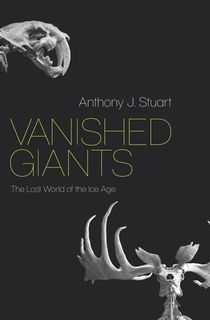
Vanished Giants
Long after the dinosaurs went extinct, Stone Age humans shared the Earth with mammoths, woolly rhinos, saber-toothed cats, giant ground sloths, and other Ice Age megafauna.
In Vanished Giants, paleontologist Anthony J. Stuart reconstructs this lost world through fossil evidence, revealing the landscapes, climates, and ecosystems these remarkable animals inhabited. He also explores why they vanished, arguing that climate change, human hunting, or both drove their extinction.
Stuart paints a picture of what the fate of the Ice Age giants can teach us about the extinction crisis unfolding today.
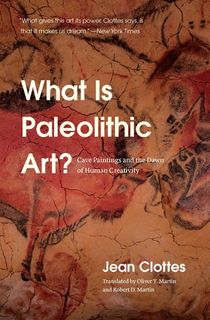
What Is Paleolithic Art?
Traveling to some of the world's most famous Paleolithic cave art sites, including Chauvet, Altamira, and Lascaux, is Jean Clottes, an expert on prehistoric cave paintings. Discussing sites and surveys worldwide, Clottes offers personal reflections to answer the “why” of Paleolithic art.
What drew our Stone Age ancestors into caves to paint in charcoal and red hematite, to watch the depictions of lions, bison, horses, and aurochs flicker by firelight? Was it a creative impulse, a spiritual dawn, or something entirely different?
Clottes work lifts us from the darkness of our Paleolithic origins to reveal insights into how we think, why we create, why we believe, and who we are.
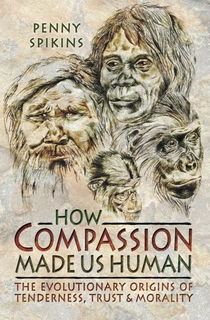
How Compassion Made Us Human
Archaeologist Penny Spikins argues that compassion lies at the heart of what makes us human. Journeying from the earliest Stone Age societies two million years ago to Neanderthals in Ice Age Europe, she draws on archaeological evidence to explore how emotional connections, kindness, and morality evolved over time.
Spikins offers a compelling look at how our capacity to care for and connect with others shaped human evolution and ultimately contributed to our success as a species.
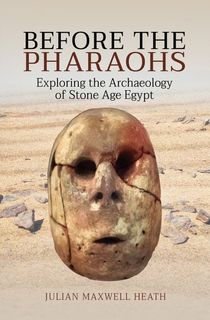
Before the Pharaohs

While ancient Egypt is famous for its pharaohs and monuments, its Stone Age past remains largely overlooked. This book explores the Paleolithic and Neolithic communities that lived in the Nile Valley, Delta, and surrounding deserts.
Tracing Egypt's prehistory from the arrival of the earliest humans from sub-Saharan Africa to the rise of the Naqada Culture, Before the Pharaohs sheds light on the people and cultures that laid the foundations for one of the world's greatest ancient civilizations.
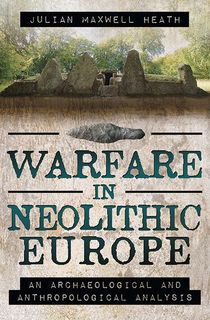
Warfare in Neolithic Europe
The Neolithic period marked the shift from hunting and gathering to farming, laying the foundations for the complex societies of today. While this complex transition varied across Europe, archaeological evidence suggests that conflict between early farming communities may have been more common than once believed.
In Warfare in Neolithic Europe, Julian Maxwell Heath examines the growing evidence for violence during the Neolithic period, challenging long-held assumptions about life in Europe's earliest agricultural societies.
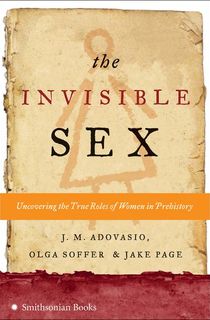
The Invisible Sex
Popular depictions of the Stone Age often portray fearless male hunters, while women remain in the background. In The Invisible Sex, J. M. Adovasio, Olga Soffer, and Jake Page present an exciting new look at prehistory, arguing that women developed innovations ranging from clothing that made life in colder climates possible to ropes that enabled water transport and nets used for communal hunting.
They also explore how women played a central role in the development of language and social life, ultimately shaping what it means to be human. The result is a new story about women in prehistory that challenges long-held assumptions about gender today.
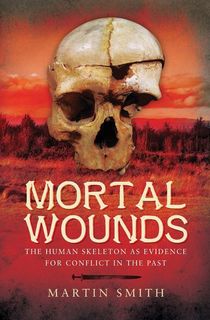
Mortal Wounds
In Mortal Wounds, biological anthropologist Martin J. Smith examines preserved human skeletons from the early Stone Age to the 19th century to uncover how conflict evolved over time. Arguing that human remains provide the clearest and most reliable evidence of past violence, he uses osteological evidence and battlefield archaeology to explore who fought, who became victims, and what ancient bones reveal about our shared past and the changing face of human conflict.
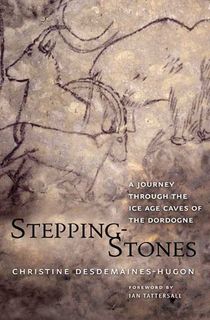
Stepping-Stones
The cave art of France's Dordogne region is renowned for its remarkable drawings of bison, horses, mammoths, and mysterious symbols. In Stepping-Stones, Christine Desdemaines-Hugon draws on more than 25 years of research to combine art and archaeology, offering an intimate understanding of the “cave experience.”
Exploring five remarkable sites, including the famed Font de Gaume, she reveals how Paleolithic art continues to shape our understanding of prehistoric culture, and the enduring ties between the ancient and modern worlds.


