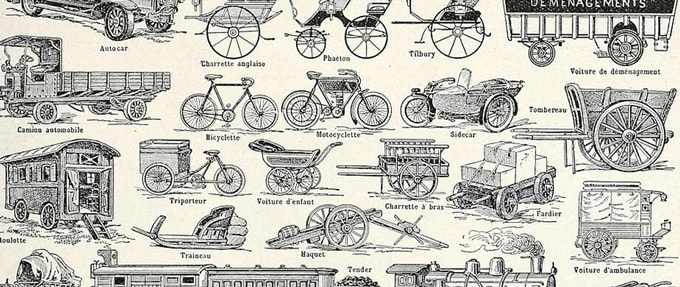

When we talk about technology today, we might be debating views on AI, or lamenting the newest OS update that—for some reason—makes your iPhone overheat.
Often, we don’t think of transportation as technology, except for some supercomputer-burdened cars. For the same reason we don’t call a pen a “machine,” we take run-of-the-mill cars for granted as necessary.
So it comes to be that we live in a world of self-driving cars, always one innovation shy of George Jetson’s jetpack briefcase, rarely questioning how transportation evolved—except to curse the faults of the newest models while yearning for the “good old days.”
But what did we have in those good old days? And why did we get the “upgrades” alongside the truly fantastic advancements?
Here are nine books about the history of transportation, written for history buffs and vintage postcard collectors alike.
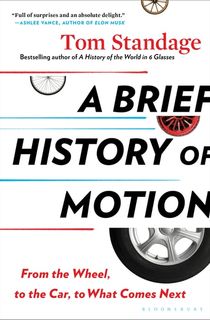
A Brief History of Motion

Tom Standage of The Economist, widely appreciated for his compelling abridgments of history, traces a throughline of human development through transportation.
Starting with the invention of the wheel over 5,000 years ago, Standage covers the eras of literal horsepower, trains, and automobiles, each a precursor to the next, acknowledging how the integration of transit both shaped and was shaped by societal progress.
He also looks at the modern era, tracking how trends like ride-sharing and crises like climate change and COVID-19 have changed society’s relationship with transportation. In his ever-curious fashion, Standage questions where different innovations might have led and where the future of transportation might be heading.
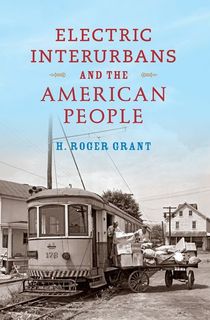
Electric Interurbans and the American People
Not all modes of transportation stand the test of time, as American railroad historian H. Roger Grant explores in Electric Interurbans and the American People.
The legacy of the steam railroad is deeply ingrained in American history post-Industrial Revolution, but the 30-year life of the electric interurban railroad at the beginning of the 1900s has long since fallen into the footnotes.
Grant’s chronicle of this once-essential mode of transportation asks vital questions, including why it saw such a swift boom and bust; why it was thought of as the next greatest investment; how it was supposed to change the lives of farmers, salesmen, commuters, and shoppers; and what the (steam) railroad tycoons thought of this innovation.
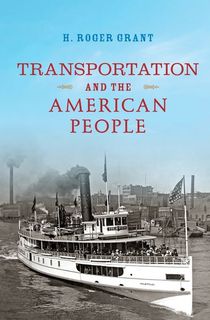
Transportation and the American People
Another of Grant’s explorations, Transportation and the American People, branches out from his usual focus on railroads to create a broader narrative of transportation as essential to American life, from early settlements to the modern era.
Grant chronicles early forms of transportation and the dangers they brought, such as stagecoaches and river vessels heading into undocumented territories.
He traces advancements such as transcontinental railways and later buses that expanded trade and settlement from coast to coast, culminating in the high-speed, reliable modes of transportation we rely on to connect the modern world.
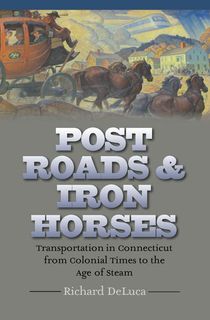
Post Roads & Iron Horses
Historian and transportation engineer Richard DeLuca traces the early history of the colonial Northeast, using maps and historical images to show how transportation advances and their rapid adoption cemented Connecticut as the hub of southern New England.
DeLuca traces the history of American transportation back to early thoroughfares (post roads and turnpikes), water transit (steamboats and canals), and trains (steam railroads and street railroads), exploring how each new mode of transportation expanded the possibilities for colonial towns—and how people in power sought to control them.
Though DeLuca’s book focuses on Connecticut and New England, it tells the story of the origins of American transportation.
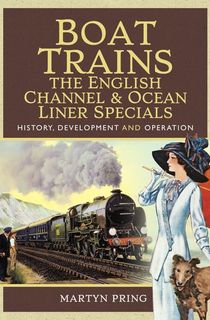
Boat Trains: The English Channel & Ocean Liner Specials
Martyn Pring’s deep dive into boat trains (passenger trains that run to a specific port for the express purpose of connecting to a passenger ship, such as a ferry or ocean liner) is critically lauded for its strong visuals, specifically the vintage travel posters and historical photographs, and for the section on ports forgotten by history.
Covering a period of 125 years—and mostly focused on the United Kingdom—Pring’s exploration of boat trains illuminates the rise and decline of a then-essential mode of travel (and multi-modal travel).
Ultimately, Boat Trains celebrates the interwar golden age of the mode of transportation, examines service changes after WWII, and tracks its decline as travelers turned to personal vehicles and commercial flights.
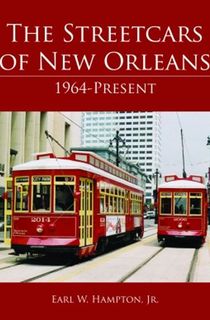
The Streetcars of New Orleans
A member of the New Orleans Railway Association, Earl Hampton provides an extensive look at the history of his beloved New Orleans streetcar.
Hampton’s account of this unique mode of transportation spans 1964 to 2008, instilling in readers a sense of the broader legacy of street railways and an appreciation for the longest-operating street railway line in the world, still in use today.
While Hampton includes technical guides to different streetcar models, he also intersperses hundreds of photographs of the iconic streetcars, ties to pop culture (including Tennessee Williams’s A Streetcar Named Desire), and notable milestones, from lines replaced by buses to restoration efforts after Hurricane Katrina.
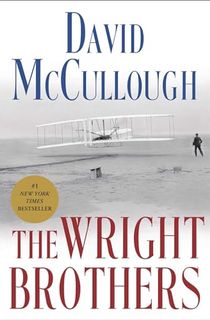
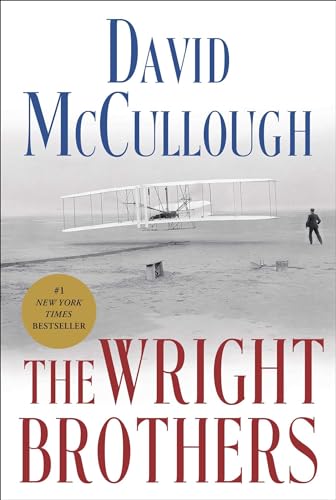
The Wright Brothers
Two-time Pulitzer Prize winner David McCullough brings the exhilarating story of Wilbur and Orville Wright’s 1903 triumph of flight to life.
This biography examines the relationship between the genius brothers, their unquenchable curiosity, and their unflagging determination, thanks largely to the Wright Papers (private diaries and notebooks, family letters, and scrapbooks).
With these primary sources, McCullough humanizes the indefatigable duo through trial and triumph, unraveling a story spanning from childhood to innovation and beyond, and tracing the path the Wright Brothers (and their sister, Katherine) paved for the future of aviation and commercial air travel.
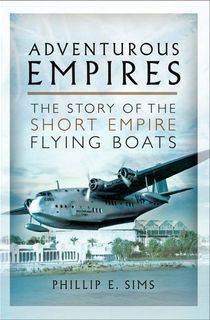
Adventurous Empires
34 years after the Wright Brothers’ first successful flight, another pair of brothers achieved their own milestone: the “flying-boat.” Phillip E. Sims, a British aviation historian and Royal Air Force veteran, chronicles the Short Brothers as they developed the flying-boat airliner—the most successful ever built.
The Short Brothers built 42 Short “Empire” flying-boats in the late 1930s, which carried passengers and mail throughout not just the United Kingdom, but the whole British Empire.
The military adapted the model during WWII as the iconic “Sunderland.” Sims explores the inception of the Short Brothers’ innovation, its widespread deployment, and how one fleet laid the groundwork for scheduled airline operation, a precursor to modern travel.
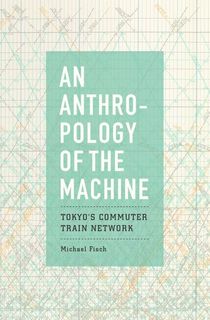
An Anthropology of the Machine
Anthropology professor Michael Fisch takes us to the other side of the world with a creative analysis of Tokyo’s culture and history through the lens of the city’s transportation and commuting. He questions the toll that ever-evolving technology takes on a community for the payoff of the economy and, potentially, sustainability.
First published in 2018, Fish’s account of the maximally efficient transportation system and the ubiquity of technology in Tokyo is regarded as a cold, hard look at our relationship with and reliance upon technology to function as a society and what that means for the future.


