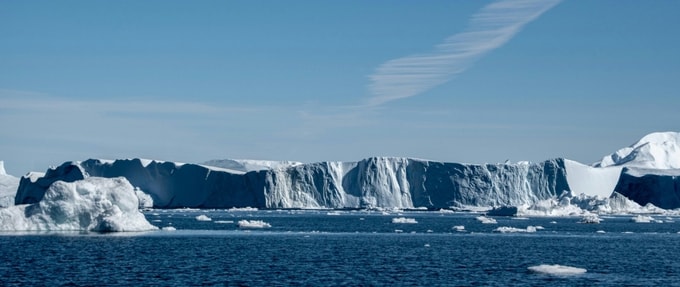

Our understanding of the climate has taken centuries to develop, from the first scientists who measured the air to the climbers who haul ice cores down from the world's highest peaks. Today, that knowledge has the world's engineers, scientists, educators, and communities seeking ways to keep bettering our world.
Whether you're curious about how climate works, how it's changing, or how people are trying to solve it, these gripping texts offer an accessible way in. Some are rigorous, and some are surprisingly hopeful, but all of them will leave you seeing the world around you a little differently.
Here are 10 vital books about climate change.
Losing Earth
By 1979, we knew nearly everything we do today about climate change, including how to stop it. Nathaniel Rich’s New York Times Magazine issue chronicled that decade and became an instant journalistic phenomenon, sparking coverage and conversations worldwide.
Losing Earth now tells the human story of climate change in book form and reveals, in previously unreported detail, the birth of climate denialism and the fossil fuel industry’s coordinated effort to prevent climate policy through misinformation, propaganda, and political influence. The book brings us into the present day and asks crucial questions about how we make sense of our past, our future, and ourselves.
Climate Change For Beginners
Year after year, science continually proves that global climate change is real. But what does it all really mean, and what can or should we do about it?
Leading scientist and educator Dean Goodwin offers a balanced approach to explaining the history of global climate monitoring, change, and how human activity interacts with recent trends in the Earth's climate.
Working from the premise that no one can do everything but everyone can do something, Goodwin challenges readers with accessible experiments to better understand the science behind climate change, and concludes with 50 easy actions readers can take to slow or stop global warming.
Thin Ice
The world's premier climatologist, Lonnie Thompson, has risked his career and life on the highest and most remote ice caps along the equator, collecting ice cores that provide detailed information about climate history dating back 750,000 years.
This narrative follows scientist and expert climber Mark Bowen, who joined Thompson's crew on several expeditions into retreating glaciers in China, across South America, and into Africa to unravel the mysteries of climate. We will learn what Thompson's hard-won data reveals about global warming, the past, and Earth's probable future.
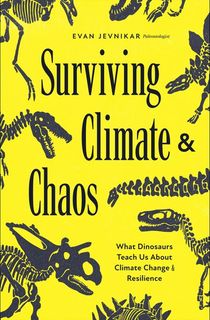
Surviving Climate & Chaos
Dinosaurs played crucial parts in ancient ecosystems, and their patterns mirror what scientists see in today’s rapidly changing world.
Paleontologist and science communicator Evan Jevnikar uses cutting-edge science, fascinating fossil discoveries, and philosophical reflection to explore how the prehistoric past holds critical lessons for understanding modern climate change, extinction, and survival.
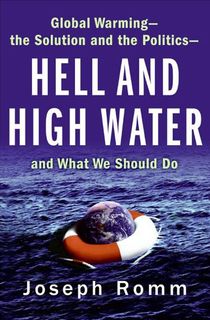
Hell and High Water
Physicist and former U.S. Department of Energy official Joseph Romm goes beyond ideological rhetoric to critique American environmental and energy policy and offer pragmatic solutions to global warming.
"His book provides an accurate summary of what is known about global warming and climate change, a sensible agenda for technology and policy, and a primer on how political disinformation has undermined climate science." —Technology Review
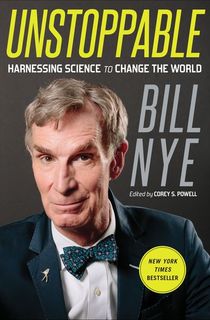
Unstoppable
With a scientist’s quest for knowledge and an engineer’s understanding of what's possible, Bill Nye sees today’s environmental issues as monumental opportunities for innovation and scientific literacy.
Nye debunks some of the most persistent myths and misunderstandings about global warming and calls on rising generations to use science, curiosity, and optimism to tackle the climate crisis.
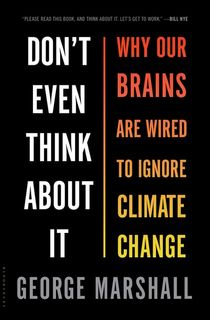
Don't Even Think About It
The founder of the Climate Outreach and Information Network questions the psychological mechanism that lets us know something is true but act as if it isn't. The answer he discovers is that our values, assumptions, and prejudices can gain authority as they are shared and divide people along the way.
Drawing on years of his own research and engaging stories, Marshall finds that once we understand what excites, threatens, and motivates us, we can rethink and reimagine climate change.

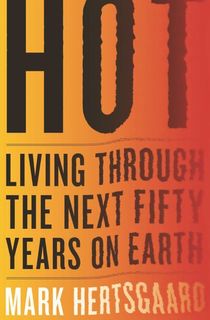
Hot
Journalist Mark Hertsgaard has reported on global warming for The New Yorker, Time, Vanity Fair, and NPR, but only after becoming a father did he begin thinking about the two billion young people worldwide who will spend the rest of their lives coping with mounting climate disruption.
Hertsgaard offers a blueprint for parents, communities, companies, and countries to navigate this unavoidable era, with examples of ambitious, hopeful efforts to mitigate sea-level rise, mega-storms, famine, and other threats.
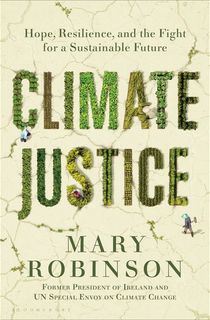
Climate Justice
In 2003, holding her first grandchild, Mary Robinson was struck by the uncertainty of the world he was born into. Before his 50th birthday, he would share the planet with more than nine billion people battling for food, water, and shelter in an increasingly volatile climate.
Mary Robinson’s mission would take her from Malawi to Mongolia, where she would meet ordinary people whose resilience and ingenuity had already unlocked extraordinary change, and she would discover that women, many of them mothers and grandmothers like herself, could be a driving force in the battle for climate justice.
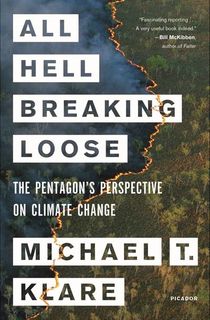
All Hell Breaking Loose
As participants in climate-triggered conflicts abroad and first responders to hurricanes and other disasters on American soil, the U.S. military now sees climate change as a top threat to American national security and is developing strategies to cope with it.
Using previously obscure reports and government documents, security expert Michael Klare shows that the Pentagon is intensely focused on climate change's effects.
Featured photo: Jo Sorgenfri / Unsplash


