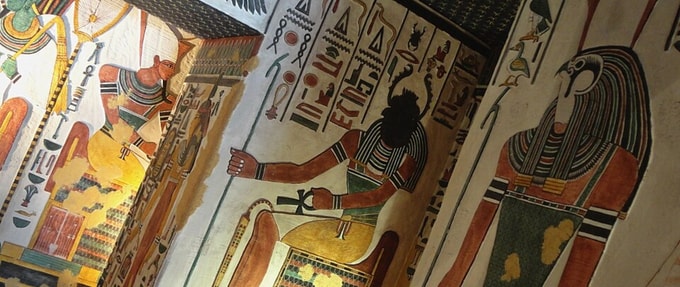

The time that elapsed from the beginning of the ancient Egyptian dynasties to their end is greater than the time that has elapsed from the end of ancient Egypt until now. Yet, how much do most of us really know about this centuries-spanning civilization?
From the Paleolithic communities who first made their home in this “cradle of civilization” to the modern streets of ancient cities such as Alexandria, these books offer essential views into a world long lost, digging far deeper than stereotypical images of mummies and pyramids, and may challenge—and even overturn—your preconceptions about what ancient Egypt was really like…
Here are 10 must-read books about ancient Egypt.
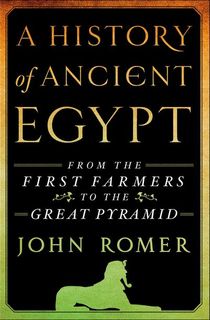
A History of Ancient Egypt
Renowned Egyptologist John Romer led the Brooklyn Museum expedition to excavate the tomb of Ramesses XI in 1979, co-founded the Theban Foundation, and has written numerous books about the ancient world. Perhaps the most comprehensive is this three-part saga that is “scholarly, passionate and exquisitely written” (Sunday Times), providing “an up-to-date, stimulating account of the birth of what may turn out to be the world’s oldest civilization” (Nature).
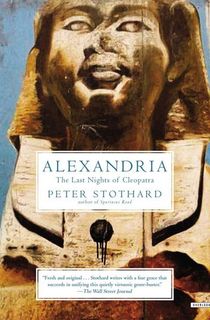
Alexandria
A chance trip to the ancient Egyptian city of Alexandria on the eve of the Arab Spring kicks off this “quietly virtuosic” (Wall Street Journal) book that is part memoir, part travelogue, and part history of the life of Cleopatra and the city she called home, as author Peter Stothard examines his fascination with the Egyptian queen and how it has affected his own life. The result is a one-of-a-kind tome that resists easy compartmentalization.
As Kirkus Reviews says in a starred review, “Don’t try to categorize this book; just read it and let it flow over you.”
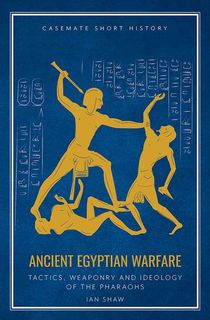
Ancient Egyptian Warfare
At just over 150 pages, “this tiny gem of a book is an engaging introduction to Iron Age combat, covering all manner of Egyptian warfare” (City Book Review). From battle tactics and military strategy to weaponry and even descriptions of common injuries, this short overview of Egyptian warfare is filled with “interesting discussion and cogent observations” (Ancient Egypt Magazine), whether you’re an avid fan of ancient combat or simply curious about what life (and death) was like thousands of years ago.
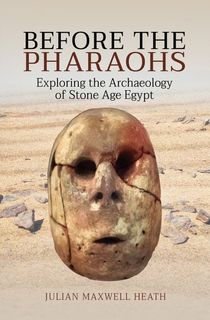
Before the Pharaohs

The history of ancient Egypt spans more than 3,000 years (depending on who’s counting), but even before the earliest pharaohs or kings of Egypt, there were Neolithic and even Paleolithic communities throughout the Nile Valley and Delta. Compared to the many dynasties of pharaonic Egypt, these early inhabitants have been relatively underexamined, and they comprise the focus of this “well-written and informative study of the Egyptian stone age” (Beating Tsundoku) from archaeologist and Egyptologist Julian Heath.
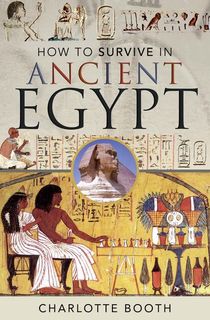
How to Survive in Ancient Egypt
There are countless books about ancient Egypt, chronicling the many dynasties of the Old, Middle, and New Kingdoms, exploring everything from agriculture to warfare and religion to the arts, but there are few accounts that can tell you what daily life was like in ancient Egypt. Enter freelance Egyptologist Charlotte Booth with this unique guide for time travelers that will answer all your questions about day-to-day life in Thebes in 1360 BCE, from the treatment of illness to where people lived, what they ate, and even how they did their hair.
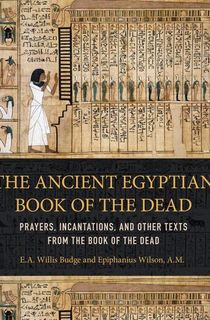
The Ancient Egyptian Book of the Dead
Knighted for his work with the British Museum, E. A. Willis Budge was one of the most decorated Egyptologists of his age, while Epiphanius Wilson was renowned as a translator of ancient and sacred texts. Together, they released one of the most important volumes of ancient Egyptian scholarship, a carefully translated collection of funerary texts and rituals that came to be known as the Book of the Dead and has served as a cornerstone of Egyptology ever since. This is your chance to read it in a beautifully illustrated edition!
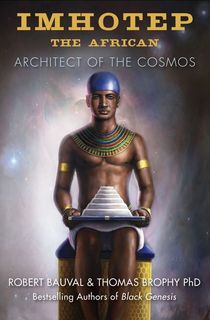
Imhotep the African
In this “archaeological detective story” (Stanley Krippner, PhD), the “dynamic duo of independent Egyptologists” (Anthony T. Browder, Egyptologist) take readers on a tour through ancient Egypt, from the Step Pyramid Complex at Saqqara to the stones of the Nabta Playa and beyond, all centered on Imhotep, an “ancient Egyptian superstar” who was a “pharaonic Da Vinci, Michelangelo, Galileo, and Newton all rolled into one,” with the intention of placing this ancient astronomer, high priest, architect, and philosopher in his proper place in Egyptian history.
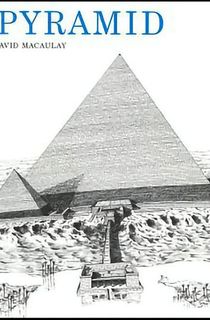
Pyramid
Winner of the Christopher Award and the Boston Globe-Horn Book Award, this “riveting, entertaining, and instructive” (Publishers Weekly) book from the creator of How Things Work provides an illustrated, step-by-step guide to “how the great pharaohs’ burial places were conceived and constructed” (Time). Joining such beloved classics as Castle, City, and Cathedral, Pyramid is “another tour de force” (School Library Journal) from master draftsman David Macaulay.
Temples, Tombs, & Hieroglyphs
Under the pen name Elizabeth Peters, Egyptologist Barbara Mertz writes the popular Amelia Peabody mysteries, following the eponymous archaeologist and Egyptologist in solving perplexing mysteries. In this “stunning” (Publishers Weekly) popular history of ancient Egypt, she shows the true stories behind her winning fiction, in a tour through the ages from Paleolithic settlements to the Roman invasions which ended the great Egyptian dynasties, all told with the same “joyful intellectual excitement” (New York Times) that has made her a bestseller.
Egypt's Golden Couple
Thanks to the celebrated excavation of his tomb in 1922, Tutankhamun has become a household name even into the 21st century, probably the most widely-known of all the ancient Egyptian rulers. Yet his reign was relatively brief, especially compared to that of his parents, as detailed in this “lively and insightful portrait of the ultimate power couple” (Booklist), which “gives us the clearest picture yet of this powerful family” (St. Paul Pioneer Press) in an “accessible study of a consequential period of Egypt’s history” (Publishers Weekly).


