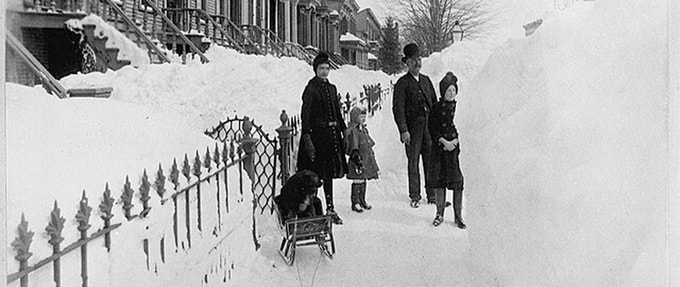
In the wake of Winter Storm Fern, as millions across the U.S. begin to dig out from a 2,000-mile path of ice and snow, the reality of "life-threatening" cold has become more than just a forecast. With temperatures in the Midwest plummeting to 50 degrees below zero and infrastructure struggling to maintain pace with the freeze, the past week has served as a sobering reminder of human vulnerability in the face of extreme meteorology.
But as bad as a modern "deep freeze" feels, history has seen even weirder—and deadlier—winters that practically stopped the world in its tracks. From a "volcanic winter" that literally blotted out the sun to the legendary blizzards that inspired classic horror, these historical events make this weekend’s storm look like a walk in the park.
Relive six of the most catastrophic winters ever recorded and see how they compare to the storms we face today.
The Volcanic Winter of 536 CE: The "Worst Year to Be Alive"
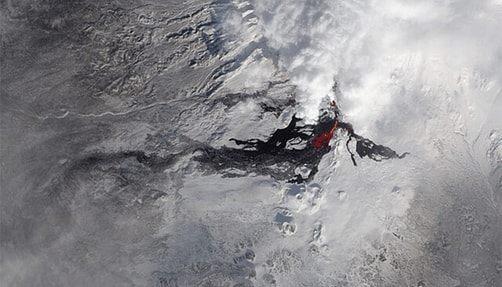
 Photo Credit: Wikimedia
While many point to the Black Death or World War II as humanity's low points, medieval historians often look to 536 CE. A mysterious, "blue" fog descended upon Europe, the Middle East, and parts of Asia, obscuring the sun for 18 grueling months. This wasn't just a gloomy atmosphere; the lack of sunlight caused temperatures to plummet, leading to the coldest decade in 2,300 years.
Modern science points to a cataclysmic volcanic eruption in Iceland as the culprit. The resulting "volcanic winter" caused total crop failure, which in turn ushered in the Justinian Plague. From Ireland to China, people lived in a twilight world of starvation and cold, marking the definitive start of the Dark Ages.
The Great Frost of 1709: When the Baltic Sea Turned to Stone
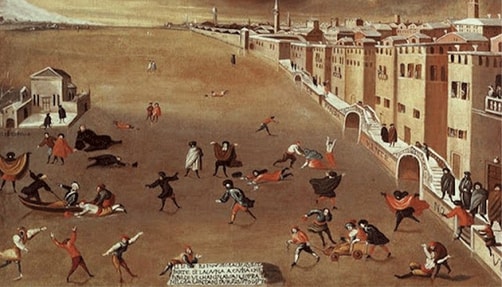 Photo Credit: Wikimedia
The winter of 1709 brought a deep, terrifying freeze that remains the coldest European winter on record. The temperature dropped so low and so fast that trees exploded from the sap freezing inside their trunks, and wine froze in the glasses of Versailles royalty.
The most surreal sight, however, was the Baltic Sea. It froze so solidly that the water became a highway; travelers could walk or ride horses across the ice from Denmark to Sweden. In London, the Thames became a solid block, hosting "Frost Fairs" on its surface. However, the charm was short-lived; the freeze led to the Great Famine of 1709, which claimed hundreds of thousands of lives across the continent.
1816: The Year Without a Summer
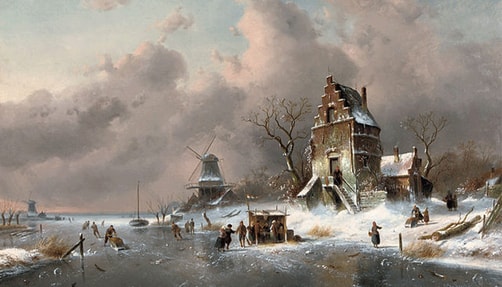 Photo Credit: Wikimedia
In April 1815, Mount Tambora in Indonesia erupted in the largest volcanic event in recorded history. The following year, the northern hemisphere felt the fallout. 1816 became known as "Eighteen-Hundred-and-Froze-to-Death." In June and July, while farmers in New England and Europe expected warmth, they instead faced heavy snowfalls and killing frosts. Food prices skyrocketed, leading to riots and global famine. However, this climate disaster had a strange literary silver lining. Stuck indoors at a villa in Switzerland due to the relentless rain and cold, a young Mary Shelley and her friends held a ghost story contest to pass the time. The result of that gloomy, sunless summer was the birth of her masterpiece, Frankenstein.
The "Black Winter" of 1880–1881: A Siege on the American West
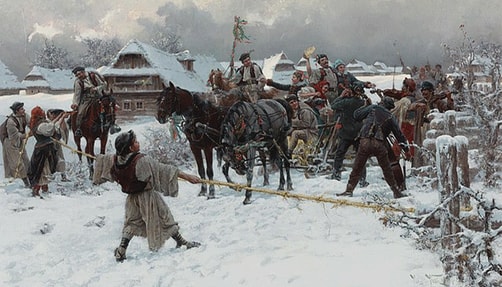 Photo Credit: Wikimedia
For those who grew up reading Laura Ingalls Wilder’s The Long Winter, the details of this season seem like fiction—but they were terrifyingly real. Beginning in October 1880, a series of relentless blizzards slammed the American Great Plains. The snow was so deep and frequent that trains were unable to reach frontier towns for months, cutting off all supplies of food and fuel.
Families were forced to survive by grinding seed wheat in coffee mills to make flour and twisting hay into "sticks" to burn for heat. It was a winter of literal darkness and starvation, where the wind never seemed to stop.
The Great Blizzard of 1888: The "White Hurricane"
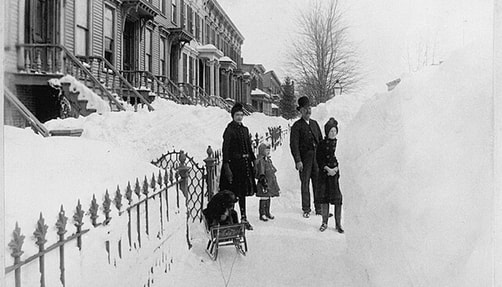 Photo Credit: Wikimedia
In March 1888, the American Northeast was anticipating the arrival of spring. Instead, they were hit by the "White Hurricane." This massive storm dumped up to 50 inches of snow from Maryland to Maine, with winds exceeding 80 miles per hour.
The chaos was most profound in New York City. The city ground to a complete halt as telegraph lines snapped and trains were buried in drifts that reached second-story windows. People were forced to tunnel through the snow just to cross the street. The paralysis of the city’s infrastructure was so severe that it provided the final push for New York to move its transit and telegraph wires underground, eventually leading to the creation of the city's subway system.
The 1972 Iran Blizzard: Nature’s Deadliest Storm
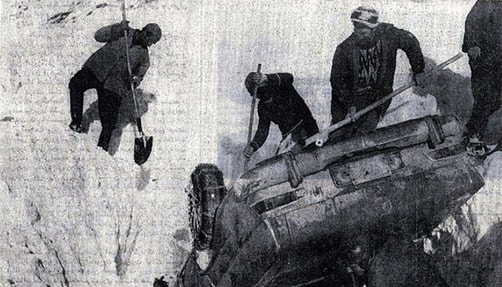 Photo Credit: Wikimedia
While many winter storms are remembered for their economic toll, the 1972 Iran Blizzard is remembered for its staggering loss of life. Over the course of a week, a series of storms dumped over 26 feet of snow across rural Iran.
The scale of the disaster was incomprehensible. In the southern regions, entire villages were completely buried. When rescue workers finally reached areas like the village of Kakkan, they found no survivors; the weight of the snow had crushed homes and suffocated everyone inside. By the time the skies cleared, an estimated 4,000 people had perished, making it the deadliest blizzard in human history.
Featured image: Wikimedia Commons
- Evans, Robert. "Blast from the Past." Smithsonian Magazine, July 2002, https://www.smithsonianmag.com/history/blast-from-the-past-65102374/.
- Hambling, David. “How the Great Frost of 1709 Left England’s Economy in Ruin.” The Guardian, 17 Dec. 2020, https://www.theguardian.com/news/2020/dec/17/how-the-great-frost-of-1709-left-englands-economy-in-ruin
- Little, Becky. “Why Much of the World Went Dark for 18 Months in 536 A.D.” History, A&E Television Networks, 30 Nov. 2018, https://www.history.com/articles/536-volcanic-eruption-fog-eclipse-worst-year
- “Missing Put at 6,000 in Iranian Blizzard.” The New York Times, 11 Feb. 1972, https://www.nytimes.com/1972/02/11/archives/missing-put-at-6000-in-iranian-blizzard.html
- Powell, J. Mark. “How America’s Worst Winter Blew Into a ‘Blizzard’.” Inside Sources, 17 Feb. 2021, https://insidesources.com/how-americas-worst-winter-blew-a-blizzard-into-our-lexicon
- Wroble, Lisa A. “Great Blizzard of 1888.” EBSCO Research Starters, 2022, https://www.ebsco.com/research-starters/history/great-blizzard-1888


