Every two years, something magical happens. Athletes from around the world gather and undergo a series of trials in the hopes of achieving specific times, distances, or scores. They have been training relentlessly for years—with blood, sweat, and tears leading up to this very moment.
If they beat the odds, a lifelong dream will come to fruition: the opportunity to represent their country abroad alongside other talented, dedicated athletes. For nearly 3,000 years, a process very similar to this has happened—although the Olympics look very different today than they did in 776 BC in Ancient Greece. Then, among a host of other distinctions, the sports were limited to summer events, and competed only between men.
Now, one of the leading values of the Olympics is that people from various backgrounds, countries, and places come together, putting aside political strife to compete peacefully. It is a time when not only the athletes going head-to-head but also the world watching, whether in person or on TV, are educated about other cultures and customs through joyful sport.
Although the first Olympics date back to a time when the festival was dedicated to Zeus, the modern Olympics began in Athens in 1896. This revival ultimately set the stage for future progress, even though it would take decades for real diversity among participants and events to emerge.
The idea of the Winter Olympics, complementing the Summer Games, did not become a reality until the 1920s, despite the earlier existence of the Nordic Games. Why were winter sports recognized so late? What led to the expansion of events beyond just skating?
With the 25th Winter Olympics approaching next month in Milan and Cortina d'Ampezzo, Italy, the answers to these questions and more await you as you explore the fascinating history behind this global celebration.
Chamonix 1924: The World’s First Winter Olympic Stage
Although the Winter Olympics are officially recognized as beginning with the 1924 games held in Chamonix, France, another organized international winter sports competition took place earlier. Known as the Nordic Games, this competition involved only athletes from Scandinavian countries and was held every four years in Sweden, beginning in 1901.
Winter events included ski jumping, downhill racing, cross-country skiing, speed skating, hockey, figure skating, curling, and more. All of these sports were included in the Olympics more than two decades later, with more to follow.
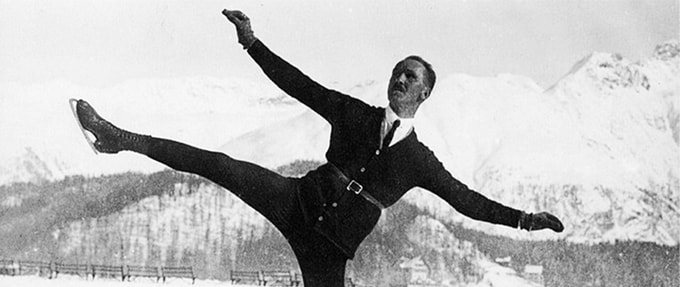
During the 1908 Summer Olympics in London, figure skating was included as an event—although the event wasn’t held until October, months after the conclusion of the other events. Thus, in 1911, Count Eugenio Brunetta d’Usseaux, a member of the International Olympic Committee (IOC), proposed a separate winter competition for the 1912 Games to be held in Stockholm. However, Sweden, with its own successful Nordic Games, declined.
In 1916, Germany, as the host country, planned to hold a Winter Olympics to follow the Summer Games, but when World War I began, both events were cancelled. During the 1920 Olympics in Antwerp, Belgium, ice hockey was included alongside figure skating as an official event, with Canada winning the gold medal, a trend that would continue. Nordic nations dominated the figure skating events, with Swedish skaters Magda Julin and Gillis Graström taking home the women’s and men’s singles competitions, and Ludovika Jakobsson and Walter Jakobsson from Finland securing the gold in pairs.
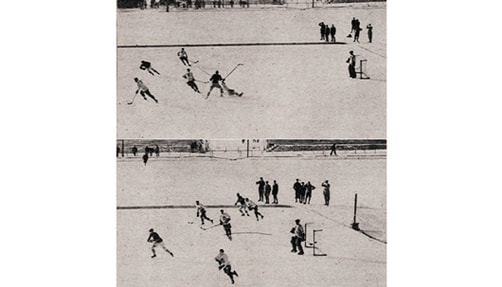

1924 Winter Olympics ice hockey final match, between the United States (in black) and Canada.
Photo Credit: Wikimedia CommonsSoon, though, the Scandinavians agreed to be involved in the IOC-led International Sports Week. Thus, on January 25th, 1924, 16 countries gathered in Chamonix, in the French Alps, for the first Olympic Games held on snow. Among the participant countries were those already with major winter sports, including the United States, Canada, Finland, Norway, and other European nations, such as France, Austria, and Great Britain. Roughly 250 athletes participated in 16 events—only 11 were women, who were allowed to compete in figure skating.
Norway took the lead, securing 17 medals and winning all but one of the nine skiing competitions, helping boost attention to the sport in the following decades. While Finland came in second, the United States and Great Britain tied for third on the podium, with one gold medal secured by American Charles Jewtraw in the 500-meter speed-skating event. Altogether, the Scandinavian countries were awarded 28 of the 43 medals and thus dropped their previous aversion to the games.
Over 10,000 spectators paid for admission, making the week a huge success. In 1928, the IOC decided to make it a recurring event, as its Summer counterpart, and the second Winter Olympics were staged in St. Moritz, Switzerland.
Growing the Legacy: Winter Olympic Evolution and What’s Next
After the 1928 Winter Games, the Olympics were held every four years. During the same calendar year, both Winter and Summer events would take place. Only in 1986 would the 91st IOC propose altering the schedule due to rising costs and demands on the host country.
Therefore, only two years separated the 1992 Winter Olympics, held in Albertville, France, from the 1994 Games in Lillehammer, Norway. From then on, the Winter and Summer Games operated on a quadrennial schedule, with the events swapping in even-numbered years. Since the first Winter Olympics in Chamonix, the Games have been held 24 times, across North America, Europe, and Asia. Every four years, the host country opens its arms to athletes and visitors from around the world.
While the first edition in Chamonix featured five sports, the most recent Winter Games, held in Beijing in 2022, included seven sports, 15 disciplines, and 109 medal events. The 15 disciplines include alpine skiing, bobsleigh, figure skating, ice hockey, luge, and speed skating—just to name a few. Those disciplines were further divided into events: 51 for men, 46 for women, 11 mixed events, and one open event.
In terms of the number of events, the Winter Olympics are much smaller than the Summer Olympics, although sports have been added over the years. During the 2014 Sochi Games, twelve new events were added, including slopestyle and women’s skiing, while during the 108 PyeongChang Games, big air snowboarding, team alpine skiing, mass start speed skating, and mixed doubles curling were included.
At the Beijing Games, women’s monobob, men’s and women’s big air freestyle skiing, and new mixed-team events were introduced, providing more opportunities for athletes, regardless of gender, to compete alongside one another. This year, eight new events will be added, underscoring the Games' continued evolution.
For a sport to be recognized, whether it's a winter or summer activity, the event must be recognized by the IOC. From there, it proceeds through a series of other checkpoints, including whether the sport has already been competed at the international level and compliance with the World Anti-Doping Code. Overall, the acceptance of a sport on the Olympic Games roster is primarily within the IOC's purview.
In a year marked by conflict and division worldwide, the need for unity has never felt more urgent. The Olympics are, to many, a beacon of hope—bringing people together from every walk of life. Regardless of one’s background, status, or homeland, these Games invite us all to celebrate what unites us: a shared passion for sport and the spirit of friendly competition.
Featured image: Wikimedia Commons


