Lady Jane Grey, otherwise known as the nine-day queen, lived an incredibly short, tumultuous life. Only reluctantly did she agreed to assume the British throne after the death of Edward VI—it is said she fainted when the idea was first brought to her. Only 15 at the time, she was the ultimate product of forces around her—used as a pawn in a larger political agenda.
For centuries, her story has pulled new audiences into the tragedy of her life, inviting reinterpretation. Was she an innocent victim or a martyr, dying for a cause dear to her heart? With little evidence to back either interpretation, all that we are left with are the pieces—of a young girl put to death for reasons beyond herself.
Life Before Tragedy
Born sometime in the fall of 1537, Lady Jane Grey was the eldest daughter of Lady Frances and Henry Grey, 3rd Marquess of Dorset. Jane was born into a high-status, in fact, her mother was directly related to the royal family, as the daughter of Mary Tudor, Henry VIII's youngest sister.
She is routinely described as very intelligent and beautiful. Growing up, she was taught classical languages such as Greek, Latin, Hebrew, French, and Italian at home. Through her father and extensive tutors, she was introduced to Protestantism. Jane latched onto the faith and became increasingly dedicated.
Preferring reading philosophers over playing sports outside, Jane once said: “I wist all their sport in the park is but a shadow to that pleasure that I find in Plato. Alas, good folk, they never felt what true pleasure meant.’
Still, Jane was ushered into society and sent by her parents to play with her cousins, Princess Elizabeth and the future King Edward. Not only were these connections seen as beneficial to Jane in securing a future, high-ranking husband, but they also reflected well on her parents as they grappled for social influence. Once Lady Jane’s father was anointed Duke of Suffolk, previously known as the Marquess of Dorset, in October 1551, she was routinely seen at the royal court.
The Issue of Religion
Religion was an issue deeply intertwined with the Tudor era. In 1534, Henry VIII, who famously had six wives during his lifetime, severed his ties with the Roman Catholic Church in favor of Protestantism to ultimately annul his marriage to Catherine of Aragon. When Henry died in early 1547, the throne passed to his son, Edward VI. The order of succession decreed that should Edward die before having children, the throne would belong to Henry’s eldest daughter, Mary.
However, Mary was Catholic, and Edward’s advisers—particularly John Dudley, Duke of Northumberland—were concerned England would return to Catholicism, should Mary take the throne. Additionally, Edward wanted his successor to be a male Protestant, and none of his sisters or cousins had yet produced a male heir.
Thus, his half-sisters, Mary and Elizabeth, were disinherited from the throne—Mary due to her Catholicism, and Elizabeth on the pretext that she might marry a foreigner. All of this begged the question—who would be the heir? That's when Lady Jane, a dedicated Protestant, came into the mix.
Soon, the king’s health took a turn for the worse when, in 1553, a cold developed into a serious lung ailment, today believed to be tuberculosis. Before his death in July, Edward designated Jane as his successor in his “Devise for the Succession.” She would reign as queen, but the crown could only pass to a male heir, as outlined by Edward. Although the king or queen had every right to change their will, any shifts in succession had to be approved by parliament.
Since Parliament was not in session, Northumberland, on the king's behalf, located as many participants as possible and asked them to sign the document. Thus, the document was not wholly legal and would likely have been disapproved if debated in session.
There is still some uncertainty around whether the king wrote the new will or whether Northumberland prepared it and simply urged Edward to sign it. Regardless of its origins, Northumberland concocted a plan between the penning of the Devise and Edward's death—a marriage between his youngest son, Guildford, and Jane.
A Doomed Marriage
The 1986 film Lady Jane, starring Helena Bonham, portrays the relationship between the queen and her husband as something romantic and ill-fated. In reality, there was much more complexity to the union, particularly concerning how they were brought together.
At the time of their marriage, on May 25th, 1553, Guildford Dudley was likely only a little older than Jane, who was sixteen. He was the fourth son of the Duke of Northumberland, although little is known of Guildford’s upbringing. What’s certain is that, like Jane, he was raised as a Protestant.
There is no evidence to suggest that Jane and Guilford knew each other before they were married, although it’s probable they met during visits to court. The first to propose the union is said to be Elizabeth Brooke, Marchioness of Northampton, who was a friend of Jane’s parents.
However, Jane’s parents had raised their daughter to be proud of her royal blood and were convinced that she would eventually marry her cousin, King Edward. But at the time Northumberland came to them with the marriage offer, Edward was on his deathbed. Her parents agreed, and Jane was betrothed.
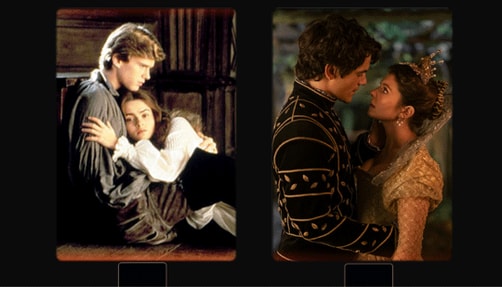
 Photo Credit: Paramount Pictures and Prime Video
Jane, who had been raised in line with her royal status, was extremely opposed to the marriage—and made her feelings clear. She pleaded not to be married, but it was too late. They were wed in a lavish ceremony at Northumberland’s house on the Strand, Durham Place. At this point, Edward was too ill to attend the ceremony, though he paid for all the clothes worn by the wedding party, signalling his approval of the union.
There is no way to know how close a bond Jane and Guilford formed or whether they even lived harmoniously, as modern depictions so often portray. Nonetheless, when Edward died on July 6th, Jane was named heir and entered the Tower of London four days later. She was publicly proclaimed queen, and Guilford was by her side.
When Jane was presented with the royal crown, the Lord Treasurer further promised her that there would be another made for her husband. Jane refused to make Guilford king, however, although it seems he had expected to be crowned, likely at the words of his father.
Guilford was made a duke, not a king, and although he was upset, he could do nothing. Jane was his queen, and he had to obey. Still, she was also his wife, and the pair would soon learn what "till death do us part" means…
Sealing Her Fate
As quickly as Jane’s reign began, it was over. Her cousin Mary, the eldest daughter of Henry VIII, demanded to be queen. John Dudley, Duke of Northumberland, assembled a small army to capture her. He grossly underestimated the support behind Mary, as she quickly gathered an even larger army, forcing Dudley to quickly retreat.
Even before Dudley returned to London, the Council had moved in favor of Mary. On July 19th, 1153, Mary was proclaimed queen and Jane was deposed. Jane and Guilford, left alone by a court in frenzy, became prisoners, moving a short distance from the Royal apartments to the prison lodgings in the Tower.
Kept separately, it is unlikely the couple ever saw each other in the following months, until their trial. There, side by side in Guildhall, they pleaded guilty to treason and were both sentenced to death, but Queen Mary made it clear she had no intentions of executing her cousin. The Duke of Northumberland, though, was executed at Tower Hill.
If not for an uprising that began on January 1544, it is likely that Jane would have lived out a long, albeit lonely, life in prison. With Mary’s deep-founded Catholicism and her plans to marry the hated Philip II of Spain, she had become very unpopular across England. Wyatt’s Rebellion was instigated with growing dissatisfaction in mind, and some rebels further called for Jane to be restored to the throne. Jane's father, Henry Grey, was involved in the uprising, adding fuel to the fire.
It was clear, then, to Mary that as long as Jane lived, her reign would not be accepted. The assurances of the Spanish ambassadors urged that Philip would not marry her as long as Jane and Guilford lived also swayed her hand. Therefore, the execution of the couple was ordered in early February 1554.
Jane was completely unaware of the rebellion and was only made aware of her father’s involvement after the fact. It is said that Mary offered Jane a chance at survival by asking her to renounce her Protestant faith in favor of Catholicism. But Jane refused, as she was a very staunch Protestant.
As her time approached, Jane wrote many letters, many offering comforts and assertions of faith. Shortly after, they would be published, making her the first female author whose spiritual letters were available in print in England.
The night before their execution, on February 11th, a contemporary noted that Guilford asked for one last meeting with his wife—suggesting, at the least, a level of care for Jane. She, however, denied his request, stating that their meeting would do nothing but make them more upset, and that, soon enough, they would be reunited in heaven, to “live bound by indissoluble ties.”
On the morning of the execution, Guilford would be taken first, and from her window in the Tower, Jane saw her husband alive for the last time. When they brought his remains back inside for burial, she screamed out, “Oh Guildford, Guildford!” The reality had settled—not only was her husband dead, but she, too, would face the executioner’s axe.
All in all, the marriage lasted only nine months. They weren’t killed for their own ambitions—but rather those of their parents.
Lasting Impact
The 2024 Prime Video adaptation, My Lady Jane, imagines a life in which Jane wasn’t sentenced to death, but rather lives out the rest of her youth as a wild, ambitious young woman. Although not at all historically accurate, such tellings can be very fulfilling.
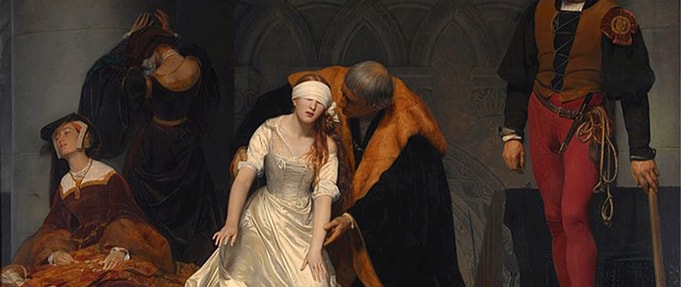
To many women, the painting depicting Lady Jane’s execution by Paul Delaroche (see header image) has become a symbol of women’s plight. Completed in 1834, it’s a heartbreaking portrait—a teenager beheaded for a crime so beyond her control. In the painting, although not historically accurate, Delaroche imagines her final moments, when she asks, "What shall I do? Where is the block?”
Guided towards the spot where she will rest her head by Sir John Brydges, the Lieutenant of the Tower, the executioner casts his head down upon the grim scene. At the back of the painting, her ladies in waiting are distraught, one of them slumped to the ground with Jane’s outer clothing.
Jane, at the center of the painting, is covered head to toe in a shimmering white gown, almost taking on the shape of an angel. Although the execution took place outside, they are placed inside, with dark, gloomy architecture seemingly closing in upon Jane—thereby emphasizing not only the spectacle but also the scene. A girl, barely a woman, sentenced to death.
Featured image: Paul Delaroche / Wikimedia Commons


