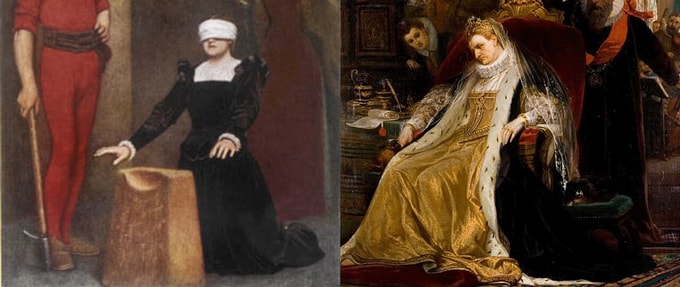
Rather than being a smooth line of progress, history is often fueled by rivalry and opposition. The most explosive and dynamic changes in human history—in politics, art, science, and culture—did not begin with peaceful alliances. They began with tension so colossal it threatened to tear apart the established order, demanding that something new and irreversible rise from the ashes.
We often remember the winners, but it is the intensity of the conflict itself that often leaves the most ineradicable mark. A feud, unlike a wide-scale war, is personal. It’s a zero-sum game of ego between two forces, who often have the power to alter the course of history.
From two queens locked in a fatal, decades-long game for a single crown, to the clash of ideologies that defined the American political landscape, to rap titans whose lyrical war dictated the course of modern music—these were not merely petty spats, they were world-shaping events.
The conflicts on this list curated a cultural blueprint that subsequent generations would follow. Prepare to dive into the legendary, often tragic, and undeniably captivating stories of seven rivalries that permanently sculpted the world we live in.
Elizabeth I and Mary Queen of Scots
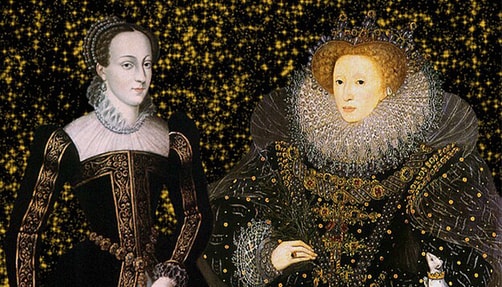
 Photo Credit: Wikimedia Commons
The feud between Elizabeth I and Mary Queen of Scots was a high-stakes, decades-long battle for survival that became the defining royal drama of the 16th century. It pitted cousins, monarchs, and rivals against each other in a geopolitical chess match that threatened to tear the very fabric of Britain apart and irrevocably alter the course of the Protestant Reformation.
While the rivalry was intense, it’s crucial to recognize the complexity of their power: both women acted as absolute rulers in a rigidly patriarchal society. As Smithsonian Magazine notes, their lives "amounted to more than either their relationships with men or their rivalry with each other." Elizabeth I and Mary Stuart's tragic, intertwining fates secured the future of the Anglican Church and concluded with Mary's infamous execution.
The conflict solidified the image of Elizabeth as the "Virgin Queen," the ultimate self-sacrificing monarch, a legendary figure whose shadow still dominates film and literature today.
Alexander Hamilton and Thomas Jefferson
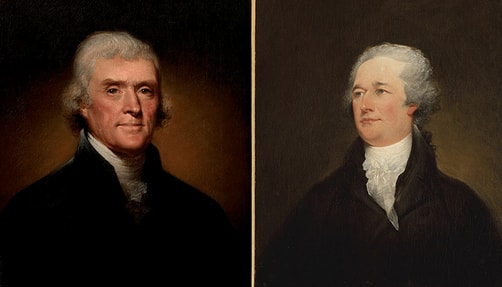 Photo Credit: Wikimedia Commons
 This was the ultimate battle of ideologies that defined the fate of America. As members of George Washington's first cabinet, Hamilton’s vision of an industrialized federal government clashed directly with Jefferson’s ideal of a states-rights-centric democracy. Their personal and policy disagreements, over the national bank, debt assumption, and foreign policy, weren't just disagreements; they were a fundamental, constitutional war for the foundation of the young republic.
Hamilton and Jefferson's political war formalized the two enduring political philosophies in America, leading directly to the formation of the Federalist and Democratic-Republican parties. Their opposing views on the necessary strength and scope of the central government remain the invisible fault line running beneath many major political debates in U.S. history today. As John Ferling writes for TIME: “Their opposing visions wind like the twin strands of DNA through American history.”
Van Gogh and Gauguin
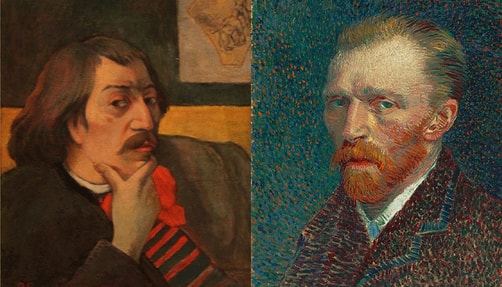 Photo Credit: Wikimedia Commons
Vincent van Gogh and Paul Gauguin’s partnership in Arles in 1888 began with big ambitions: Van Gogh hoped to build an artist commune, and Gauguin agreed to help him bring it to life. But their clashing temperaments and artistic philosophies quickly turned their 63 days together into a volatile mix of creativity, intensity, and mounting conflict. As art historian Bradley Collins explains, “You have to see the ear cutting in the context of the relationship with Gauguin, and van Gogh redirecting some of the anger he felt toward Gauguin toward himself.”
Everything came to a breaking point on December 23, 1888, when a fierce argument ended in the infamous ear-mutilation incident. Gauguin left Arles immediately, and the two never saw each other again. Their split remains one of art history’s most dramatic ruptures, acting as a cautionary tale surrounding creative collaboration, ego, and mental health. And its impact lingers today, shaping how we talk about artistic genius and reinforcing the enduring cultural myth of the “tortured artist."
Gore Vidal and Norman Mailer
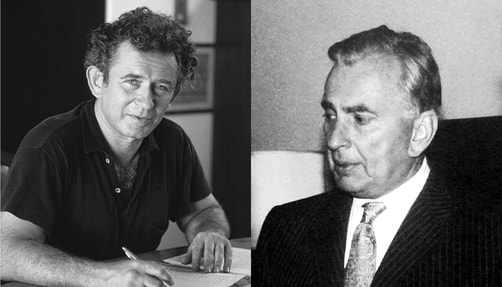 Photo Credit: Wikimedia Commons
Gore Vidal and Norman Mailer, two of mid‑20th century America’s most outspoken writers, shared a complicated mix of respect and rivalry. Their feud reached its peak in the 1970s, after Vidal’s sharp critique of Mailer’s work on the women’s movement, culminating in public and physical confrontations, famously at a New York apartment party, where Mailer threw a drink in Vidal’s face and struck him. As Jay Parini details for The Guardian, “This confrontation… became emblematic of an age when literary lions roared at each other.”
Though they later softened their rivalry, the Vidal–Mailer clashes remain a defining moment in literary culture. Their battles highlighted the drama of public intellectual life and the intense egos behind great art, showing how personal conflict can shape cultural conversation and legacy.
Muhammad Ali and Joe Frazier
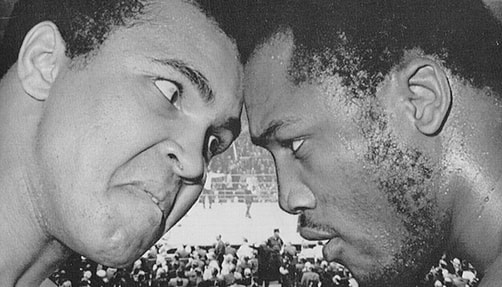 Photo Credit: Wikimedia Commons
No feud in sports history transcended the ring quite like the rivalry between Muhammad Ali and Joe Frazier. It was a conflict that divided a generation, amidst the cultural turmoil of the Vietnam War. While their trilogy of fights were brutal, defining athletic contests, their verbal war turned their personal animosity into a racial and political moment in history.
As Kieran Mulvaney writes for History.com, the conflict "was more than just a sanctioned combat between two men: it became a proxy battle for a divided nation.” Ali, representing the counterculture and civil rights radicalism, relentlessly taunted Frazier as a tool of the system, while Frazier, who had supported Ali during his exile, felt betrayed by the personal attacks. The "Thrilla in Manila" remains the benchmark for sporting intensity, but the deep psychological scars left by their feud lingered long after the final bell, continuously overshadowing boxing matches since.
Biggie Smalls and Tupac Shakur
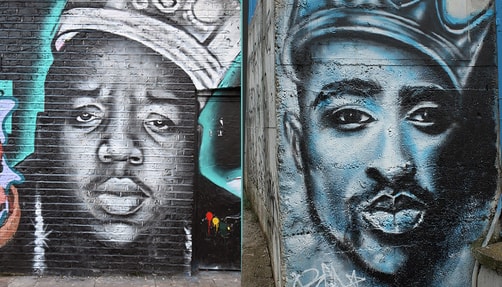 Photo Credit: Wikimedia Commons
What began in the early 1990s as a budding friendship between two of hip-hop’s most talented voices quickly morphed into one of music’s most infamous rivalries.
Everything changed after the 1994 shooting of Tupac outside a New York studio, an incident he believed Biggie or members of his camp had foreknowledge of (Biography). The growing mistrust triggered a fierce East Coast vs. West Coast clash, one defined by diss tracks, label rivalries, and escalating tension. In the end, both rappers were killed in separate drive‑by shootings, events that eerily remain unsolved.
The Tupac–Biggie feud wasn’t just a music industry spat. It became a cultural turning point. Their rivalry turned hip‑hop into a battleground for regional identity and industry power. Even decades later, their story continues to shape how we understand fame and rivalry in the world of music.
Tonya Harding and Nancy Kerrigan
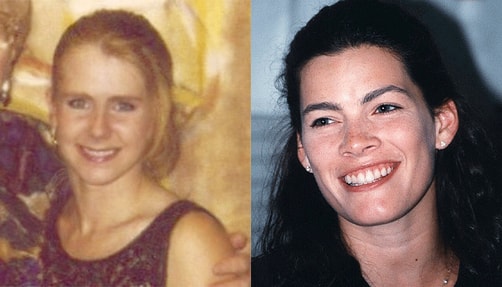 Photo Credit: Wikimedia Commons
In a sport prized for its grace and poise, the 1994 attack on figure skater Nancy Kerrigan exposed a dark, brutal underbelly of ambition. This rivalry between Kerrigan and Harding exploded into a worldwide scandal that was part sports crime, part true-crime spectacle.
The attack, orchestrated by Harding’s ex‑husband, was part of a plot to eliminate Kerrigan from competing so Harding could secure a spot in the upcoming national championships. Despite the trauma, Kerrigan recovered in time for the Olympics and won silver; Harding’s U.S. title from the national championships was later revoked, and she was banned from competitive skating after pleading guilty to conspiring to hinder prosecution.
The Harding–Kerrigan scandal became a global media spectacle and forever changed public perception of sports rivalries. The event linked their names in a tragic narrative of fame and envy, becoming a major cultural touchstone on class and media exploitation.
Featured image via Wikimedia Commons.


