“Frank Lloyd Wright” is a name often thrown around while discussing the aesthetics of the last century, alongside terms such as “art deco,” “mid-century,” and “postmodernism.” Wright, though, was a pioneer of two other architectural styles: prairie style and organic architecture.
The most notable—and likely the most widely recognized—of his organic designs is Fallingwater, a 1930s home in Pennsylvania. If that name doesn’t conjure any images, consider instead the Guggenheim Museum in New York City, one of his last creations.
Wright’s legacy endures not only in 20 UNESCO World Heritage Site designated structures, but also in his namesake foundation and in the work of his son, Lloyd Wright, his grandson Frank Lloyd Wright, and the hundreds of architects trained through his Taliesin Fellowship, the school of architecture named for his beloved home.
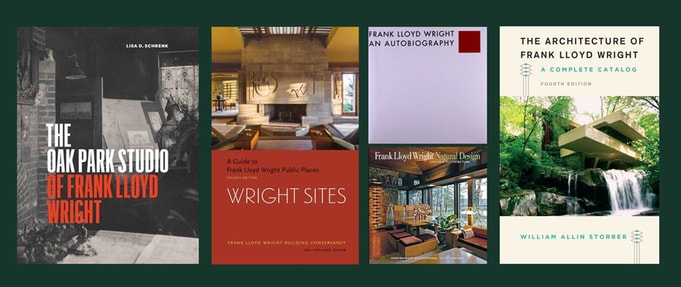
Here are 10 books exploring Wright, his influences, his creations, and his theories on architecture.
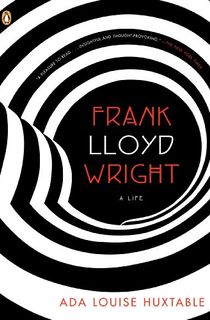
Frank Lloyd Wright: A Life
Pulitzer Prize-winning architecture critic Ada Louise Huxtable gives an account of Wright’s life, work, and legacy in this biography of a complex man. She explores how Wright changed the medium of architecture to be not just about buildings or decoration, but to be about accommodating the evolution of the American family and reintegrating humanity with nature.
Huxtable writes to reconcile this set of philosophies with life Wright lived outside of his blueprints, including his personal relationships and their many scandalous and tragic ends. She creates a portrait of a complicated figure whose private life never quite manifested the harmony he sought in his designs.
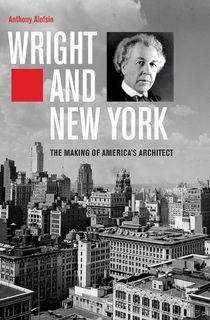
Wright and New York
The first to delve into the previously-sealed Wright archives at Columbia University and the Museum of Modern Art, architect and art historian Anthony Alofsin contextualizes Wright’s impact on New York City, and perhaps the impact of the city on the man in return.
Alofsin’s research details how Wright leveraged his circumstances to elevate his career, even as the city he had loathed as an “unlivable prison” post-WWI and an antithesis to his work in the midwest and the desert provided the opportunity for his most iconic structure.
At the end of his life, Wright lived in New York to complete the Guggenheim Museum, which solidified his place in history as possibly the greatest architect of the 20th century.
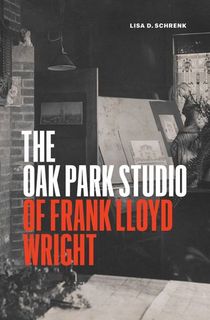
The Oak Park Studio of Frank Lloyd Wright
An inside look at Wright’s studio from the turn of the last century, architectural historian Lisa Schrenk’s account of how the studio grew and developed as Wright and—surprisingly—other architects designed new worlds from within. Here, Wright cultivated and refined his design ideology (including the prairie house, an intrinsically American concept).
Schrenk explores how the suburban setting and proximity of Wright’s family affected his work, and how Wright became a leader rather than just a colleague during his years in the Oak Park studio. She also documents the evolution of the site over time, including its second life as a historic house museum.
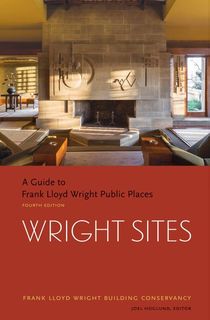
Wright Sites

Joel Hoglund, a founding member of the Frank Lloyd Wright Building Conservancy, contributed a new introduction for the latest edition of this collection, updated for Wright’s 150th birthday to include 20 new sites and updated information on the existing entries. It is also the first edition of the book to include color photographs.
More of a guidebook to Wright’s work, Wright Sites details Wright’s buildings that are open to the public in both the United States and Japan, going so far as to provide itineraries for road trips for die-hard Wright fans to inform their pilgrimage.
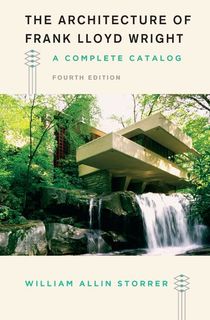
The Architecture of Frank Lloyd Wright
Considered the only complete guide to Wright’s structures, the latest edition of William Allin Storrer’s collection includes full addresses (and GPS coordinates) of all of Wright’s known built work, including sites rediscovered since the publishing of the previous edition.
This catalogue also provides a chronology of these structures and the most efficient routes to see each one, so readers who remain enamored by Wright’s designs can track the progression of his designs without losing time hunting them down. It even contains color photographs detailing the edifices that have remained more-or-less the same as they were when they first built.
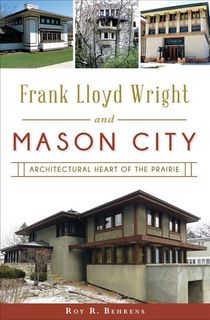
Frank Lloyd Wright and Mason City
Born in the Midwest, it’s no surprise that Wright’s designs and philosophy grew out of the regions closest to home. In the early 1900s, his designs for Mason City, Iowa’s City National Bank and Park Inn changed the face of midwestern architecture and turned a small prairie community into an internationally revered architectural site.
Between these and his first-iteration Stockman House, Wright had launched the “Prairie School” style of architecture. Design historian Roy Behrens recounts the history of Mason City’s transformation from small town to architectural hotspot, chronicling the community from the Industrial Revolution through Wright’s indelible imprint on its landscape.
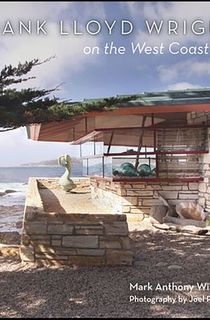
Frank Lloyd Wright on the West Coast
In the first half of the 20th century, Wright designed 38 structures that trace the West Coast from Seattle to Southern California. These designs include the Hollyhock House in Los Angeles, which has served as a residence, an art museum, private gallery, and historic house museum over the last century, and has been designated a UNESCO World Heritage site.
Architectural historian Mark Anthony Wilson and photographer Joel Piliatti compiled the first printed collection of Wright’s West Coast, along with each site’s development, history, and restoration.
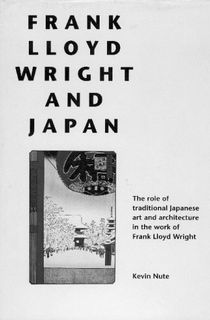
Frank Lloyd Wright and Japan
Architect and professor Kevin Nute provides the first detailed account of Wright’s fascination with, admiration of, and debt to Japan and Japanese art. Though he was revealed as a prolific collector and trader of Japanese prints decades after his death, Wright began a relationship with Japanese art in the early 1900s, even publishing his own essays on interpretation of Japanese prints.
Nute details eight primary Japanese influences on Wright, from individual prints to people and publications, citing each and its impact on Wright’s work and architectural philosophies. Through comparisons between Wright’s output and his influences, Nute draws a clear path from the architect’s inspiration to his designs.
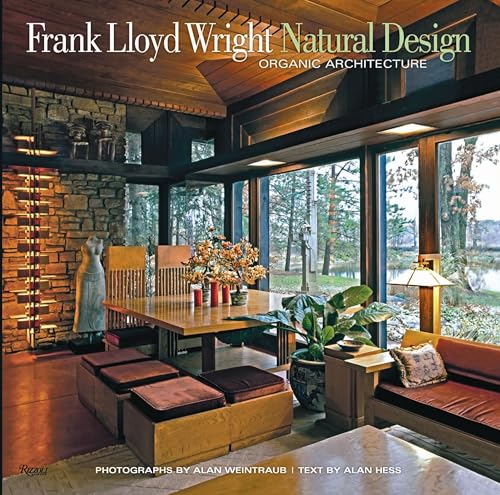
Frank Lloyd Wright: Natural Design, Organic Architecture: Lessons for Building Green from an American Original
In addition to promoting the philosophy of organic architecture (building people and residence into or as close to nature as possible), Wright was also a pioneer of what we would call “green living” or “eco-friendly” design. Alan Hess writes of Wright’s work as eco-sensitive, a clear predecessor of today’s green movement. He details Wright’s development of design around a sensitivity to environment, sustainability, adaptability, and livable space.
The book explores aspects of Wright’s designs that are nearly a century ahead of their time as far as sustainability features go, such as passive ventilation, passive use and diffusion of natural light, thermal massing, and environmentally-sensitive landscaping.

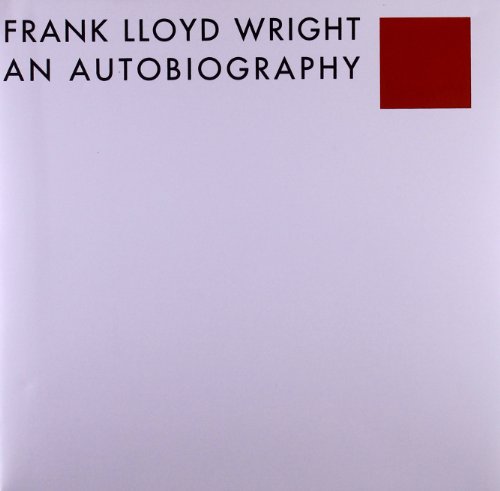
Frank Lloyd Wright: An Autobiography
Read an account of Wright’s life, work, and theories, penned by the man himself. Wright published the first edition in 1932, before some of his most iconic designs were constructed and over 25 years before his death.
In a work that became a calling-card for his Taliesin school of architecture (later and more formally, the Taliesin Fellowship), Wright details his early life; his first apprenticeships; his scandalous, tragic, and often headline-making personal life; and reflections on both his philosophies of architecture, rooted in nature and efficiency, and what he considered his greatest achievements—all recounted with singular charisma and wit.