
If you’re planning a trip, there are countless tourist guides and travelogues that you can turn to. While these may tell you of places you can go and what facilities, amenities, and sights await you there, they are rarely inspiring.
If you’re looking for a book that will instill in you the itch to travel—to walk strange roads, see new sights, and experience the history and culture of the places you visit—these eight books will more than fit the bill…
The Appian Way
At one time, the Roman poet Statius called the Via Appia the “Queen of Roads.” It ran from the center of ancient Rome to the very heel of Italy, and it was walked by untold numbers of soldiers, merchants, travelers, and pilgrims.
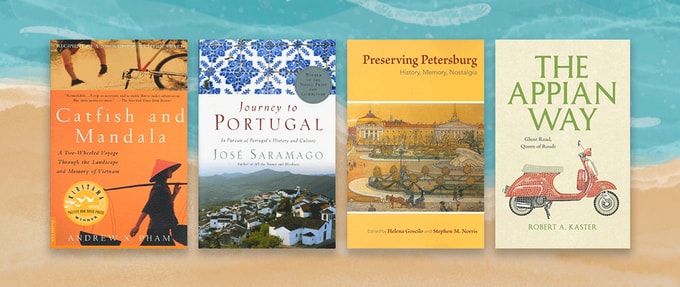
Today, the Appian Way is gone, but a modern seeker can still trace its ghost and, by doing so, the history of a lost empire. That’s what Princeton University professor of classics Robert A. Kaster does in this “delightful, literally lightweight book” that takes readers on an “engaging journey” (Times Higher Education).
Tracing both the history and the present of this ancient roadway, The Appian Way is a “wonderful preface for any traveler planning an outdoorsy day in Rome or, especially, a trip through southern Italy” (Library Journal).
Crossing the Heart of Africa
Crossing the Heart of Africa sounds like something from out of a turn-of-the-century adventure novel, but the tale of British explorer Ewart “the Leopard” Grogan really happened. Faced with perhaps his most daunting challenge, Grogan had fallen in love, but had to prove himself to the aristocratic father of his would-be fiancée.
He resolved to do so by becoming the first white man to cross the length of Africa, from Cape Town to Cairo. In this award-winning travel memoir, journalist Julian Smith sets out to recreate Grogan’s 1898 expedition, crossing 4,500 miles of Africa.
Smith shows the continent’s beauty and danger in both big and small ways, resulting in “an insightful and often uproarious romp” that reveals “a modern continent going through constant change” (Boston Globe; Booklist).
Journey to Portugal
In a “literary hybrid” of cultural history, literary nonfiction, travelogue, and memoir, award-winning author Jose Saramago explores his own homeland in a “monumental work” (Publishers Weekly).
Hailed as a “page-turner” by Travel & Leisure, Saramago travels the length and breadth of his native land—exploring Portugal not as a tourist, but as someone fascinated by history, by people, and even by the legends of the region.
His unmistakable literary voice won him the Nobel Prize for literature in 1998, and in Journey to Portugal, it is that same “personality that makes the book worth your while," in a tale filled with “observances both wry and soulful” (Seattle Times/Post Intelligencer; Travel & Leisure).

The Bonanza Trail
“This is the story of the men who sought for gold,” begins one synopsis of Muriel Sibell Wolle’s colorful and vividly researched book, “from California to the eastern rim of the Rocky Mountains.”
Subtitled “Ghost Trails and Mining Camps of the West,” Wolle’s book is more than a history of the gold rush; it is “the fascinating and definitive book on the ghost and near-ghost towns of the Old West for which so many students and amateurs of Western Americana have been waiting” (The Territorial Enterprise).
A guidebook for ghost towns, boom towns, abandoned mining camps, and much more throughout America’s western frontier, it will make you want to go prospecting, or at least exploring, right away!
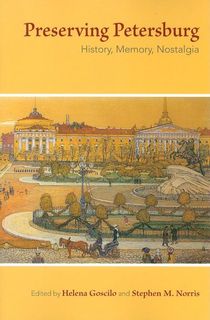
Preserving Petersburg
Founded in 1703 by Peter the Great, St. Petersburg has, in the centuries since, become a “museum piece,” a place where Russia’s history can be preserved and mythologized. At least, so argue the essays contained in this “innovative anthology [that] provides Slavic scholars with a panoramic view of the city’s literary, pictorial, and social manifestations” (Europe-Asia Studies).
Filled with unique essays that cover a variety of aspects of life, culture, architecture, art, commerce, and more, the result is a collection that “brings together history, literature, architecture, and the politics of memory,” and a “truly innovative contribution to the scholarship on Petersburg” (Choice; Emily Johnson, University of Oklahoma).
“Sparkl[ing]” as contributors “breathe movement and life into the idealized Petersburg museum,” it’ll make you want to plan your trip to St. Petersburg tomorrow (Gregory Stroud, Bennington College)!
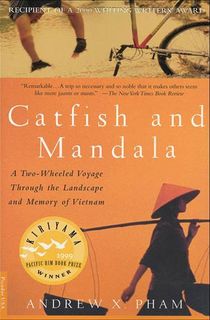
Catfish and Mandala
Winner of the Kiriyama Pacific Rim Book Prize and the Whiting Writers’ Award, named a notable book of the year by both the New York Times and the Seattle Post-Intelligencer, Andrew Pham’s story of a bicycle tour of Vietnam is “a trip so necessary and so noble [it] makes others seem like mere jaunts or stunts” (New York Times Book Review).
Born in Vietnam and raised in California, Pham returns to his largely unknown fatherland as a seeker, following the tragic death of his sister. The result is “far more than a travelogue,” but rather a “seamlessly constructed work deftly combining literary techniques with careful, evenhanded reportage” from a “gifted writer” (Philadelphia Inquirer).
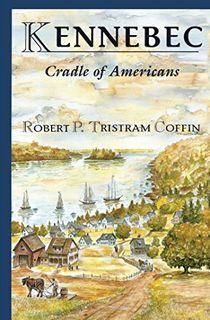
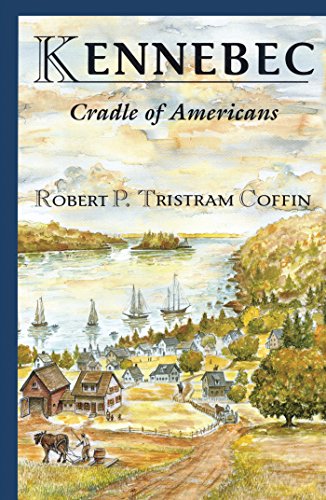
Kennebec
The legendary Rivers of America series ran for some 65 volumes, between 1937 and 1974. Conceived by writer, critic, and historian Constance Lindsay Skinner, the books described almost all of the major waterways in America.
According to Skinner’s vision, “the authors of these books will be novelists and poets,” rather than historians or scholars. The first of these was Kennebec: Cradle of Americans, penned by Pulitzer Prize-winning poet Robert P. Tristram Coffin, describing the Kennebec River, which flows through his home state of Maine, from Moosehead Lake all the way to the Atlantic Ocean.
Along the way, he writes eloquently of the history, the people, and the landscape of this great river, and will inspire you to, as Skinner hoped, “[know] and care more about its past and present.”

Our Lady of Darkness
It has been called perhaps Fritz Leiber’s greatest novel, a pioneering work of modern urban fantasy, and “one of the scariest, most original, and most damnably convincing fantasy notions I’ve ever come across” (Richard A. Lupoff, renowned sci-fi author and editor).
Unlike most of the other books on this list, this World Fantasy Award winner is emphatically a fiction novel of the supernatural, the horrible, and the fantastic—but it’s also a travelogue of real places in San Francisco, and a love letter to that city’s history.
From Corona Heights and the Sutro Tower to the modernist Transamerica Pyramid, you can’t read Our Lady of Darkness without wanting to walk the streets of that city in Franz Westen’s footsteps—however inadvisable that might prove to be.
Featured image: Canva


