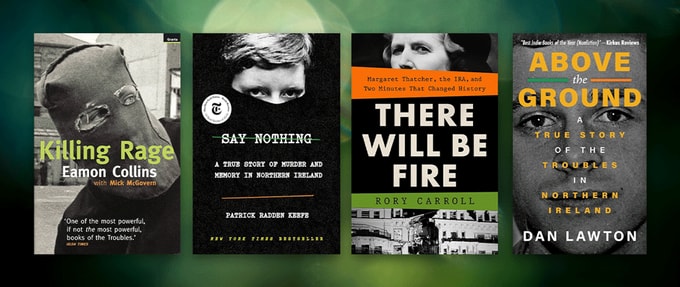

Between the late 1960s and 1988, Northern Ireland experienced a period of profound tragedy. Marked by violence, the major forces at play included the Protestant unionists, who sought to remain part of the United Kingdom, and the Roman Catholic nationalists, who sought to become part of the Republic of Ireland.
The other players involved included the British army, who, in their own words, strove to maintain peaceful relations, with the rise of the nationalist Irish Republican Army (IRA). Members of the IRA were staunch advocates for national independence, and, over time, escalated their efforts to violence.
Over three decades, 3,600 people were killed, and more than 30,000 were wounded, before an agreement was reached between the United Kingdom and Ireland. Today, many stories strive to make sense of this conflict and how it has inevitably impacted generations of Irish people.
Although over 50 years have passed, the Troubles still cast a tremendous shadow over Northern Ireland, and therefore, should continue to be studied and reckoned with. Above all, what these eight non-fiction titles have in common—whether journalist, historical, memoir, biographical, or a combination—is the pursuit of truth and justice for the many lives impacted.
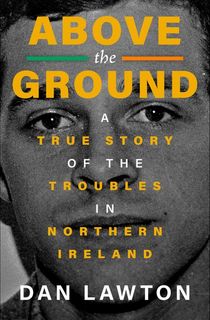
Above the Ground

A mix of courtroom drama and true crime, author Dan Lawton reveals the true story behind a man convicted of a murder he did not commit.
Deeply researched and conducted with sweeping prose, the curtain is pulled back on the life of Kevin Barry Artt and “how his life was [...] turned upside down by being dragged unjustly into the Troubles” (Los Angeles Daily Journal).
Ultimately, following the murder of British prison official Albert Miles, Lawton exposes how forces within the IRA and British government worked to stash away their dirty laundry.
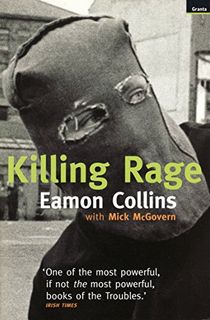
Killing Rage
In Killing Rage, author Eamon Collins offers a unique perspective on the Troubles as a former member of the Irish Republican Army. Although he never killed anyone, he helped organize several hits before eventually being captured and placed under interrogation.
After he returned home to his family, Collins told his story on British television. In fuller detail, Collins attempts to make sense of what became of Northern Ireland and why he became involved in the violence.
Sadly, only a couple of years after publishing Killing Rage, Collins was found murdered, leaving us with “one of the most powerful, if not the most powerful, books of the Troubles” (Irish Times).
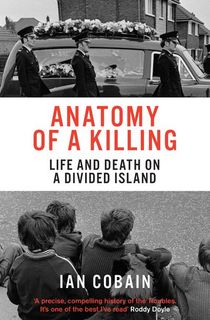
Anatomy of a Killing
From the multi-award-winning investigative journalist Ian Cobain comes “a concise and gripping history of the Troubles, revealing the people behind the pain and violence” (Vice). On April 22nd, 1978, members of the IRA seized control of a car, killing an off-duty policeman before his son.
In Anatomy of a Killing, Cobain, through interviews, court files, police notes, IRA strategy papers, and much more, pieces together the hours before the events and the years of violence to come. As put by Daily Mail, this book is “as gripping as a thriller, except that this isn’t fiction but cold, spine-tingling reality.”
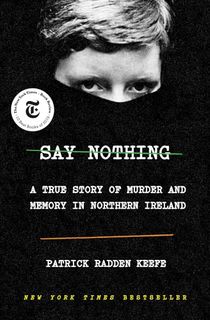
Say Nothing
In December 1972, Jean McConville, a mother of ten, was kidnapped from her Belfast home, never to be seen again. Representing only one of countless brutal attacks of the IRA, no one said anything, for fear of retaliation.
New Yorker staff writer Patrick Radden Keefe offers a "masterful history of the Troubles," where IRA members, rather than achieving the initial objective of peacefully uniting Ireland, killed people and committed heinous crimes (Maureen Corrigan, NPR).
Say Nothing has since been adapted into an FX limited series of the same name, starring Lola Petticrew, Anthony Boyle, and Hazel Doupe, among others. Although following a handful of lives, Keefe manages to convey the history of the Troubles as a whole, to great success, with the book spending six weeks on the New York Times bestseller list.
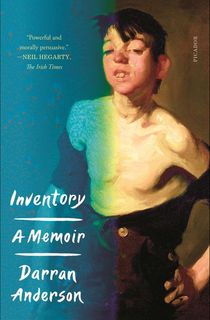
Inventory
In this lyrical memoir, Darran Anderson chronicles growing up in Derry, Northern Ireland, bearing witness to the rampant violence around him. Trying to make the most out of his youth with friends, Darran did his best to avoid British soldiers, IRA operatives, and the tensions between them.
But as Catholics living in a Protestant-controlled Northern Ireland, it was not possible for his family to stay out of harm's way, especially with his father’s eventual enrollment in the IRA.
Spanning decades, and weaving the story of his family through trauma, violence, war, and hope, “[Anderson has the] uncanny ability to draw image from object [...] so much so that you feel your own memory coming alive in tandem with his” (New York Times Book Review).
There Will Be Fire
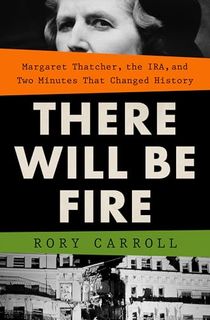
On October 12, 1984, a bomb placed by the Irish Republican Army detonated, killing five people and wounding dozens. And yet the prime target of the violence remained just narrowly unwounded in her bed: Prime Minister Margaret Thatcher.
In There Will Be Fire, author Rory Carroll unravels the harrowing true story of how Thatcher was almost assassinated and the ensuing search for the culprits. Drawing on first-hand interviews, Carroll connects previously unconnected clues in a nonfiction that reads much like a thriller.
Northern Ireland: The Troubles
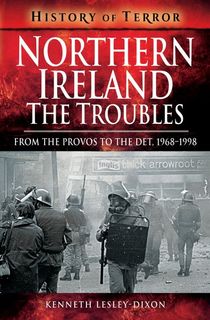
Throughout the Troubles, it has been made aware that undercover Special Forces and intelligence agencies took root across Northern Ireland. But, as author Kenneth Lesley-Dixon seeks to expose, it is little-known how these units were recruited, operated, and mandated.
In the first account of its kind, Lesley-Dizon sifts through previously unpublished information, surveillance, undercover combat, and more, offering a “major contribution […] to understanding the full nature of the warring groups responsible for the province’s protracted conflict” (Washington Times).
The Roots of Ireland's Troubles
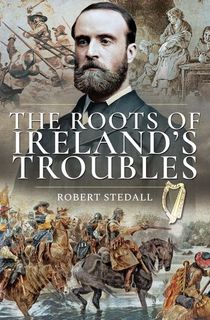
Although many books have sought to decipher the three-plus decades of violence known as the Troubles, author Robert Stedall proposes, in this account, that one must take a longer historical view to truly comprehend the contributing factors at play.
Taking a comprehensive approach, The Roots of Ireland’s Troubles, ranges from Plantagenet intervention with the warring Gaelic chieftains to the English Civil War.
Stedall also turns to the history of Britain and its inextricable connection to Ireland, thereby making sense of a conflict that has and continues to shape the nation.
Featured image: Pixaby / Canva


