-(3).png?w=3840 "Books-about-the-History-of-the-Ottoman-Empire_feature")

For more than six centuries, the Ottoman Empire stood as one of history's most influential and enduring empires, shaping the political, cultural, and religious landscape of Europe, Asia, and North Africa.
Founded around 1300 by the Turkmen leader Osman I in Anatolia (modern-day Turkey), the empire expanded through military conquest and strategic governance to control vast territories across southeastern Europe, the Middle East, and North Africa. At its height, the Ottoman Empire served as a major center of trade, Islamic scholarship, and artistic achievement, connecting the East and West for generations.
By the 19th century, however, economic challenges, political corruption, and growing nationalist movements weakened the empire's authority. Its decision to join the Central Powers during World War I accelerated its decline, leading to military defeat and the loss of much of its territory. Following the Turkish War of Independence (1919–1923), the Ottoman Empire was formally dissolved and replaced by the modern Republic of Turkey.
The following 10 books explore the rise, culture, leadership, and eventual fall of the Ottoman Empire, offering a deeper understanding of one of history's most significant civilizations.
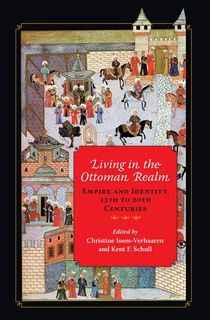
Living in the Ottoman Realm
Living in the Ottoman Realm explores the everyday lives and diverse identities of people across the Ottoman Empire, examining its rich mix of cultures, religions, languages, and communities. Drawing on primary sources, including some translated into English for the first time, the collection offers fresh perspectives on what it meant to be Ottoman.
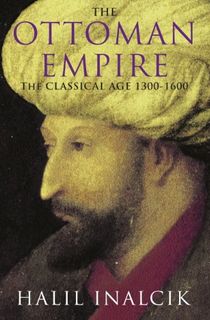
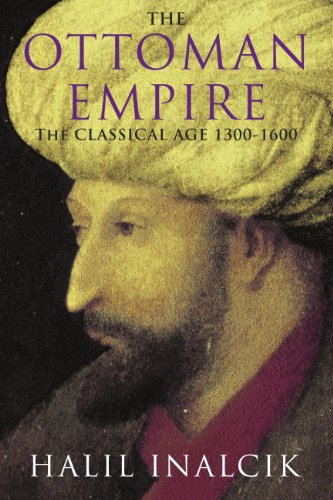
The Ottoman Empire: 1300-1600
The Ottoman Empire: The Classical Age, 1300–1600 traces the rise of the Ottoman state from a small frontier to the world's leading Islamic empire. Renowned historian Halil İnalcik examines the central role of religion, warfare, government, and social institutions, offering a vivid portrait of Ottoman life and power during its formative centuries. This authoritative history remains an essential introduction to the empire's political, cultural, and military legacy.
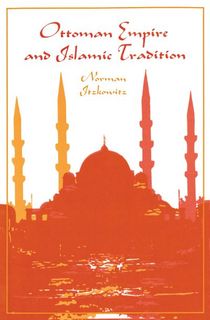
Ottoman Empire and Islamic Tradition
This book presents the full sweep of Ottoman history, from its beginnings on the Byzantine frontier around 1300 through centuries of expansion to its eventual clash with Europe in the late 1700s. Along the way, it unpacks the core institutions, social divisions, and ideas of governance that shaped Ottoman rule.
What makes the account distinctive is its perspective: Rather than leaning on the observations of Western chroniclers, it reconstructs how the Ottomans understood their own history, offering a rare, inside view of one of history's most enduring empires.
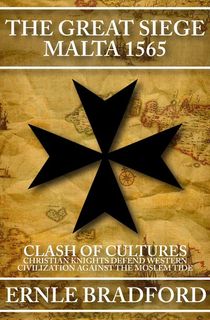
The Great Siege, Malta 1565
The Great Siege of Malta recounts one of the Ottoman Empire’s most dramatic military campaigns: Suleiman the Magnificent’s 1565 attempt to capture the strategically vital island of Malta. Historian Ernle Bradford delivers a gripping account of the brutal confrontation between the Ottoman forces and the Knights of St. John, exploring a pivotal clash that reshaped the balance of power in the Mediterranean.
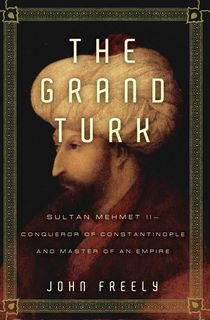
The Grand Turk
The Grand Turk offers a compelling portrait of Mehmed II, the Ottoman ruler known as the Conqueror, who transformed Constantinople into the heart of a powerful empire. Historian John Freely explores the man behind the legend, revealing Mehmed as both a military strategist and a Renaissance prince whose court welcomed poets, scholars, and artists from across the world.
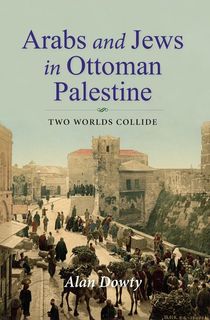
Arabs and Jews in Ottoman Palestine
When did the Arab-Israeli conflict actually start? Most people point to 1967, Israel's founding in 1948, or the British Mandate in 1922. Alan Dowty goes back further, all the way to the Ottoman Empire in the 19th century, when religious and ethnic groups in Palestine were already clashing constantly.
He shows how deep-seated suspicion of European foreigners shaped how Arab residents viewed the new Jewish settlers arriving. It's a well-researched look at how tensions from over a century ago set the stage for a conflict that continues to shape the Middle East today.
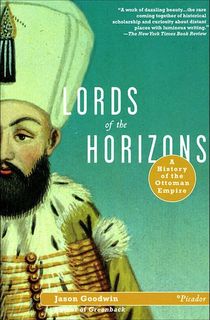
Lords of the Horizons
For 600 years, the Ottoman Empire rose and fell, and Jason Goodwin brings that sweep to life, tracing how it grew in just three centuries from a dusty corner of Anatolia into an empire ruling the Danube to the Nile, powerful enough that Indian rajahs and French kings once sought its help.
He then turns to the long, strange unraveling that followed, three more centuries where the empire seemed perpetually on the brink of collapse, yet somehow kept surviving. Along the way, Goodwin digs into the roots of conflicts that still echo today, including the tensions still felt by Kosovars and Serbs.
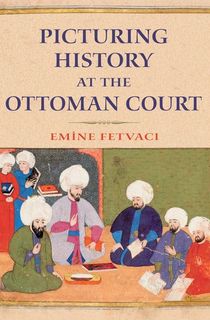
Picturing History at the Ottoman Court
The late 16th-century Ottoman court produced an incredible number of illustrated history books, and for a long time people dismissed them as fancy flattery for the sultan. Emine Fetvaci shows that these books were actually commenting on current events, pushing the political agendas of courtiers and sultans, and shaping how elite readers saw the people behind them.
Digging into these illustrated histories, Fetvaci uncovers a story about how political power gets built, how history gets written, and how a culture evolves, all playing out at once.
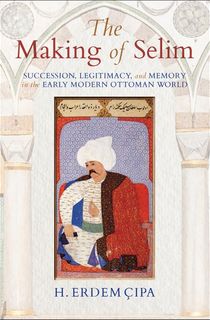
The Making of Selim
Selim I, known as "The Grim," was the father of Suleyman the Magnificent, and he set the stage for centuries of Ottoman dominance by doubling the size of the empire, conquering Eastern Anatolia, Syria, and Egypt along the way.
Drawing on sources in Ottoman-Turkish, Persian, and Arabic, H. Erdem Cipa offers a fresh take on how Selim actually rose to power, and how his image was later reworked and mythologized in Ottoman histories of the following two centuries. Even after death, Selim kept serving the empire, his legacy reshaped again and again to reinforce an idealized vision of Muslim rule.
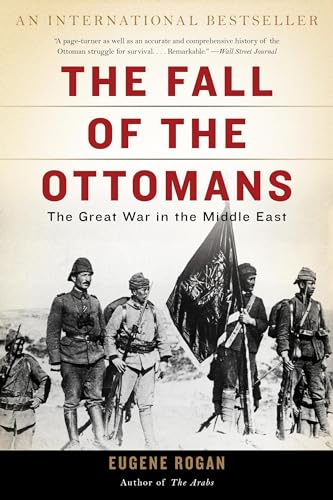
The Fall of the Ottomans: The Great War in the Middle East
By 1914, Europe was sliding toward war, and it dragged the Middle East right along with it. Eugene Rogan brings that often-overlooked front to life, showing how the war there played out nothing like the static trench warfare of the Western Front. Instead, it was fast-moving and unpredictable, with the Turks pulling off decisive victories at Gallipoli, Mesopotamia, and Gaza before the Allies eventually turned the tide.
Rogan carries the story through to the postwar partition of Ottoman lands, tracing a direct line from those decisions to the conflicts still playing out in the region today.
Feature Image: Getty Research Institute Digital Collections


