
The “Space Race” began on August 2, 1955, when the Soviet Union and the United States began competing to be the first to launch artificial satellites into space. Since then, space exploration has advanced year after year—from the first Moon landing to the current trials of colonizing Mars. Our tools to observe space have only been getting better, too, with the Webb Telescope recently capturing the deepest (and oldest) views of the cosmos yet.
But space exploration hasn't always been successful. Over the decades, there have been many fatal disasters—notably Challenger, Columbia, Soyuz 11, and Apollo 1—that have changed the course of various space programs. Still, there have also been great triumphs—including landing on the Moon, orbiting Earth, and establishing the International Space Station.
These 16 books cover the history of space exploration—the good and the bad.
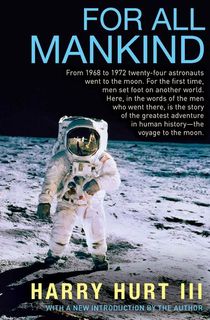
For All Mankind
From December 1968 to December 1972, the entire world was focused on twenty-four men as they accomplished a feat that had yet to be achieved by humanity: voyaging to the moon.
Described by the Chicago Tribune as “far more than a history of lunar exploration [...] [author Harry Hurt III] is at his best in the deft sketches of the astronauts—as they were and as they became.”
Pulling from detailed research and exclusive interviews with the Apollo astronauts, For All Mankind recounts the wonder that was the lunar voyages—in all their triumph and danger.
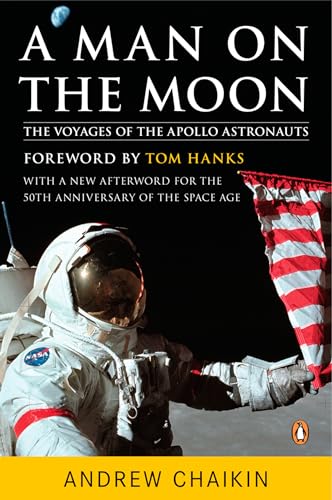
A Man on the Moon
Hailed by the astronauts themselves as a definitive account of their missions, A Man on the Moon is an “authoriative masterpiece,” on the Apollo space program (Los Angeles Times).
A must-read for any space junky, Andrew Chaikin's book details how the world changed forever on the night of July 20, 1969, when Neil Armstrong and Buzz Aldrin touched down on the moon.
Since adapted into an acclaimed miniseries produced by Tom Hanks, this definitive account, based on extensive interviews with the astronauts, considers the human experience of traveling to the moon.
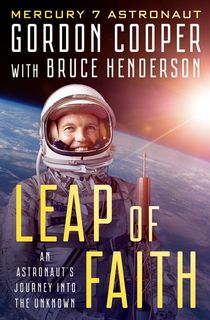
Leap of Faith
Gordon “Gordo” Cooper—one of the original Mercury Seven, pilot for Apollo X, the last American to enter space alone, and much more—was a pioneering astronaut.
In Leap of Faith, he teams up with #1 New York Times-bestselling author Bruce Henderson to offer “an exciting insider’s look at Projects Mercury, Gemini and Apollo [...] NASA’s internal politics, disasters, glitches, and close calls” (Publishers Weekly).
Having crossed paths with aviation stars such as Amelia Earhart, Wiley Post, German rocket scientist Wernher von Braun, and many more, Cooper considers humankind's dream of traveling to the moon—and how it became reality.
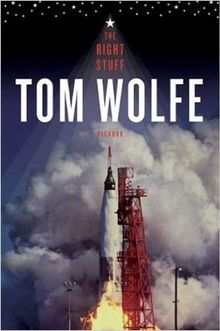
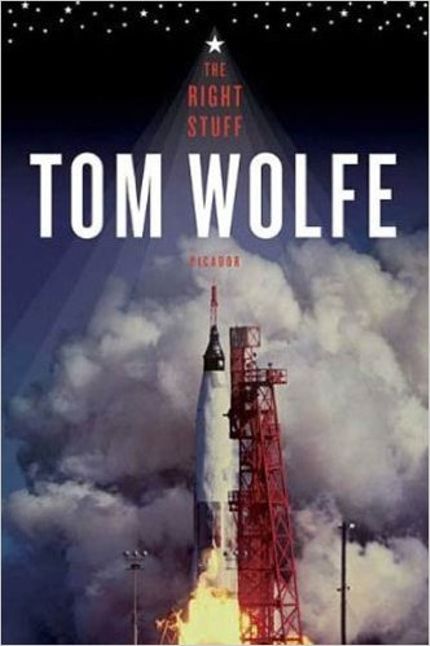
The Right Stuff
The 1980 winner of the National Book Award for Nonfiction, The Right Stuff is a moving, harrowing documentation of the first Americans to enter space.
The basis of the 1982 Oscar Award-winning film of the same name, “America’s nerviest journalist,” chronicles the lives and experiences of the Mercury Seven, the test pilots who followed them, and the cultural phenomenon that was the Space Race (Newsweek).
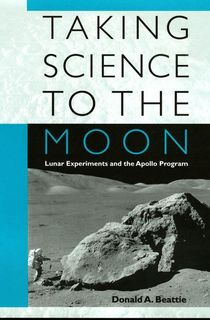
Taking Science to the Moon
The first Moon landing is rightfully touted as a grand scientific achievement. However, that wasn’t the only motivation behind the historic space flight, which also aimed to assert American dominance during the Space Race.
How did academics manage to advocate for scientific discovery and make it a priority of the politically driven mission? That’s the subject of this “valuable addition to the literature on America's race for the moon” (Publishers Weekly).
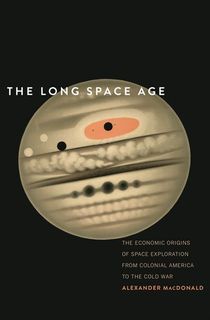
The Long Space Age
To the uninformed observer, the emergence of private sector space exploration might seem to have come out of left field. But in reality, the industry had existed long before we landed man on the Moon.
In this surprising and fascinating account, an economic historian traces the true story of privately funded space exploration, from early 19th-century astronomical observatories to SpaceX.
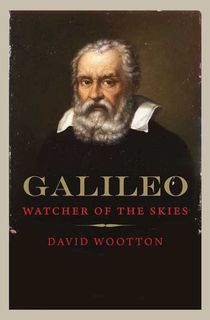
Galileo
Galileo Galilei is best known for challenging the Catholic Church by insisting the Earth revolves around the sun, a position that resulted in his investigation and subsequent house arrest by the Inquisition.
Having been one of the earliest users of the telescope to peer at the mysteries of our galaxy, he’s also known as the father of observational astronomy. His contributions undoubtedly led to the advancements that made space travel possible. This biography of Galileo explores his life, motives, and scientific breakthroughs.

The Perfect Theory

Albert Einstein first published his general theory of relativity, which explains the relationship between gravity, space, and time, in 1915. The theory beautifully unites and explains many behaviors of the universe, yet it’s been mired in controversy since its introduction.
Proponents of the theory have been looked down upon or even persecuted in places as disparate as Hitler’s Germany, Stalin’s Russia, and 1950s America. This book traces the history of the theory of general relativity from its earliest days, examining “how Einstein and his followers have been trying to explain the universe for decades” (Kirkus Reviews).

Disasters in Space
When talking about space, the dangers of exploration cannot be ignored. Though there have been many stories of success over the years, there have also been disastrous failures.
Hermann Woydt’s book covers disasters from both the American and Soviet space programs—starting in 1967 and spanning to present day. From NASA’s Apollo 13 to the Soviets’ Soyuz 11, this book takes a deep dive into the perils of space exploration.


The Soviet Space Program
When you think of the Soviet space program, you might think of the “Space Race” that began in 1955 between the Soviet Union and the United States—each trying to first launch a satellite, and then later put a human in space before the other.
But there’s so much more to it than that. Author Eberhard Rödel examines the early days of the space program (before the “Space Race” began)—covering everything from the development of the Soviets’ own atomic bomb to rockets.

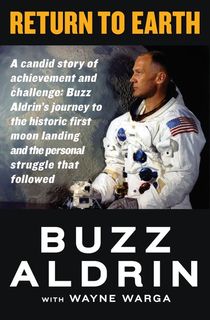
Return to Earth
You may know astronaut Buzz Aldrin as one of the first men to set foot on the Moon, but there's so much more to this space pioneer. In his candid memoir, Aldrin recounts his life and career—from the famous Apollo 11 Moon landing to his battle with alcoholism.
At the time of the historic mission to the Moon, Aldrin never imagined the immense impact his newfound fame would have on his life. In addition to delving into his own personal struggles, the author examines the toll the mission took on his fellow astronauts who were on that fateful mission into the unknown.
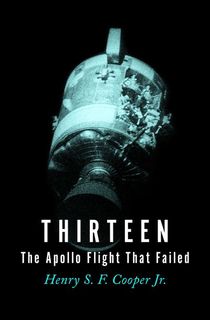
Thirteen
Just hours before Apollo 13 was set to be the third mission to land on the Moon, tragedy struck when an oxygen tank exploded—putting the crew in terrible danger, 200,000 miles from Earth. Though you may know the story of Apollo 13, it’s unlikely you’ve heard it like this before.
Based on transcripts from mission control in Houston, author Henry S. F. Cooper weaves together the terrifying story—offering a minute-by-minute account of this seemingly grave situation.
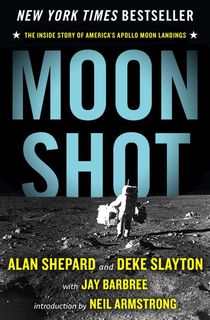
Moon Shot
Alan Shepard was an American astronaut during the golden years of space exploration. Becoming the first American in space in 1961, he was quite experienced with the “Space Race.”
After the Soviet Union launched Sputnik I, the U.S. was desperate to get a person into space before the Soviet Union did so first…again. Though they narrowly lost to Soviet astronaut Yuri Gagarin, Shepard became the first American in space with the Mercury-Redstone 3 mission.
Along with fellow astronaut Deke Slayton, Shepard details the Apollo missions they were involved in—including Apollo 14, after they were deemed too inexperienced to command Apollo 13.
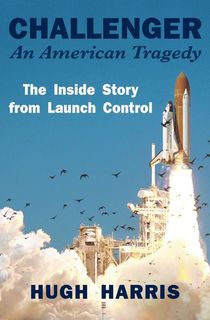
Challenger: An American Tragedy
Hugh Harris was the voice of launch control—the person counting down to lift-off—on the day of the Challenger disaster in 1986. 73 seconds after it was launched, Challenger broke apart—killing all seven people on board.
Aboard the flight was Payload Specialist Christa McAuliffe, who would have been the first teacher in space. As a result, 17% of Americans are said to have witnessed the tragedy live. Author Hugh Harris takes us back to that fateful day, giving readers a behind-the-scenes look at how this disaster impacted NASA and the future of space exploration.

Hidden Figures
The book that inspired the film of the same name focuses on a group of female mathematicians at NASA—known as “human computers”—who calculated the numbers required to send rockets and astronauts into space.
During World War II, a group of African American women was called to be these “human computers” at the Langley Memorial Aeronautical Laboratory in Hampton, Virginia. Segregated by Virginia’s Jim Crow laws, these women were integral in space exploration—specifically in helping John Glenn orbit the earth.


Rocket Men
Rocket Men takes a look the Apollo 8 mission—the risky attempt to land on the Moon before the 1960s ended. Author Robert Kurson focuses on three astronauts in his book: commander Frank Borman, who was on his final mission; Jim Lovell, who’d dreamed of going to the Moon since childhood; and, Bill Anders, a nuclear engineer making his first space flight. Based on interviews with astronauts, their families, NASA personnel, and more, this detailed account takes a thrilling look at Apollo 8.

This post is sponsored by Schiffer Books. Thank you for supporting our partners, who make it possible for The Archive to continue publishing the history stories you love.
Featured image: NASA / Unsplash


