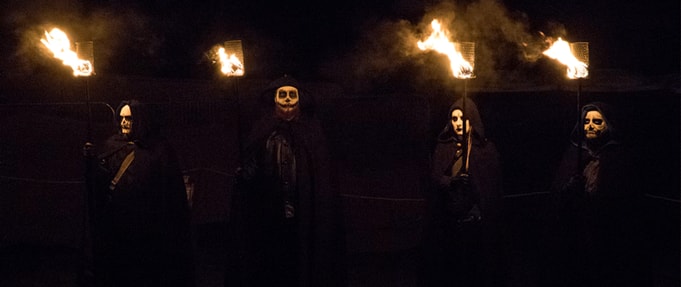

It’s that time of year again—when empty storefronts become costume-rental treasure troves, and restaurants put out their best ghouls, ghosts, and goblins. Blink, and you could miss the spirit of Halloween passing by.
But where does that spirit come from? What compels society to spook and be spooked? People have loved a good ghost story since the dawn of imagination, and most cultures have myths about the ascension of souls and possession by evil spirits. Take, for example, the ancient Celtic festival of Samhain (pronounced SAHW-ehn), one of the ancient fire festivals.
Separating the summer harvest from the darkest months, Samhain is the night when the veil between the worlds all but evaporates, allowing souls to pass in either direction. As Christianity rose, other holidays absorbed Samhain in an effort to eliminate paganism and other spiritual practices, eventually shaping it into Halloween as we know it.
While plenty of Samhain novels are readily available, the same isn’t true for reference books—a chapter here, a footnote there. Below is a list of seven non-fiction books about the spookiest day of the year and the people who first celebrated it.
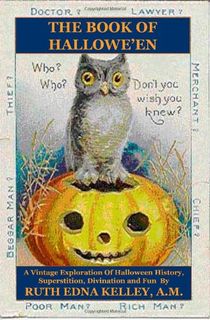
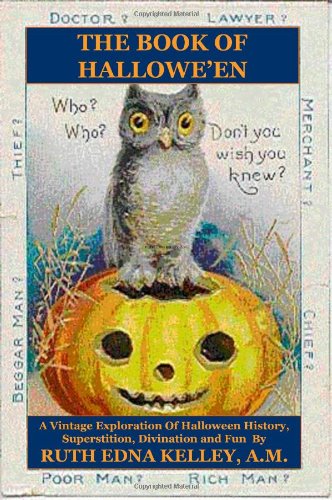
The Book of Hallowe'en
Published in 1919, this is the first book-length text on Hallowe’en. Ruth Edna Kelley, whose academic research focused largely on folklore, draws a fairly direct thread from sun worship and Samhain through Roman and then Christian influence, all the way to American traditions.
She traces Samhain through the British Isles, Brittany, and France, including regions as specific as the Hebrides, remote Scottish islands steeped in folklore and mysticism.
Kelley’s book is unique for its regional distinctions, its chapter on the Teutons (foes of the Romans), and the amount of poetry and folkloric text she incorporates. She also includes recommendations for party games, Hallowe’en plays, and further reading.
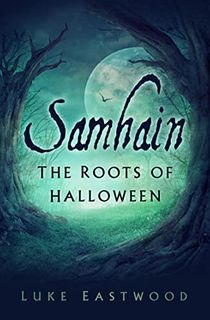
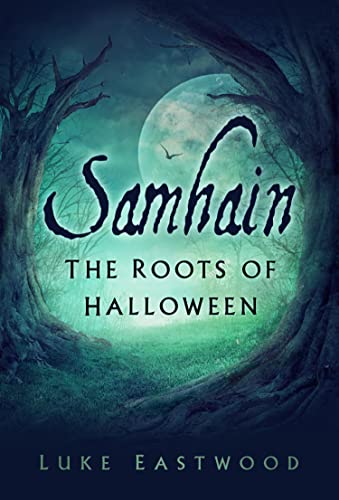
Samhain: The Roots of Halloween
With personal roots in Scotland, England, and Ireland and a background in Celtic spiritual studies, Luke Eastwood offers an extensive, meticulously researched guide to Samhain’s origins.
He traces the festival’s history through Britain, Ireland, and Brittany, including insights into ancient devotion to a long-forgotten goddess, the Druid temple where the first festival fires were lit, and the traditions that have been diluted and distorted into what we know today as Halloween.
Eastwood describes Samhain as a festival of the dead that was blended with Catholic and Protestant celebrations for the masses, yet is still observed today in the ancient tradition in Wicca, neo-paganism, and modern Druidry.
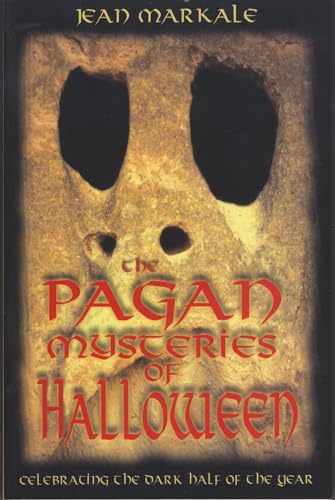
The Pagan Mysteries of Halloween
Formerly a Celtic studies specialist at the Sorbonne, Jean Markale writes an account of Samhain that focuses less on the festival’s history and more on its enduring legacy.
He compares costume-wearing trick-or-treaters on a night of make-believe, hoping strangers will offer them candy, to pre-Christian observers on the night when the veil between the living and the dead was thinnest, hoping to gain wisdom from the fairy folk.
Markale goes on to create further and deeper parallels between the ancient Celtic rituals and modern holiday traditions, and he explores where and how the festival is still celebrated faithfully today.

Halloween: From Pagan Ritual to Party Night
In what many consider the definitive non-fiction book on Halloween, history professor Nicholas Rogers offers a thrilling account of the holiday's candy-coated history. As expected, he traces Halloween’s origins to the Celtic holiday of Samhain and the Christian observances of Hallowtide (All Saints’ Day and All Souls’ Day).
In a fascinating turn, he then traces Halloween’s evolution through the lens of pop culture: its portrayal in Hollywood, its connections to violence in the 1970s, its rebranding as a holiday of make-believe, its reemergence as fright night, and its periods of appropriation and censure.
Through this complex web, Rogers shows that Halloween is and has always been a night when earthly rules are contorted.

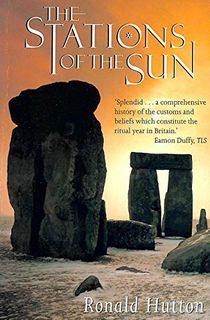
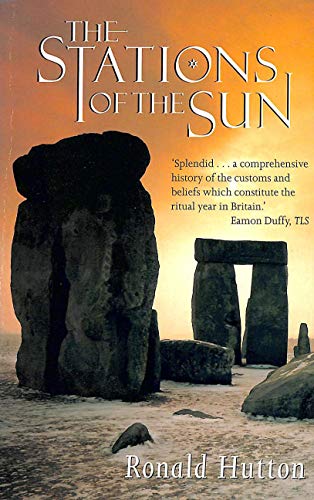
The Stations of the Sun
Ronald Hutton, a historian specializing in pre-Christian religion and modern paganism, brings the history of worship to life from the earliest written records to the present day.
He covers everything from May Day to the 12 days of Christmas, from Midsummer to Hallowe’en (and Samhain), treating all rituals and festivals as equally important. His analysis of the ritual year illuminates the history of the calendar year and how ancient traditions shape it.
In this first scholarly work to provide an exhaustive survey of British rituals, Hutton challenges some accepted late-Victorian scholarship on the same rituals and raises further questions for historians of every age, as addressed in his text on tradition.
Death Makes a Holiday
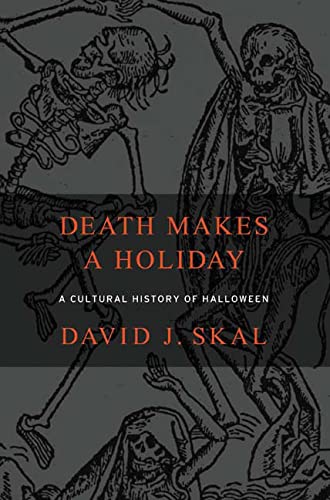
Acclaimed cultural historian and horror film analyst David J. Skal takes an Ameri-centric look at Halloween in Death Makes a Holiday. Puzzled by how this dark, Celtic-rooted ritual became one of the largest commercial holidays (second only to Christmas), Skal travels the country in search of answers.
His social analyses scrutinize businessmen calculating Halloween’s commercial value; Wiccan traditions; tourism in Salem, MA; the effect of 9/11 on Halloween traditions (first edition published in 2002); fundamentalists opposed to paganism; and regular folks who live in fantasy for one night. Skal’s book is both a love letter to American Halloween and a debunking of the urban myths that surround it.
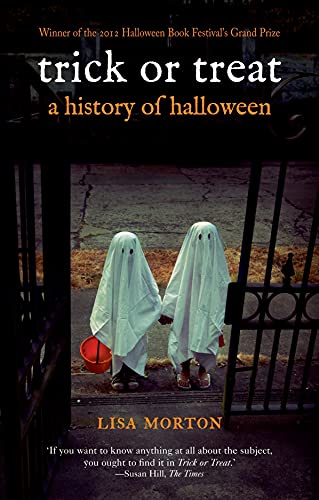
Trick or Treat: A History of Halloween
Lisa Morton explores the tradition of trick-or-treating in this book, along with other activities like cornfield mazes, haunted houses, and ghost tours.
She not only provides a thorough history of the spooky holiday, but also traces its rebirth as an American tradition, influenced by holidays such as Día de los Muertos and Samhain.
Morton examines the commercialization of a holiday tied to death and the supernatural, asking how we arrived at this version of Halloween. She analyzes how American Halloween affects pop culture and how this mainstream version of the holiday has spread to Russia, China, and Japan.
Featured image: Robin Canfield / Unsplash


