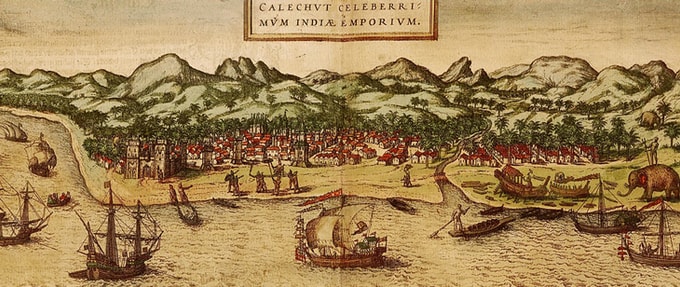

Although spices are often viewed today as common pantry staples, some were once more valuable than gold. When, in 410 CE, the Visigoths captured Rome, they demanded 3,000 pounds of peppercorns as part of the city’s ransom. In the 17th century, nutmeg was harvested on a small island in Indonesia, and a pound of the spice could yield a profit of 3,200 percent by the time it reached England (read more in Nathaniel’s Nutmeg by Giles Milton).
Among the most lucrative spices were black pepper, often called “black gold”; its counterpart, salt; vanilla; cinnamon; cardamom; nutmeg; and mace. Any of these would make a worthy addition to sprucing up a dish, but less well-known is their ability to trace history.
Spices, and how they came to move through the world, launched many of the economic, cultural, and political systems we recognize today—for better and for worse. In these seven books about spice and spice history, scholars outline the ways in which spice has been used across time—as a commodity, weapon, flavor-booster, and much more.
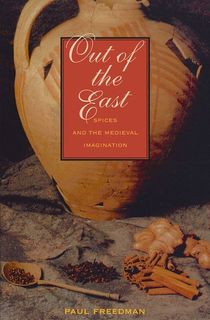
Out of the East

Rooted in the tastes of the Middle Ages, scholar Paul Freedman considers why spices were so popular and expensive. In medieval Europe, the demand for spices reflected a growing demand for extravagance, which would ultimately lead to imperialist missions—a critical point in history.
From common spices such as pepper and cinnamon to rarer commodities like ambergris and musk, the quest for the affluence and beauty they represented fueled contemporary economic mechanisms.
Out of the East is not only, as James Beard Award-winning author Marion Nestle puts it, “a consummate delight,” but a “magnificent, very well written, and often entertaining book that is also a major contribution to European economic and social history” (American Historical Review).
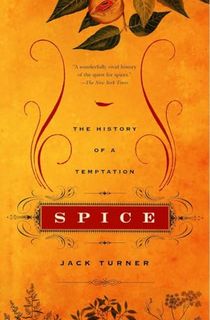
Spice
Beginning in ancient times through the Renaissance, Jack Turner traces the history of various spices—including pepper, ginger, cinnamon, nutmeg, mace, and more—and how these now-common products were once as valuable as gold.
Spices served many purposes, beyond cooking. From medieval wines to wedding night aphrodisiacs, spices took on various symbolic meanings, including heaven's iParadise, power, and, notably, colonialism.
Selected as one of the Best Books of the Year in 2005 by the San Francisco Chronicle, “Spice is an erudite and engaging account of how foodstuffs can change the flow of history” (New York Times Book Review).
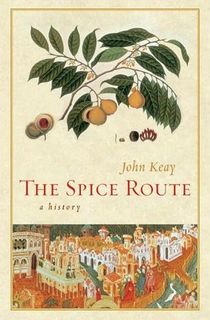
The Spice Route
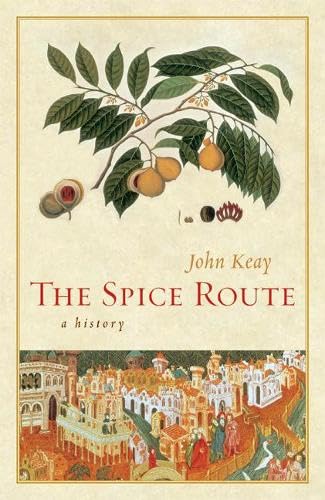
If you’re looking for an overarching history of how spice moved through the world, The Spice Route is for you! Spanning three millennia, scholar John Keay weaves the long, complex history of the spice trade.
Drawing on ancient geographies, travelers’ accounts, ship logs, and many other primary sources, Keay illustrates how ancient Egyptians developed maritime practices to procure the incense of Arabia, and how Columbus sailed west for spices, and de Gama went east for them.
The Spice Route considers, above all, how the spice race developed, in tandem with the West’s push for expansion, stripping islands of their resources, and setting off chain reactions whose effects are still felt today.
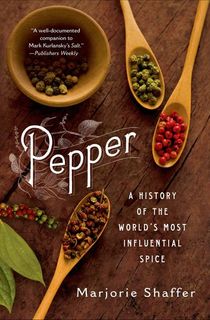
Pepper
With a mix of history, customs, and food lore, Pepper details the role the spice played in bringing Americans and Europeans to Asia. As celebrated by Pulitzer Prize-winning author David Oshinsky, “This is more than the story of a spice [...] Get ready for a sweeping ride through history.”
Pulling from “first-person accounts from journals and ships' logs, Shaffer crafts a textured story of exploration, danger, wealth, and greed,” offering, in addition to an insightful look into the spice sitting on your countertop, “a delightful history of the Indian Ocean and the South Seas” (Kirkus Reviews; Robert D. Kaplan, New York Times-bestselling author).
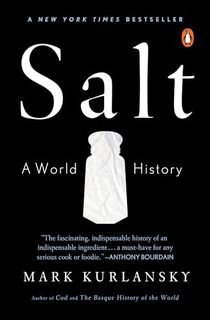
Salt
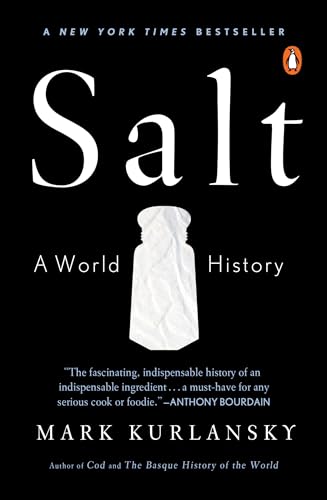
A companion to Marjorie Shaffer’s Pepper, award-winning author Mark Kurlansky explores the profound effect salt has had across history.
Not only is the spice unique as the only rock we eat, but it has been the source of many trades, wars, economies, and the pervasive culture. A surprising, fascinating adventure, “Kurlansky finds the world in a grain of salt” (New York Times Book Review).
Nathaniel's Nutmeg
In the Indonesian archipelago, there is a small island named Run, which, though lesser known today, once held a crucial place in history. Almost 400 years ago, Run was one of the most sought-after of the spice islands for its nutmeg harvest, sparking a struggle between England and the Netherlands for control of the spice trade.
The outcome of the battle would be crucial, leading to not only the formation of New York but also the British Empire. At the center of all the action was Nathaniel Courthope, who ran Run for four years beginning in 1616, holding off the Dutch navy.
Told as a narrative history of the imperial legacy on spice, Nathaniel’s Nutmeg is “an exciting account of the dangerous voyages, bizarre transactions, and desperate battles of the spice wars” (Washington Post).
Culinary Herbs & Spices of the World
For those looking to “delve deeply into the herbs and spices that characterize the world’s cuisine,” this all-around guide to their chemical compounds, traditional uses, signature dishes, and much more is for you (New York Times).
Covering more than 150 spices and herbs, from blackcurrant to white mustard, author Ben-Erik van Wyk considers the global context of each species, in a “well-written and researched text [that] will be of interest in any public or academic library reference collections as well as to chefs, gardeners, lovers of food, [and] culinary adventurers” (Library Journal, starred review).
Featured image: Wikimedia Commons


