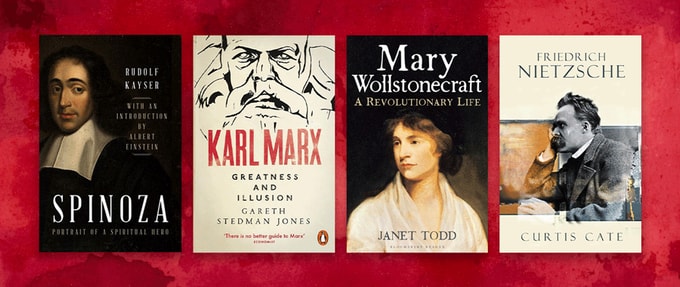

You may know these six thinkers' philosophies, from Karl Marx’s history of class struggles to Friedrich Nietzsche’s nihilism—but have you ever considered these thinkers beyond what they left with the world?
Whether examining Jean Paul Sartre’s radical marriage with another pioneering existentialist philosopher, Simone de Beauvoir, or Spinoza’s rejection of traditional Abrahamic faith in favor of his own, impersonal view of God, much can be learned about how these larger-than-life characters thought through considering the lives they led.
Spanning a wide intellectual history, these six books begin in the Ancient World of Athens with Socrates, a city at its political and cultural peak, through the 20th century with Friedrich Nietzsche, a tumultuous period of rapid industrialization.
Covering the Classical era, the Enlightenment, the Industrial Age, and beyond, this list traces the evolution of Western philosophy through six thinkers who helped shape its course.
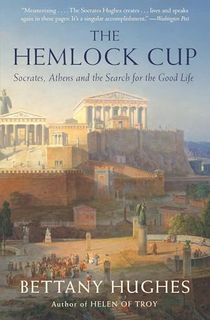
The Hemlock Cup
Much of the modern thought process we owe to Socrates—and yet, the world knows little about the man. Scholar Bethany Hughes works to construct, as she describes, the “seventy of the busiest, most wonderful and tragic years in Athenian history,” in which the philosopher lived.
Recreating Athens in the fifth century BCE, Hughes draws out the streets, centers, dialogues, and Socrates was involved in. From emphasizing the importance of self-examination to establishing the Socratic method of question and answer, his provocative beliefs—and expansive life—are vividly illuminated.
Spinoza

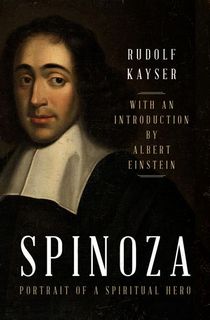
One of the most radical philosophers of the early modern period, Portuguese-Jewish Baruch Spinoza made his mark upon almost every area of philosophy. Ultimately, Spinoza became famous for his unusual beliefs, proposing a purely naturalistic philosophy that rejected a personal, interventionist God.
Although he grew up studying Hebrew literature, he quickly became unsatisfied and sought out his own course of thought that would have a major influence on 17th-century rationalism. Uncover his ideas and more in “the story of how the gentle but firm Spinoza followed his conscience to the point [of excommunication]” (Journal of the American Academy of Religion).
Mary Wollstonecraft
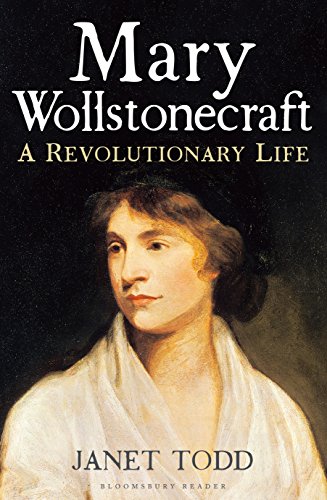
Considered to be the first major feminist in England, Mary Wollenstonecraft paved the way in many regards.
When she published A Vindication of the Rights of Woman in 1792, the prevailing attitude towards women was that they were intellectually inferior to men and destined to perform only domestic, inferior roles.
Although Wollstonecraft’s now-foundational book was met with intense criticism from conservatives, she persisted in her beliefs, as Janet Todd illuminates in this all-encompassing biography.
Karl Marx
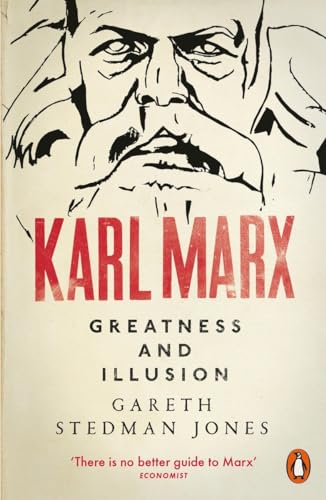
The son of a Jewish convert, Karl Marx devoted his life to making sense of the 19th-century world.
In this biography, author Gareth Stedman Jones works to piece together not only the landscape in which new ideas about political systems, industry, empire, and more were running rampant, but also Marx, a man who managed to be heard amid the noise.
Easily one of the most debated and controversial philosophers in history, unpack the ideas that shaped Marx’s world, and in turn, himself.
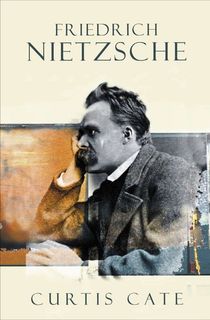
Friedrich Nietzsche
In this “accessible, anecdotally rich” biography, the legend that is Friedrich Nietzsche comes to life (Kirkus Reviews).
Widely regarded as the most original thinker in Western history, journalist Curtis Cate makes sense of his beliefs within the context of his personal struggles, including chronic illness.
Covering his entire life, from childhood to his mental collapse, the book breaks down his denser, more provocative ideas, as well as the influences that inspired his thought.
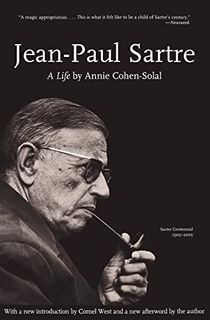
Jean-Paul Sartre
An acclaimed, comprehensive biography, Cohen-Solal offers an intimate view into the French philosopher’s life.
Employing archival research and interviews, he reconstructs Sartre’s complex relationship with Simone de Beauvoir to his role in 20th-century movements, and beyond.
Painting him as the contradictory figure he was, who both thrived in public engagement but lived a private life, Sartre shows the human behind the existentialism.
Featured image: Jolica / Canva


