
From the Kennedys and Roosevelts to the Guggenheims, Du Ponts, and Morgans, dynastic American families explored are as rich and complex in story as they are on paper. How was each family's wealth built? What strengths and weaknesses defined them? What shifting hierarchies operated within their own walls?
Drawing from private documents, rare photographs, and interviews, these books reveal how dynastic families—large or small—accumulated multi-generational wealth and rose through American society, as well as how they managed, or failed to manage, their image in the public eye.
Despite their differences in era and industry, these families share the same recurring tensions: the pressure placed on heirs, the gap between public image and private turmoil, and the price of ambition passed down through generations.
From meticulously researched nonfiction to memoir and biography, these 14 books about American dynastic families pull back the and prove that no amount of wealth can shield a family from its own flaws.
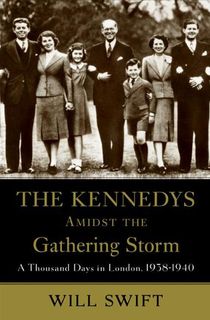
The Kennedys Amidst the Gathering Storm
Historian and psychologist Dr. Will Swift draws on newly released Kennedy family archives, Joseph P. Kennedy's private papers, and rare photographs to trace the shifting alliances among the Kennedys, Chamberlains, Churchills, and Roosevelts.
Arriving in London in early 1938, the Irish-Catholic Kennedys were embraced by politicians, aristocrats, and intellectuals eager to court America's favor. Swift illuminates how their outsider status fueled a near-mythic rise: from 1938 to 1940, the family crystallized its identity on the world stage, appearing to have finally shed generations of exclusion, even as the same forces that had lifted them soon brought their downfall.
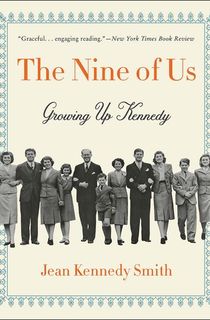
The Nine of Us

In this evocative, affectionate memoir, Ambassador Jean Kennedy Smith, the last surviving child of Joe and Rose Kennedy, offers an intimate look at the family before their public roles, including the early rise of the future president John F. Kennedy.
Filled with vivid anecdotes, vignettes, and family pictures, The Nine of Us captures this large, close-knit family during a different era in American history, shaped by parents who instilled a strong work ethic, national pride, and a real appreciation for the sacrifices their ancestors made in coming to America.
"We were lucky children indeed," Smith writes.

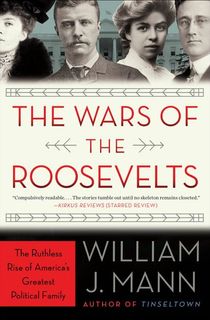
The Wars of the Roosevelts
Deeply psychological and finely rendered, The Wars of the Roosevelts illuminates not only the strengths but also the profound shame of this remarkable and influential family, exposing unknown secrets and complex rivalries.
Drawing on previously hidden documents and interviews with the long-silent "illegitimate" branch of the family, William J. Mann paints a groundbreaking group portrait of a family often at war with itself, one in which the strong devoured the weak and the inconvenient were pushed aside. Mann also brings into focus Eleanor's cousins, TR's children, and Elliott Roosevelt Mann, who inherited his family's ambition and skill without their name or privilege, along with the never-before-told stories of Elliott's daughter and grandchildren.
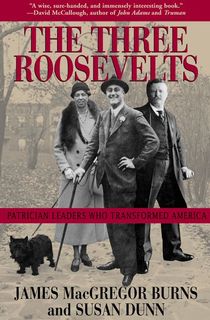
The Three Roosevelts
The Three Roosevelts is a political biography of the intertwining lives of Theodore, Franklin, and Eleanor Roosevelt, who became one of the most prominent American political families of the 20th century.
Pulitzer Prize and National Book Award winning author James MacGregor Burns and acclaimed historian Susan Dunn trace the evolution of the Roosevelt political philosophy, showing how Theodore's example of dynamic leadership later inspired the careers of his distant cousin Franklin and his niece Eleanor, who together forged a progressive legacy that reverberated throughout the world.
This is a fascinating portrait of three of America's greatest leaders.
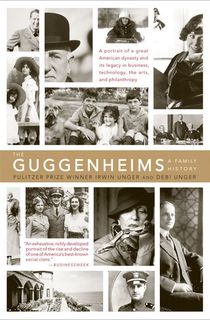
The Guggenheims
The Guggenheims chronicles the extraordinary rise, transformation, and legacy of one of America's most influential dynasties. Beginning with Swiss immigrant Meyer Guggenheim's mining and smelting empire, authors Debi and Irwin Unger trace the family's ascent to immense wealth, the fractures that weakened its industrial fortune, and its remarkable reinvention through philanthropy and modern art.
Drawing on meticulous research, the book reveals how the Guggenheim's shaped American business, aviation, publishing, and the cultural landscape, leaving a legacy that extends far beyond industry.
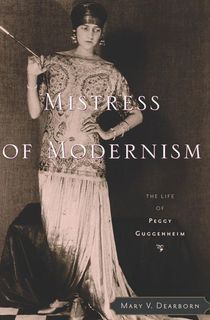
Mistress of Modernism
Mary V. Dearborn draws on unprecedented access to Guggenheim family papers, friends, and archives to deliver the first definitive biography of Peggy Guggenheim.
Set against the backdrop of one of America's most influential dynasties, the book explores Peggy's complicated relationships with her famous relatives, her rivalry with fellow Guggenheim collectors, and her determination to forge an identity beyond the family name. Richly researched and vividly told, it reveals how Peggy helped transform the Guggenheim legacy from industrial wealth into a lasting cultural empire.

Du Pont Dynasty
The Du Pont story in America began in 1800, when Éleuthère Irénée du Pont fled revolutionary France and, two years later, founded the gunpowder company that called itself "America's armorer." Drawn from years of research, this fully documented book reads like a novel, laying bare the feuds, power plays, and cover-ups that erupted in murder.
Colby pulls back the curtain on a dynasty whose influence continues today, one of America's wealthiest families and a major force behind the push toward plutocracy. From plans to force Roosevelt from office to arms sales to the Nazis to Freon's damage to the ozone layer to poisoned workers and a legacy as a top polluter, the Du Pont reign has been marked by scandal for generations.
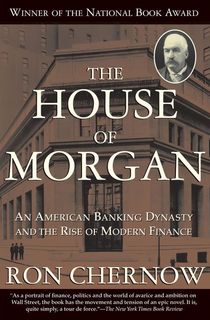
The House of Morgan
Tracing the trajectory of J. P. Morgan's empire from its obscure beginnings in Victorian London to the financial crisis of 1987, acclaimed author Ron Chernow paints a fascinating portrait of the family's private saga and the exclusive world of the American and British elite in which they moved, a world that included Charles Lindbergh, Henry Ford, Franklin Roosevelt, Nancy Astor, and Winston Churchill.
A masterpiece of financial history, it won the 1990 National Book Award for Nonfiction and was named by the Modern Library one of the 100 Best Nonfiction Books of the Twentieth Century. It remains essential reading for anyone seeking to understand the money and power behind the major historical events of the last 150 years.
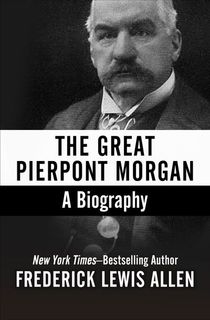
The Great Pierpont Morgan
Celebrated as a titan of industry by some and criticized as a monopolizing robber baron by others, John Pierpont Morgan was a dominant and enigmatic player in American finance at the turn of the 20th century. He founded U.S. Steel, the first company worth more than a billion dollars, and helped develop the Federal Reserve after working with political leaders to head off a fiscal crisis in 1907.
In this deeply researched biography, Frederick Lewis Allen, former editor of Harper's Magazine, digs into the life and character of a complex, contradictory man, and traces the business world of Morgan's lifetime, when giant corporations began absorbing and replacing smaller competitors.
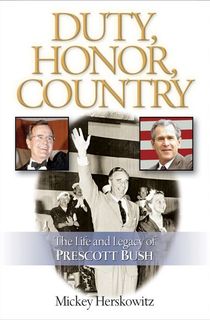
Duty, Honor, Country
Prescott Bush is the only person in US history to be the father of a president, grandfather of a president, and grandfather of a state governor. Written with the encouragement of former President George H.W. Bush, this is more than a biography of the senator from Connecticut. It traces his path from town government in Greenwich to the US Senate, and his role in passing major legislation during the Eisenhower years, while dealing honestly with claims about his business ties to Nazi industrialists.
Above all, this book looks at the values Prescott Bush passed down like family heirlooms: discipline, duty, ethics, commitment, courage, honor, honesty, loyalty, and responsibility.
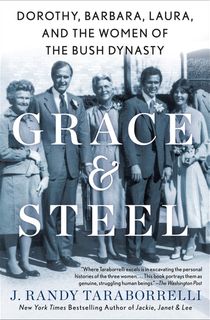
Grace & Steel
"The future of this nation does not depend on what happens in the White House, but what happens in your house," Barbara Bush once said. She is one of the women whose stories have been left out of history for far too long, alongside her mother-in-law, the formidable Dorothy Bush; the enigmatic Columba; the controversial Sharon; and Laura's twins, Jenna and Barbara.
In Grace & Steel, bestselling author J. Randy Taraborrelli reveals the unsung heroines of the Bush family dynasty and their commitment to equality in their marriages, as they raised their children to stay true to American values through every challenge of power and politics.
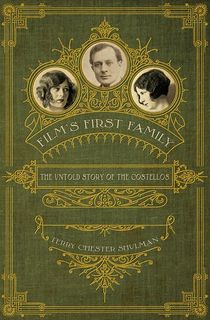
Film's First Family
Written with unprecedented access to the family's personal documents and artifacts, as well as interviews with several family members, this riveting study explores the dramatic history of the Costellos and their significance to stage and screen.
Adultery, secret marriages, divorce, custody battles, suicide attempts, alcoholism— the trials of the Costellos were as gripping as any Hollywood feature film. This eccentric and tragic, yet talented, clan was one of the 20th century's most accomplished families of actors, second only to the Barrymores, with whom they intermarried, deepening the legacy further.
The original members are gone, but the Costello name lives on through their films and descendants, most notably actress Drew Barrymore.
America's Medicis
From literary polymath Suzanne Loebl comes a captivating exploration into the philanthropic and cultural legacy of one of America's wealthiest and most influential families: the Rockefellers.
Fueled by John D. Rockefeller's vast fortune, the family's passion for the arts transformed the artistic infrastructure of 20th century America. Funding museums like MoMA, the Cloisters, and the Metropolitan Museum of Art and commissioning major architectural projects like Rockefeller Center, Riverside Church, and Lincoln Center, the Rockefellers reshaped the cultural landscape of the Western world.
Loebl's biography is the first to rigorously explore the family's critical role as collectors and patrons of the arts.
The House the Rockefellers Built
100 years ago, America's richest man established a dynastic seat, the granite-clad Kykuit, high above the Hudson River. Though George Vanderbilt's 255 room Biltmore had recently put the American country house on the map, Kykuit would anchor the Rockefeller family's memories more than any other place, offering the clearest picture yet of the family and their ambitions for the fortune John D. Rockefeller had settled upon them.
In this book, the authors take us inside the house and family to observe a century of building and rebuilding, tracing the architecture, art, and gardens alongside the family's shifting feelings. The text reveals surprising twists of a family often at odds over what the house symbolized.
Featured Image: Janke Laskowski/Unsplash


