
When King Henry I died in Normandy in December 1135, there was no reason to think England stood on the edge of nearly 20 years of turmoil.
The old king had ruled for more than three decades. The royal government functioned. The kingdom itself appeared secure enough. Yet beneath that appearance sat an awkward problem that Henry had spent years trying to solve.
His son was gone.
15 years earlier, the sinking of the White Ship had claimed the life of William Adelin, Henry’s only legitimate male heir. Chroniclers later treated the disaster almost as though it carried some larger significance. At the time, though, it left a very practical difficulty.
Who would succeed the king?
Henry eventually settled on his daughter Matilda. She was no ordinary noblewoman. Widowed after her marriage to the Holy Roman Emperor Henry V, she carried the title of empress and possessed strong royal blood. Henry even required many of his leading nobles to swear that they would recognize her claim.
But oaths and reality did not always travel together in the 12th century.
A Crown Up for Grabs
Matilda was in Anjou when her father died, and Stephen of Blois moved faster. A grandson of William the Conqueror and nephew of Henry I, Stephen crossed the Channel and secured support from important churchmen and nobles. Before long, he had been crowned king in Westminster Abbey.
It happened quickly. Perhaps that speed explains why so many accepted the situation. Some nobles may have preferred a familiar male ruler to the uncertainty that surrounded Matilda’s claim. Others probably wished to avoid a struggle altogether.
For a time, England appeared settled. But appearances can be deceptive.
The Empress Returns
Matilda had no intention of abandoning what she regarded as her inheritance. In 1139, she arrived in England with the support of her half-brother, Robert, Earl of Gloucester. Robert’s defection mattered. He was one of the most powerful men in the kingdom, and his decision transformed a dispute over succession into open conflict.
What followed rarely resembled the grand battles later associated with the Civil War. Castles changed hands. Alliances shifted. Local rivalries surfaced. Powerful families chose sides, and sometimes members of the same family found themselves supporting different claimants.
Life continued, of course. Markets still operated, and fields still had to be worked. But uncertainty hung over much of the country.
"Christ and His Saints Slept"
One medieval chronicler left behind perhaps the most famous description of the period. Writing in the Anglo-Saxon Chronicle, he lamented the suffering caused by private warfare and lawlessness and concluded that, “Christ and His saints slept.”
Historians have debated the truth of that gloomy picture ever since. Not every region suffered equally. The government did not collapse completely. Some parts of the kingdom escaped the worst of the disruption. Even so, there is little doubt that the conflict weakened royal authority and allowed ambitious nobles to pursue their own interests.
Unauthorized castles sprang up across the country. Strongholds appeared where none had existed before. Men who might otherwise have remained loyal servants of the crown increasingly acted for themselves.
England had seen rebellions before. This felt different.
A King Taken Prisoner
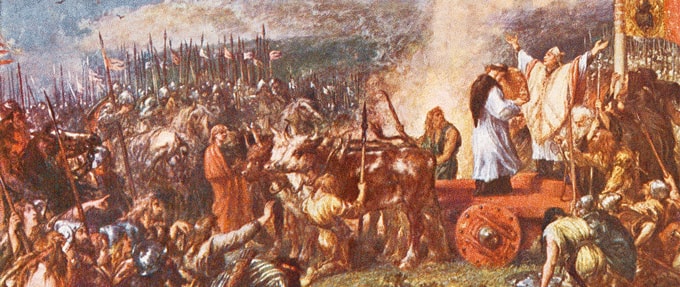
In February 1141, the struggle produced one of its strangest moments. At the Battle of Lincoln, Stephen was defeated and captured. Suddenly, the king himself was a prisoner.
Matilda’s supporters must have sensed victory. She entered London, and preparations began for her coronation. Yet events refused to cooperate. Opposition within the city grew, and before she could be crowned, Matilda found herself leaving London rather hurriedly.
Later that same year, Robert of Gloucester was captured by Stephen’s supporters. An exchange followed. Stephen regained his freedom, and the whole business started again.
No one had really won anything.
Years Without an Ending
The war dragged on. Neither side possessed enough strength to destroy the other. Supporters shifted allegiance when it suited them. Local concerns often mattered more than grand political principles.
Gradually, Matilda withdrew from active involvement and returned to Normandy. She never surrendered her claim, but attention increasingly focused elsewhere. On her son. Henry Plantagenet was still young, though few could have guessed how important he would become.
By the early 1150s, many of those involved in the conflict had simply grown tired. Years of uncertainty had achieved very little. Stephen remained king, yet Matilda’s cause had not disappeared. Into this weary landscape stepped Henry Plantagenet. Young, energetic, and ambitious, he offered something neither side had managed to secure. A future.
Then, in 1153, Stephen suffered a personal blow with the death of his son Eustace. The loss changed the mood of the conflict. Continuing the struggle suddenly seemed less appealing.
Peace at Wallingford
Later that year, negotiations produced the Treaty of Wallingford. Stephen would remain king for the rest of his life, while Henry Plantagenet would become his heir.
It was, in some ways, a compromise. Perhaps that was what the kingdom needed by that stage. Stephen died in 1154, and Henry became King Henry II. The Plantagenet dynasty had begun.
The years of civil war were finally over.
Remembering the Anarchy
The reputation of the Anarchy owes much to the writers who lived through it. Their accounts painted vivid pictures of suffering and disorder. Modern historians have tended to take a more measured view, pointing out that the machinery of government never entirely disappeared, and that conditions varied widely from place to place.
Still, few would argue that the years following Henry I’s death were easy ones. What began as a dispute over succession stretched across a generation. Children born during the early years of Stephen’s reign were adults before the struggle finally ended.
By then, England had a new king and a new dynasty. And somewhere in the pages of the Anglo-Saxon Chronicle, an old complaint remained.
“Christ and His saints slept.”
Want to read even more about the Anarchy? Check out these books:
The Reign of King Stephen
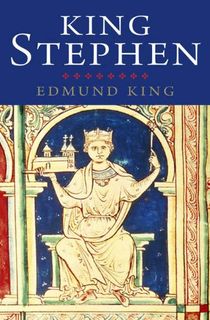
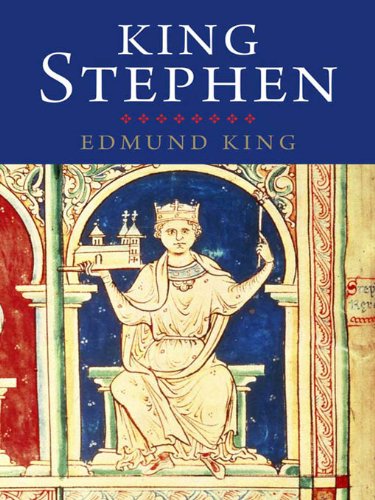
King Stephen
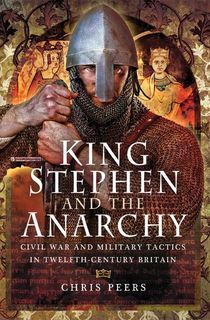
King Stephen and The Anarchy
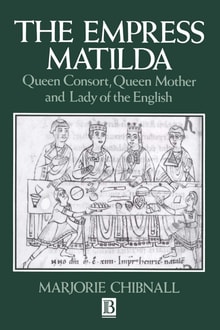
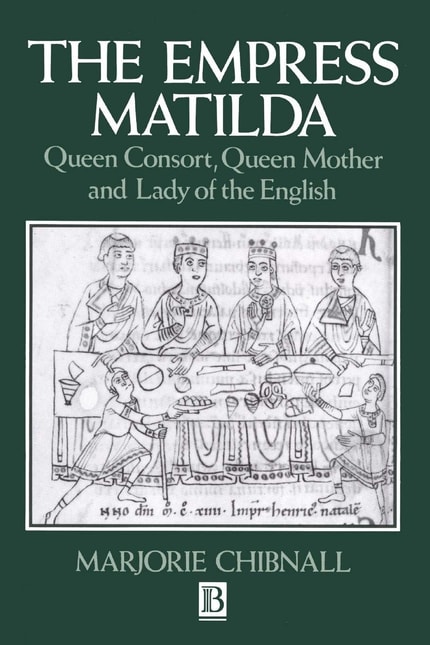
The Empress Matilda