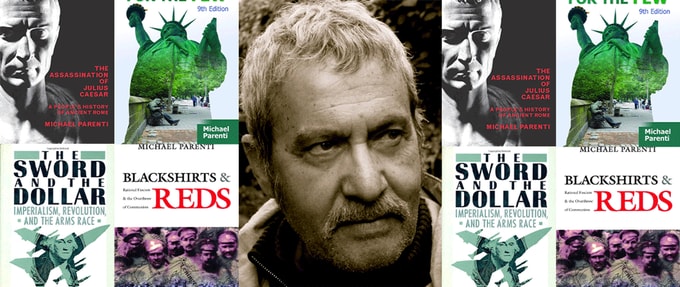

Author of over 20 books and a frequent lecturer, political theorist Michael Parenti became famous for his defining beliefs, many of which pushed the fold of the American left. His death was confirmed on January 24th by his son, Christian Parenti, at an assisted living facility in Amherst, Massachusetts.
Michael Parenti was born in Manhattan on September 30th, 1933, and grew up in East Harlem. He later graduated from the City College of New York, then earned a master’s degree and a PhD in political science from Brown University and Yale, respectively.
Following the completion of his doctorate, Parenti went on to teach at various higher learning institutions, including the University of Illinois Urbana-Champaign. There, in 1970, he became involved in a tussle with a state trooper while protesting the ongoing Vietnam War. He was convicted of battery and resisting arrest, though he avoided jail time.
His rallying against America’s involvement in Vietnam further politicized him, leading him to unsuccessfully run for Congress in Vermont in 1974. By the 80s and 90s, his work had become widely read among the left-wing figures such as Noam Chomsky and Howard Zinn.
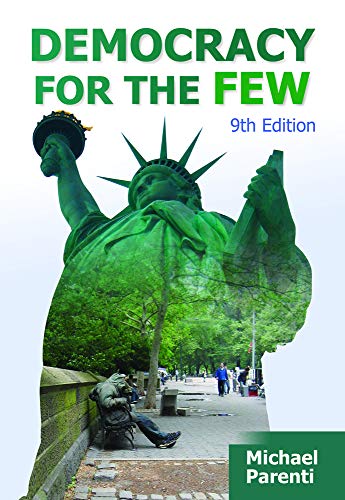
His 1974 textbook, Democracy for the Few, went through nine editions and viewed American history through the lens of class struggle. The subject would be returned to in his 1986 book, Inventing Reality: The Politics of the Mass Media, but in terms of how newspapers and TV networks catered to corporate owners, reinforcing propaganda for the working class.
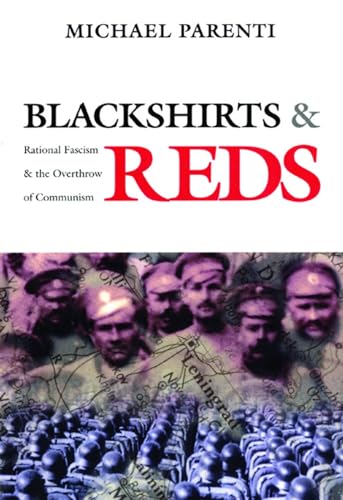
Throughout his career, he adopted various controversial stances, particularly in advocating for Marxist governments. Arguably his best-known work, Blackshirts and Reds, Parenti begins by analyzing the founding ideologies of European fascism before offering a rare defense of the Soviet system, including its leader, Slobodan Milosevic.
He is survived by his son, Christian Parenti, a professor of economics, and his grandson.
Michael Parenti's unwavering commitment to challenging mainstream narratives, with opinions that were often staunchly supported or opposed, ensures that his legacy will continue to provoke thought.
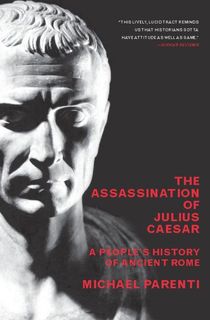
The Assassination of Julius Caesar

In The Assassination of Julius Caesar, scholar Michael Parenti offers “an important alternative to the usual views of Caesar and the Roman Empire” (Publishers Weekly).
By adopting the perspective of the people, Parenti offers a provocative, illuminating account of Roman society—whether considering democratic struggle, oppression against women, or homophobic attacks.
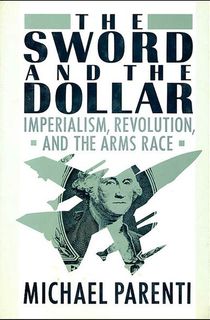
The Sword and the Dollar
Throughout history, as Michael Parenti argues, the U.S. has pursued a hidden agenda in foreign policy that appears to be at odds with its domestic political values.
Parenti goes on to examine how America’s interest in protecting large corporations runs counter to the public interest and contributes to the impoverishment of developing countries.
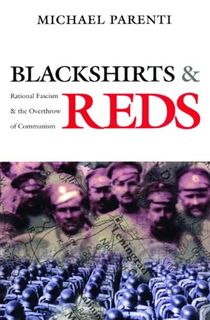
Blackshirts and Reds
Throughout history, as Michael Parenti argues, the U.S. has pursued a hidden agenda in foreign policy that appears to be at odds with its domestic political values.
Parenti goes on to examine how America’s interest in protecting large corporations runs counter to the public interest and contributes to the impoverishment of developing countries.
Democracy for the Few
In the ninth edition of Democracy for the Few, Michael Parenti critiques class power and its influence within political institutions.
His analysis offers an alternative view on American capitalism, particularly considering how democracy is infringed upon by corporate systems.
Featured image: Michael Parenti Archive


