The image is hard to shake: a city in the jungle, stone steps pushing up through roots and vines, and somewhere below it all, a sealed chamber full of gold. The phrase “lost Maya treasure” tends to bring that picture with it.
It sits comfortably alongside other familiar ideas. Pirate hoards, El Dorado, lost cities waiting to be opened. The Maya tend to get pulled into that same line of thinking, as if their world ought to have produced something similar.
But once you look at what has actually been found, it does not quite line up.
How the Idea Took Hold
Part of the myth can be traced back to the first European encounters in the 16th century. Spanish accounts described societies with elaborate material cultures, including objects made of gold. Those reports did not travel cleanly. They were repeated, reshaped, and often exaggerated as they moved across Europe—gold becoming the focus, as it often did.
Further south, that process fed directly into the legend of El Dorado. In the Maya regions, the situation was different, but the expectation lingered. If wealth had existed, then some of it must still be hidden. That idea set in early and, for the most part, stayed put.
By the 19th century, travelers were writing about Maya ruins in more detail. John Lloyd Stephens and Frederick Catherwood are usually mentioned first. Their accounts were careful, even restrained in places, but readers did not always take them that way.
They described large cities that appeared abandoned, their structures still standing in dense vegetation. That alone was enough to invite speculation. If places like these had once been active centers of power, then what had happened to everything that filled them?
The Influence of Film and Documentary
The 20th century allowed the idea of what was to be found to enter a more visual form. Film, illustrated magazines, and later television all leaned into the same basic elements. Remote landscapes, partial discoveries, and the suggestion that something remained just out of reach.
Even when the scholarship behind a documentary was sound, the framing could drift. A temple emerging from the jungle, a chamber opened after centuries, objects revealed where they had been placed long ago. These are real moments in archaeology, but they carry a different weight when sensationalized on screen.
It becomes easy, almost without noticing it, to interpret those moments as steps toward a hidden cache. Adventure stories set in the Maya world often put gold at the center, drawing on older colonial ideas. Given time, that version simply became familiar enough to pass without much question.
What Counted as Value
The difficulty is that this way of seeing things leans more toward European priorities than Maya ones. For the Maya, materials carried meanings that do not always translate neatly into modern ideas of wealth.
Jade is probably the clearest example. It was linked to life, breath, and renewal. Its color tied it to maize, which sat at the center of Maya cosmology. Objects made from jade appear frequently in burials and ceremonial settings, not as stored wealth but as part of an ongoing cycle.
Other materials follow a similar pattern. Shells, obsidian, fine ceramics, and textiles all had value, though not in a simple monetary sense. Where something came from could matter as much as what it was. Associations, origins, and symbolic weight all played a part in creating value to the Maya.
Gold, which tends to dominate modern expectations, was present but not central. In many Maya areas, it appears relatively late and in smaller quantities than people often assume. It was used, certainly, but it did not define status in the way it did for the Spanish who encountered these societies.
Once that shift is made, the idea of large hidden stores of gold begins to look less convincing.
What Has Actually Been Found
There is no real shortage of important discoveries. Some of them are striking enough that they are still described as treasure, though the term needs a bit of care.
Royal tombs are the obvious place to start. The burial of K’inich Janaab’ Pakal at Palenque, uncovered in the mid-20th century, contained a detailed arrangement of jade objects, including a well-known funerary mask. Nothing in that chamber appears to have been placed casually.
Similar finds have appeared elsewhere. Tombs at sites such as Tikal and Copán have produced ceramics, ornaments, and inscriptions that help build a picture of how Maya rulers understood their place in the world. At Río Azul, burials revealed painted vessels and carefully arranged offerings.
There are also deposits that were never meant to be seen again. Caches placed beneath temples or within plazas often contain objects set out in deliberate patterns. Their purpose was ritual. Recovery was not part of the plan.
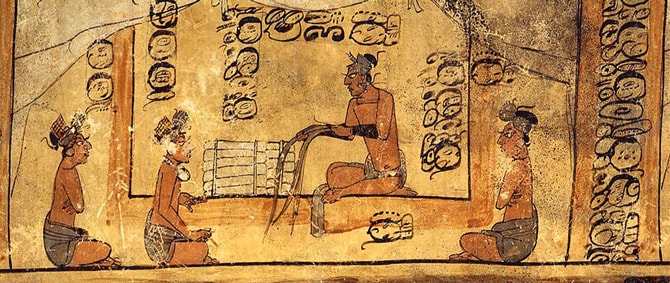
Even outside these contexts, some discoveries carry their own kind of weight. Murals, carved stelae, and hieroglyphic texts do not sit comfortably in the category of treasure, but they hold far more information than a store of metal ever could.
What stands out, looking across it all, is how rarely anything resembles the popular idea of a hidden cache. The value is there, but it stays tied to place, belief, and use.
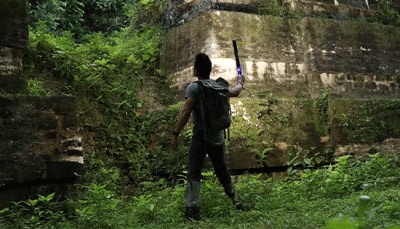

National Geographic explorer Dr Albert Lin in Tikal, Guatamala.
Photo Credit: National Geographic ChannelWhy the Story Keeps Returning
Even so, the idea of lost treasure has not really gone away. Part of that comes down to habit. Stories about hidden wealth are easy to tell and easy to follow. The actual work of archaeology moves in smaller steps, and the results do not always settle into a single narrative.
There is also the scale of the Maya region to consider. It is vast, and much of it remains only partially explored. New sites continue to be identified, sometimes through techniques that would have been difficult to imagine a few decades ago.
That sense of possibility leaves room for older ideas to persist— and media still plays a role. A newly opened tomb or a set of objects uncovered in situ can be presented in ways that echo the language of discovery and revelation. The line between careful reporting and familiar storytelling is not always a sharp one.
And then there is the pull of gold itself. It carries a certain weight in the imagination. When people think about ancient wealth, it tends to come first. Applying that expectation to the Maya happens almost automatically.
A Different Way of Seeing Treasure
What has been found so far points in a slightly different direction. The Maya world left behind cities, inscriptions, artworks, and traces of belief that are still being pieced together. Each excavation adds something, though not always in ways that draw much attention at the time.
None of that looks like treasure in the traditional sense. Yet it is difficult to argue that it is any less valuable.
The jungle still covers a great deal. That much is true. What it is likely to reveal, though, is not a hoard waiting to be claimed, but further evidence of how the Maya understood value in the first place.
Further Reading
The Maya by Michael D. Coe
Ancient Maya by Arthur Demarest
The Order of Days by David Stuart
Gods and Symbols of Ancient Mexico and the Maya by Mary Miller and Karl Taube
Featured image: Wikimedia Commons


