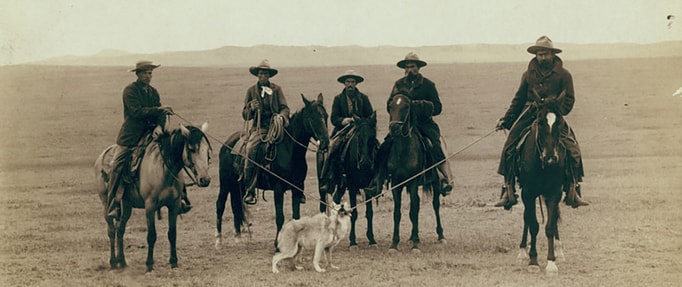

There is perhaps no more iconic avatar of Americana than the cowboy.
At one time, these rugged cattle wranglers dominated our movie screens and our bookshelves, and even today they are an inescapable part of our national identity. Yet, most of us live lives that are far removed from the “home on the range,” and even modern ranch hands would find little that they recognized in the lives of the cowboys who drove cattle across the American West more than a century ago.
For most Americans, our ideas of cowboys are still rooted in old movies about gunslingers and sheriffs. In a haze of mythmaking, we run the risk of forgetting our very real history, and the role that cowboys, cattle barons, ranchers, and others played in shaping America’s culture, geography, economy, and more.
Fortunately, these five books show what life was really like on the prairie – from campouts along cattle drives to the bustling cow towns, from nights under the stars to the sprawling ranches of southern Texas – and how the events of the past can shape the present in ways both obvious and unexpected.
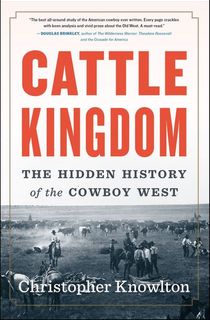
Cattle Kingdom

Perhaps nothing is more iconically American than the cowboy, despite the fact that the era which we associate with these rugged cattle herders lasted barely a quarter of a century. In a book that has been hailed as “the best all-around study of the American cowboy ever written” (Douglas Brinkley, author of The Wilderness Warrior), author Christopher Knowlton draws a vivid picture of “trail drives, rambunctious cow towns, gunfights and range wars” (Wall Street Journal), while bringing to life a bygone era that nonetheless shaped much of America’s self-identity.
Besides the details that create the luster and allure of the Old West, Knowlton focuses on the economics and social and political factors that show us “why the story played out as it did” (New York Times Book Review). The result? “The best one-volume history of the legendary era of the cowboy and the cattle empires in thirty years” (True West).
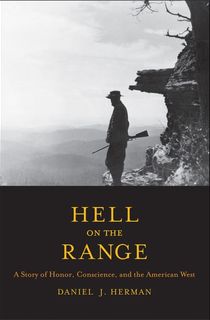
Hell on the Range
The so-called “Pleasant Valley War” took place from 1882 to 1892 in Arizona’s Pleasant Valley. In that time, it drew Texas cowboys, shepherds from New Mexico, Mormons, and many more into a long and bloody feud between two ranching families. In Hell on the Range, professor of history Daniel Justin Herman argues that the conflict stemmed at least in part from a conflict of different codes and ideologies, and traces the history of American violence, and how it shaped our nation, in “an original and provocative contribution to western history” (Benjamin H. Johnson, author of Revolution in Texas).
Of interest not just to scholars of Arizona or of cowboy history, Hell on the Range is “a genuine contribution to the histories of American violence, society and culture, politics, and economics” that “will become a classic in the historiography of the American West” (Durwood Ball, University of New Mexico).
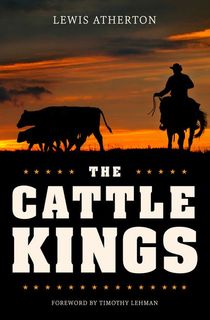
The Cattle Kings
“Containing little glamour and much neglected history, this excellent book will appeal to students of the West, Old and New, and to addicts of history who prefer fact to fireworks,” writes Kirkus Reviews of Lewis Atherton’s “stimulating and rewarding” (Indiana History Magazine) history of the ranchers and cattlemen who were the driving force behind the Old West.
While fictional accounts may focus on cowboys, gunslingers, and lawmen, Atherton argues that it was the cattle barons who really shaped this time and this land, and in so doing he creates “probably the best critical review ever presented on this complex subject” (Agricultural History), introducing readers to such memorable figures as Charles Goodnight, Shanghai Pierce, the Marquis de Mores, Richard King, and others. After all, without the cattle barons and their ranches, there would have been no herds for cowboys to drive, and much of the west would look very different than it does today.
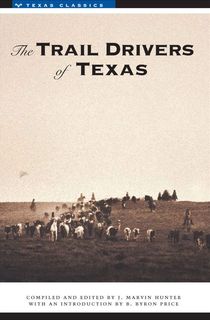

The Trail Drivers of Texas
Hailed as the “essential starting point for any study of Texas trail driving days” (Basic Texas Books), The Trail Drivers of Texas is a chronicle of the men and women who drove cattle from the wide-open spaces of Texas to markets in the north. Written by the founder of the Frontier Times Museum in Bandera, Texas, this indispensable volume “has been considered the most monumental single source on the old-time Texas trail drives north to Kansas and beyond” for more than 60 years (Dallas Morning News).
Drawn from accounts by those who rode the trail, J. Marvin Hunter’s exhaustive compendium of trail-driving stories will give readers a firsthand look at what life was like on the range, driving cows from Texas to Kansas City and points beyond. Rather than one story of life on the range, The Trail Drivers of Texas produces a kaleidoscopic overview of the lifestyle of cowhands, as told by those who were there.
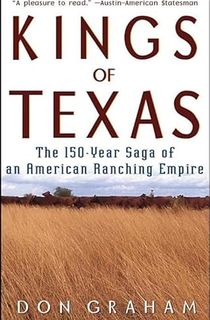
Kings of Texas
Founded in 1853, the largest ranch in America spans parts of six different Texas counties, and has survived sweeping changes across our nation. In this “good read about an era long gone” (Boston Globe), author Don Graham conjures up a sweeping saga of the history of the King Ranch, the families who founded it, and the changes it underwent through the years.
The result is “a compelling chronicle of war, peace, love, betrayal, birth, and death in the region where the Texas-Mexico border blurs in the haze of the Wild Horse Desert” (H. W. Brands, Pulitzer Prize-nominated author of The First American); a book that is “concise but thorough, crisply written, meticulous, and very readable” (Larry McMurtry, Pulitzer Prize-winning author of Lonesome Dove). Read it to discover not only how America’s largest ranch has shaped history and culture, but how history and culture have shaped life on the ranch, from the days of the Old West to today and even tomorrow.
Feature image: John C.H. Grabill via Library of Congress


