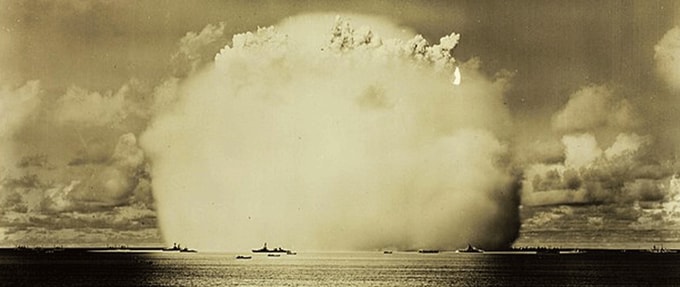
What makes a weapon deadly? Is it the number of people it has killed throughout history, or the number that it can kill all at once? In 1964, the Historical Evaluation and Research Organization was contracted by the U.S. Army Combat Developments Command to study “Historical Trends Related to Weapon Lethality.” The study examined the lethal potential of various weapons on a range of quantifiable measures, including “number of potential targets per strike, relative effect, effective range, accuracy, reliability, and mobility.”
And yet, one of the weapons with the greatest potential lethality, the 25-megaton hydrogen bomb developed during the Cold War, has never been used, and so has an actual lethality of zero. Taking all of these and other factors into account, including weapons whose deadly reputations have changed the way that battles were fought, we’ve assembled this list of seven of the deadliest weapons in history, and how they have altered the ways in which we wage war.
Polearms
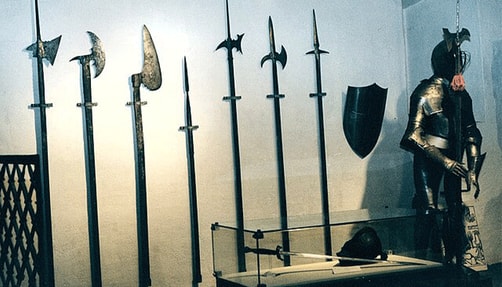
 Photo Credit: Wikimedia
Some scholars have suggested that stone-tipped spears may have been among the earliest weapons ever devised, when they were probably used mainly for hunting. Spears and other polearms have an obvious benefit when fighting – you can stab or chop your opponent without ever letting them get too close to you. This led to polearms being mainstays of warfare in medieval Europe, where they were essential as a counterbalance to heavy cavalry. A knight on horseback was the equivalent of a tank in medieval warfare, and there was very little that a soldier on foot could do against them without at least a long, pointy stick. Estimates by Interesting Engineering suggest that polearms have killed more than 60 million people throughout history, though they fell out of favor with the Industrial Revolution.
Crossbows
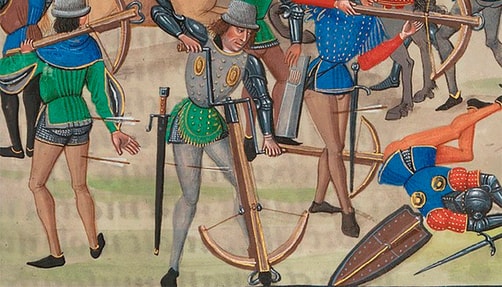 Photo Credit: Wikimedia
 English archers at the Battle for Agincourt had already shown that being able to strike down enemies from afar could not only turn the tide of battles but change the face of warfare. However, longbows required considerable training and practice to use effectively. Enter the crossbow, which “democratized lethality.” In much the same way that firearms would in subsequent years, the crossbow allowed even relatively untrained soldiers to be deadly at great distances, and “upended the old order of medieval warfare.” While crossbows and similar weapons had been in existence since as early as 650 BCE in China, the modern crossbow became a staple of European medieval armies between the 10th and 12th century.
Artillery
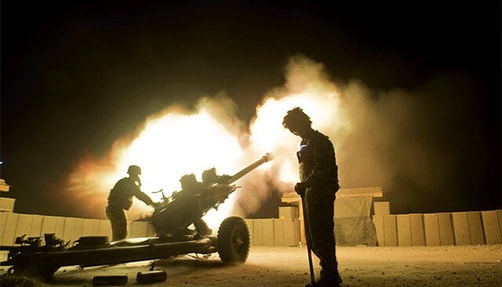 Photo Credit: Wikimedia
Since ancient times, large weapons that can deliver strikes deep into enemy lines have been among the most effective and most deadly of all tools of war. In early days, such artillery included catapults and ballistae, while gunpower-operated cannons likely made their way into Europe from China and became the de facto form of artillery for centuries. Today, artillery may not look much like it did hundreds of years ago. Ballistic missiles can strike targets on other continents and can even carry nuclear warheads, making them centerpieces of modern military strategy. In fact, according to estimates made by Interesting Engineering, it’s possible that artillery has killed more people than any other form of combat in history – and it’s still probably the most important weapon in military arsenals today.
Machine Guns
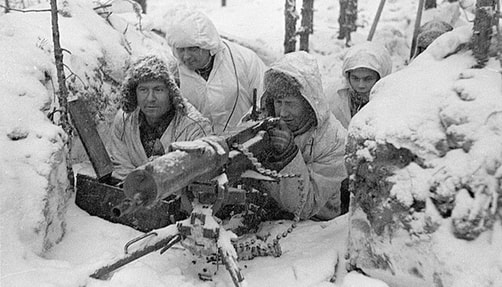 Photo Credit: Wikimedia
In a single day of the First Battle of the Somme in World War I, some 20,000 British soldiers were gunned down by German troops operating heavy machine guns. These guns resembled those designed by inventor Hiram Maxim in 1884, who had incorporated a number of new developments to create the first machine guns. These guns were heavier and bulkier than the assault rifles that were to follow, and were prone to jamming and overheating, but their sheer rate of fire gave them a killing potential that had largely never been seen before, and they proved decisive in the First World War, changing battle tactics and reshaping the way wars are fought entirely.
Nuclear Weapons
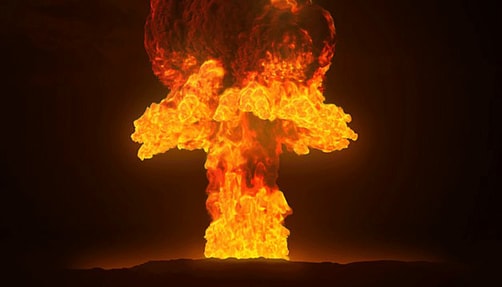 Photo Credit: Wikimedia
On August 6, 1945, the United States dropped an atomic bomb on Hiroshima that killed tens of thousands of people immediately, while countless more succumbed to radiation poisoning in the subsequent months and years. It was the first time that such a devastating weapon was used, and it was followed just a few days later when another bomb was dropped on Nagasaki, killing more than 60,000. The destruction wrought by the atomic bombs led to the Cold War and an arms race that threatened the planet with global extinction. The lethal potential of these weapons has meant that they have never been used again, but there are still thousands of nuclear weapons in the world, many of them considerably more powerful than those used on Hiroshima and Nagasaki – so the most lethal weapons may be those that have yet to be deployed.
AK-47s
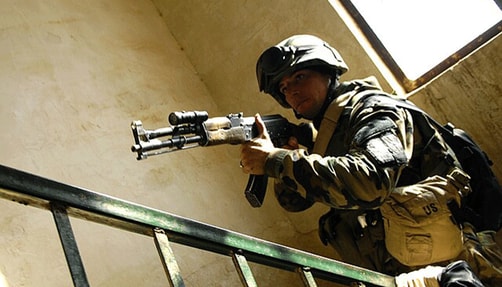 Photo Credit: Wikimedia
“The AK-47’s impact on global warfare remains unmatched,” writes the History Collection, discussing the most ubiquitous assault rifle in the world, while the Encyclopedia Britannica describes the AK-47 as “perhaps the defining piece of military hardware of the 20th century.” Developed in 1947 by Mikhail Kalashnikov, the Avtomat Kalashnikova, or AK-47 is one of the most popular and widely-used firearms in the world, with an estimated 100 million AK-47s still in use in the early 21st century. This popularity is due in part to the weapon’s ease of use and durability under a variety of less-than-ideal conditions, making the AK-47 the logical extension of the values already brought to warfare by the development of hand-held rifles. It has been estimated that the AK-47 is responsible for more violent deaths than any other single type of firearm.
Drones
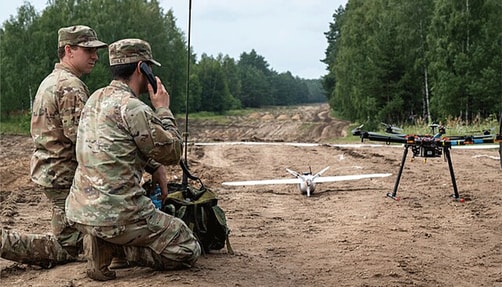 Photo Credit: Wikimedia
While “killing at a distance” may not be the be-all and end-all of lethality, it is clearly one of the most important developments in battlefield tactics, and there are few more distance-enabling weapons than modern-day drones, which can be operated from halfway around the world while still striking with lethal accuracy. During World War I and II, fighter planes and bombers proved decisive for their ability to strike quickly and without much opportunity for reciprocity. After all, it’s hard for someone on the ground to attack something in the air. Unmanned aerial vehicles, or drones, provide many of the same benefits that such fighter planes and bombers enjoyed, but they are smaller, harder to detect, and don’t put their pilots in any immediate physical peril, though drone operators have been shown to suffer from PTSD in similar numbers to ground troops, suggesting that the psychological toll of “killing at a distance” is still considerable.
Featured image: Wikimedia


