
Anglophile, n.: a person enamored with England and/or its people, culture, history, and legacy
Many an American has been known to swoon over a suave English accent, though American cinema often depicts Brits as villains. Our world turned technicolor when The Beatles landed in the US, but we turn our noses up at Marmite. Tom Holland is primed to become one of the hottest and brightest stars of this century, but he’s only good enough for our California girl Zendaya if she gets bigger billing.
This dichotomy is confounding. Didn’t we fight for nearly a decade to be out from under English rule? Is our obsession with British culture a form of buyer’s remorse of our freedom? Do we simply put on rose-colored glasses when we look out across the Atlantic? Or do we have post-colonial FOMO as British pop culture becomes so robust it invades by radio plays and binge-able TV shows?
Whatever the mania behind it, there is no shortage of reasons to love the United Kingdom, from the Lake District to the London Underground, from treacle tart to Sunday lunch, from Scottish coos and Welsh corgis to Northern Irish Giant Causeway to castles upon castles upon castles, from pub grub to whisky—and, of course, to tea. While the books below are not love letters to Colin Firth or Robert Pattinson or Doctor Who, nor to Elizabeth Taylor or Saoirse Ronan or Bridget Jones, they comprise a compendium on the kingdom we left, how it came to be, and where it is now.
Here are 10 books for Anglophiles.
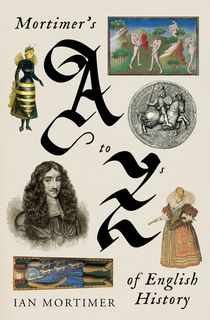
Mortimer's A to Zs of English History
Known for his “Time Traveller’s Guides” to different eras, historian Ian Mortimer has compiled everything from the most essential facts to the most interesting tidbits on four defining eras of modern England: the 14th century, the Elizabethan age, the Restoration, and the Regency. He covers authors, artists, military leaders, inventions, illnesses, etiquette, and more.
With Mortimer’s guidance, one can learn how the invention of the button changed the world, or why pistols were potentially safer than swords in a duel, all in one tome. While the A to Zs paints a vivid portrait of the past, explorations of daily life and how times have changed shed light on modern living as well.
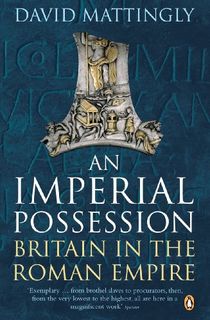
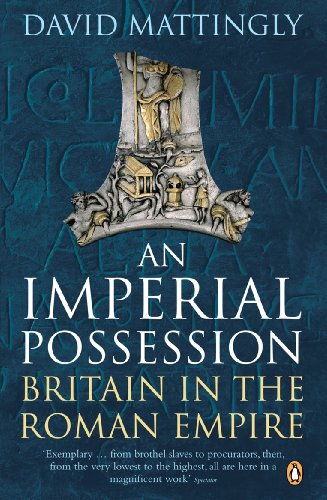
An Imperial Possession: Britain in the Roman Empire, 54 BC - AD 409
Archeologist and historian David Mattingly uses new findings to expand previous understanding of Roman-occupied Britain from 54 BCE to 409 CE. He portrays the Roman colony as dangerous and remote compared to the rest of the Roman Empire, with a native British resistance led by clan chiefs and druids and the Roman military leaders barely able to keep hold of the territory. As the first new exploration of the Roman occupation of Britain in several decades, Mattingly’s text is not only able to add to the historical narrative, but also to dispel myths and misunderstandings of that era.
The First King of England: Æthelstan and the Birth of a Kingdom
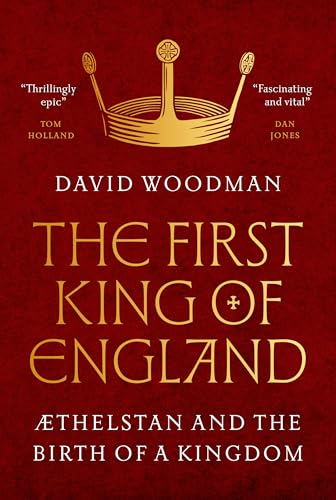
Overshadowed by post-Norman rulers in the history books, Æthelstan is often forgotten as the first king of a united England. His grandfather and father, Alfred the Great and Edward the Elder, respectively, were instrumental in consolidating power and subduing the Danes, but they only reigned over the “kingdom of Anglo-Saxons.” It was Æthelstan who conquered the Viking kingdom at York, forced submission of a Scottish king, and subjugated the Welsh kings, declaring himself the first king of England in 927 AD.
Historian David Woodman brings new appreciation to Æthelstan’s life and legacy, including his early childhood in a warring medieval Europe, his impressive military record, and his unprecedented alliances with Europe’s royal families.
A History of English Place Names and Where They Came From
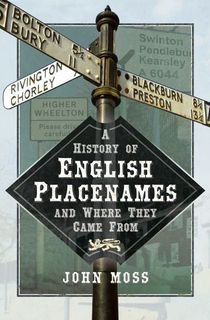
The names of many English boroughs seem old fashioned to an American ear, but John Moss traces them far back into the past, uncovering ancient roots and reasons behind place names. Having scoured local sources, existing historical accounts, and ancient records, Moss examines names of towns, hamlets, and villages going back to the Anglo-Saxons, the conquering Danes, the Normans, and the Romans before them, some all the way back to the Vikings who invaded and settled in England in the 800s.
While most place names refer to the people who founded the settlements or the land itself, many staying relatively recognizable to their older spellings and pronunciations, still others changed shape over time to the point that they would be unrecognizable to their original inhabitants.
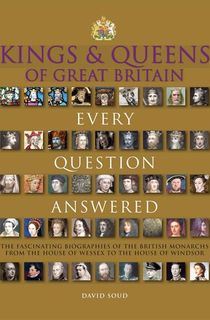
Kings & Queens of Great Britain
In this exhaustive text of British rulers through publishing year 2014, David Soud catalogues biographical details of not only monarchs and conquerors, but individuals who harnessed enough political power to give the monarchs a run for their money. Soud paints scintillating portraits of all the expected Henrys and Edwards, etc, as well as Britain’s two longest-reigning monarchs (Queen Victoria and Queen Elizabeth II), and rivals to the crown including Lady Jane Grey and Oliver Cromwell. Soud’s biographies focus not only timelines of events, but also insights into their personalities, bringing these figures vividly to life.
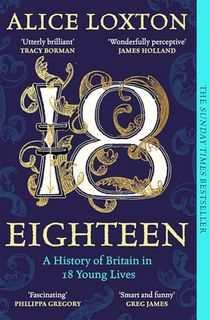
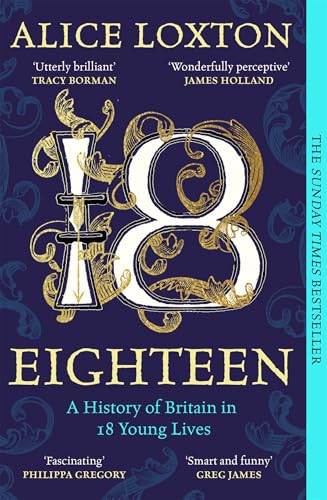
Eighteen: A History of Britain in 18 Young Lives
Historian Alice Loxton weaves a tapestry of British history through the lives of 18 teenagers, including notable figures such as Elizabeth Tudor (later Elizabeth I), Geoffrey Chaucer, and Vivienne Westwood. Loxton not only explores the lives of these young people through the lens of how the era and circumstance in which they live shaped their outlook on their individual futures, but also the impact they had on British legacy. Her writing is witty and engaging, crafting equally compelling stories of those who have little known about their lives and of those who had their near-every movement recorded.
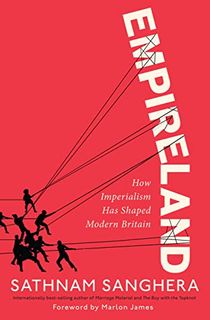
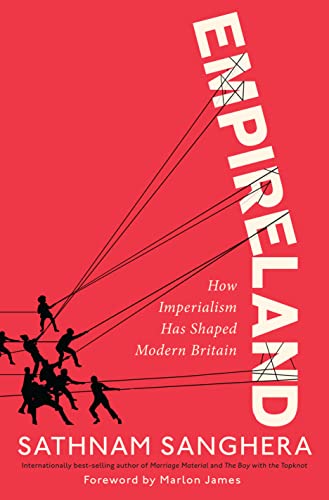
Empireland: How Imperialism Has Shaped Modern Britain
In Empireland, award-winning journalist Sathnam Sanghera traces the legacy of Western imperialism throughout the United Kingdom and its former empire. Sanghera boldly claims that understanding British imperialism is fundamental in understanding America, tracing the remnants of British control through to the most innocuous aspects of life, like “traditional” daily routine, to the more insidious issues plaguing society, like the distrust of public intellectuals.
This text exposes the now centuries-old shadow of imperialism by exploring the history of the most famous former British colony turned global power, and how the imperialistic ambitions of the parent empire have stayed embedded in the American spirit.
British Food
English food was once considered the height of delicacy. That changed in the Victorian age, Colin Spencer claims, due to changing opinions and changing times, and English food spent the next 150 years devolving into a punchline.
Spencer provides an account of British history through culinary heritage and shows how certain eras and events shaped eating, cooking, and cultivation, particularly noting the Black Death, the Reformation, the Industrial Revolution, and modern capitalism. As much as Spencer is able to draw the thread through the rise, fall, and postmodern resurgence of British cuisine, he is also able to illustrate how the culinary impression of a nation can be shaped equally by the natural, political and social worlds.
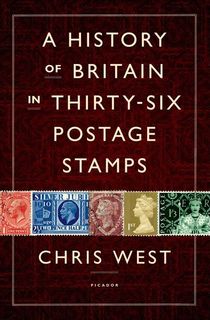
A History of Britain in Thirty-Six Postage Stamps
Some people collect stamps to mark significant times in their personal histories, others because they find value in the images they depict from history and events. Chris West, though, has collected 36 postage stamps that tell this history of modern Britain, including gems such as the Penny Black, printed after Queen Victoria’s coronation, to the Victory! stamp issued in the postwar reconstruction chaos of 1946.
Though stamps can range from boring to beautiful and economical to eccentric, West analyzes each stamp as a reflection of style, politics, and social climate of its time.
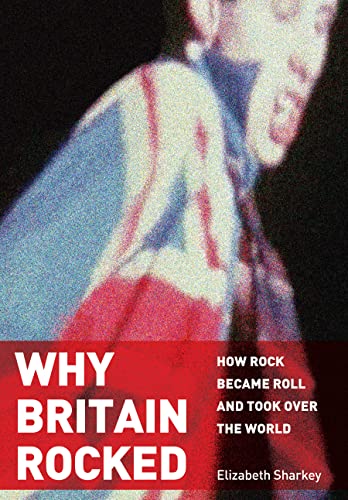
Why Britain Rocked: How Rock Became Roll and Took over the World
Music historian Elizabeth Sharkey writes an extensively researched love letter to British rock and pop in Why Britain Rocked. Acknowledging the explosion of sensational music in the 1960s that led to the “British Invasion” of American music and pop culture, Sharkey lays the path toward rock beyond the influence of blues and music halls.
She investigates influences from the Celts, Tudor England, and the Quakers all the way to Ira Aldridge and Paul Robeson, arguing that British pop music had always been moving in a direction always destined to end at rock and roll, and that The Beatles’ seemingly overnight arrival wasn’t sudden at all, but inevitable.