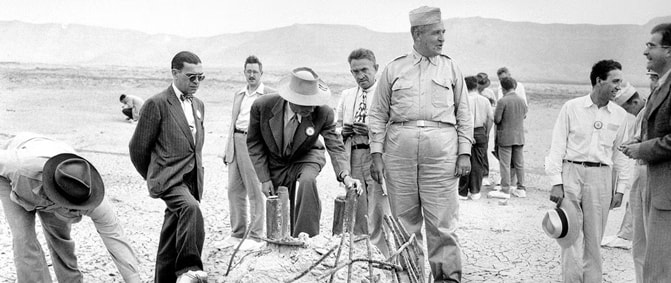

In June 1942, at the height of World War II, the U.S. government launched a top-secret program to develop the world’s first atomic bomb. Codenamed the Manhattan Project, the effort would fundamentally reshape humanity, transforming politics, warfare, and the question of human survival itself.
The project remains one of the most controversial events in history, culminating in the tragic bombings of Hiroshima and Nagasaki, where over 200,000 people died, and many more suffered long-term radiation sickness and cancer.
More recently, the Manhattan Project was the basis for the Academy Award-winning film Oppenheimer, which chronicles physicist J. Robert Oppenheimer and his team of scientists, who spent years developing the first nuclear weapon.
From comprehensive histories to biographies and overlooked stories, these six books explore one of history's largest and most secretive wartime projects—and its enduring legacy.
Now It Can Be Told
From the general who hired and served as J. Robert Oppenheimer’s right-hand man, uncover the truth behind what was one of the most significant engineering feats in history: the making of the first atomic bomb.
As the ranking military officer in charge, General Leslie Groves oversaw the project, ensuring nothing stood between the Manhattan Project and completion. His role has long been controversial, as physicist Edward Teller, also at Los Alamos, notes in the introduction.
What follows “is a thriller as strange as any chapter in American history, and its drama is heightened by the general’s candor and restraint” (New Yorker).
The Making of the Atomic Bomb
Winner of the Pulitzer Prize, National Book Award, and the National Book Critics Circle Awards, this is “the comprehensive history of the bomb—and also a work of literature” (Tracy Kidder, Pulitzer Prize-winning author).
Introducing the major players, scientists, and theories behind nuclear weapons—from nuclear energy to J. Robert Oppenheimer and the Manhattan Project—author Richard Rhodes offers “the best, the richest, and the deepest description of the development of physics in the first half of this century” (Isaac Asimov, SFWA Grand Master).
The Girls of Atomic City
During World War II, Oak Ridge, Tennessee, drew thousands of young women through the promise of stable jobs—but what exactly were they doing there? Home to 75,000 civilians, Oak Ridge consumed more energy than New York City, yet remained shrouded in mystery.
Speaking with women who lived and worked there, author Denise Kieran “has amassed a deep reservoir of intimate details of what life was like for women living in the secret city [...] Rosie, it turns out, did much more than drive rivets” (Washington Post).
American Prometheus
The ultimate biography of J. Robert Oppenheimer, and the inspiration for the Academy Award-winning film Oppenheimer, authors Kai Bird and Martin Sherwin capture the life of one of the most iconic—and controversial—figures of the 20th century.
To better understand what led the physicist to become the ‘Father of the Atomic Bomb,’ this Pulitzer Prize winner “succeeds in deeply fathoming his most damaging, self-contradictory behavior,” offering a “multifaceted portrait with a keen grasp of Oppenheimer’s essential nature” (New York Times).
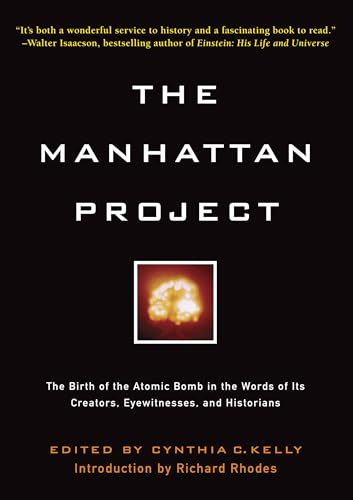
The Manhattan Project
Employing nearly 600,000 people and costing about $2 billion ($28.5 billion in 2020), the Manhattan Project is easily one of the U.S. government’s most significant undertakings—and yet remained a complete secret during operation.
Combining essays, articles, documents, novels, and more, this “rich anthology [...] enhances our knowledge of the formative years of the nuclear era and underscores the perils we still face” (Kai Bird, co-author of the Pulitzer Prize-winning American Prometheus).
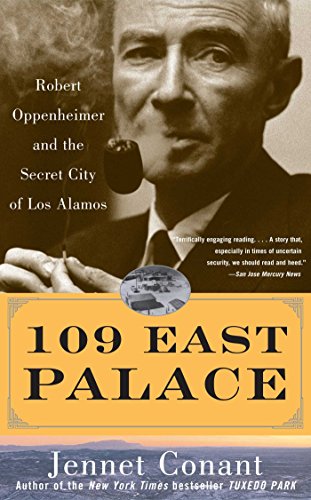
109 East Palace
In 1942, the Manhattan Project began, and its director, J. Robert Oppenheimer, recruited scientists who, unknowingly, became virtual prisoners of the U.S. government.
For the next 27 months, thousands of families were sequestered outside of Santa Fe, New Mexico, and had to lie to loved ones about where they were.
Jennet Conant, a young widow and one of Oppenheimer’s first recruits, narrates “a haunting, beautifully realized and highly entertaining story” about what it was like to witness the invention of the atomic bomb (Edmonton Journal).
Featured image: Bettmann


