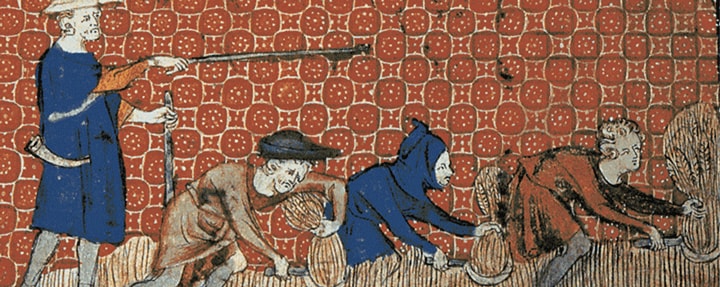

What is feudalism? Now a somewhat contentious term among historians and medievalists, feudalism refers to a dominant social and political system that existed in various forms throughout much of Europe (and in some other parts of the world) between the 9th and 15th centuries.
In his influential 1939 book Feudal Society, Marc Bloch presents the premise that “with the disintegration of state power in the tenth century under the pressure of invasion and economic collapse, the result was an increasing tendency for society to be defined by ties of dependency rather than ties of solidarity, a shift to vertical social relations away from horizontal ones protected and endorsed by public power, and that this shift became so fundamentally embedded that it came to be the defining characteristic of almost all medieval social organization.”
Which is perhaps an overly technical way of saying that feudalism is often defined as a “strict, hierarchical system of reciprocal legal and military obligations among the warrior nobility, revolving around the core concepts of lords, vassals, and fiefs.” Essentially, it was a system that linked social, political, and military power to landholding, with those who worked and lived on the land beholden to, yet also protected by, the land’s owners, who typically resided in a large, often fortified manor house or castle.
While feudalism in various forms can be found outside medieval Europe—such as in Japan under the shoguns or in the Antebellum South in America—it is primarily associated with our conception of what life was like in medieval Europe.
These five books will take you into the world of feudal society, from the lives of soldiers to those of nobles and even the poorest of the poor, to show you how medieval society functioned, how much things have changed, and, in some cases, how much they’ve stayed the same.
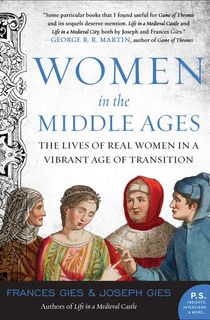
Women in the Middle Ages
Written by bestselling authors and historians who were used as reference by writers such as George R. R. Martin, this “highly recommended […] reliable survey of the real and varied roles played by women in the medieval period” was sadly unavailable in print for several years (Choice).
Fortunately, it has recently been republished, offering new readers a glimpse into the too-often-neglected lives of women during the Middle Ages. While history is frequently relegated to lists of battles and kings, women were shaping much of life in medieval Europe, as readers will see in this book, which makes “the Middle Ages accessible to nonspecialists” (The New Yorker).
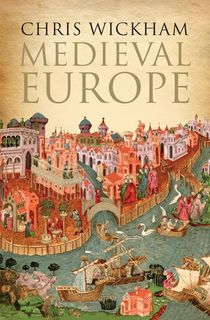
Medieval Europe

Kirkus Reviews calls Chris Wickham’s work a “thorough survey of the European continent in the time between antiquity and modernity […] of considerable interest to students of history writ large, and not just of Europe." It’s easy to forget that the Middle Ages spanned a thousand years and saw numerous changes throughout Europe.
Covering such a vast tract of information often seems more than a single book can handle, yet this thought-provoking volume does so with great focus, revealing a dynamic and vibrant medieval world.

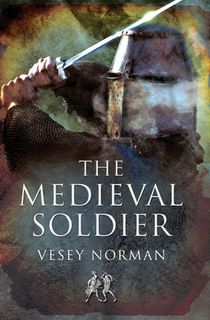
The Medieval Soldier
We've all heard that history is written by the victors, and throughout much of the Middle Ages, history was defined by battle. In a heavily researched volume, author and historian Vesey Norman details how the face of the medieval soldier changed throughout the Middle Ages, the rise of chivalry, and the transition of knights into landed gentry who served feudal lords as heavy cavalry in exchange for titles and positions.
From the arms and armor used by these soldiers to the tactics and battles that reshaped medieval society, this is a one-stop shop for all your questions about the soldiers, knights, and other warriors who were instrumental in the battles that defined so much of medieval history—and also what those same soldiers did when they weren’t on the battlefield.
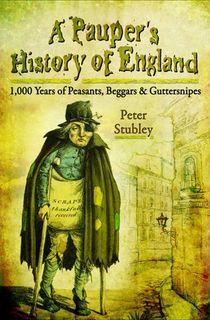
A Pauper's History of England
History is usually told through the lens of the wealthy. Kings and queens, aristocrats and warlords. For the lives of the common people, one must look harder. Enter Peter Stubley’s A Pauper’s History of England, which draws on countless historical sources to reconstruct what life was like for the poorest of the poor throughout England’s Middle Ages.
From a night in the workhouse to the Peasant’s Revolt of 1381, this book shows what everyday life was like for the people no one remembers. As England evolved from a feudal society into a global empire, how did the country's changing fortunes affect the daily lives of its poorest residents?
Whether you want to learn the secret language of Elizabethan beggars or meet the inmates of the notorious Bedlam Hospital, this book explores the unexplored corners of English history.
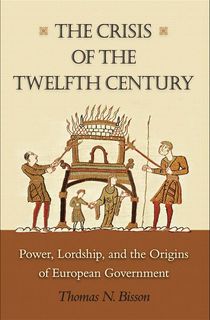
The Crisis of the Twelfth Century
“The story is an old one,” writes the London Review of Books, “but so many-sided as to invite constant retelling from new angles. Bisson has found a new angle, and writes with prodigious sweep and learning.” The story is of changes within the feudal system and the origins of modern government, in this case, centered on several violent lords early in the Middle Ages.
Featured image: Wikimedia Commons


