
The Appalachian Mountains run from southwest New York to Northern Alabama and Mississippi, and are populated by diverse communities historically reliant on the land. The region has a tumultuous history, including the violent displacement of the indigenous peoples, the generational poverty caused by systematic marginalization, the disproportionate effect of the opioid crisis, and other fallout from reliance on mining companies, dwindling natural resources, and increasing pressure of the “modern” world.
Many Appalachian stereotypes have invaded popular culture, including the “hillbilly” characters, the “backward-thinking” traditionalists, and the backwoods Fundamentalists, serving as backdrops in horror movies and sitcoms alike. Appalachia, though, has a unique and complex culture that its residents capture in stories and in songs and that is marked forever in the land itself.
These Appalachian history books explore how Appalachia became the forgotten American region and what repercussions its near-erasure has had on the people and the landscape.

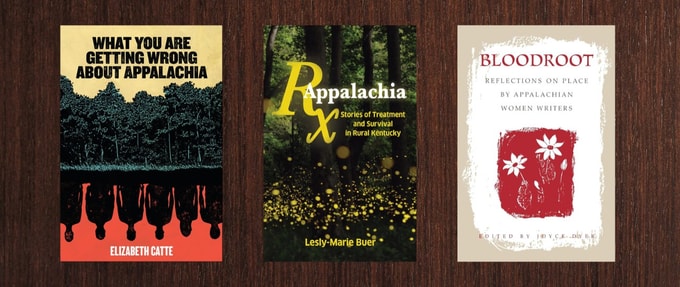
What You Are Getting Wrong About Appalachia
During the 2016 presidential election, the eyes of the nation turned to Appalachia, where generational poverty and political abandonment made people desperate to hold onto even the flimsiest campaign promises.
Dr. Elizabeth Catte examines America’s newfound obsession with Appalachia, including an analysis of contemporary writing on the region, from scholarship to film and television. She provides a brief history of Appalachia, dismantling stereotypes and undermining the bigotry of this misunderstood region and its people. Catte also explores the culture of Appalachia from within, presenting examples of art, writing, and policy created by Appalachians themselves, rather than by outsiders.

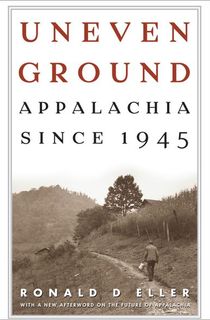
Uneven Ground
Originally from West Virginia, history professor Ronald Eller has spent four decades teaching and writing about Appalachia. In Uneven Ground, Eller analyzes the nature of “progress” in the region, including images perpetuated by late 19th century journalists, when Appalachia seemed at odds with rapid development and industrialization. These articles became the stereotype of isolated and “backward” Appalachians and led to the attempt of corporations to educate and modernize its inhabitants. Eller digs into the politics of development in Appalachia since World War II, highlighting this subset of American people fighting to overcome poverty and to live in concert with both the land and their diverse community.
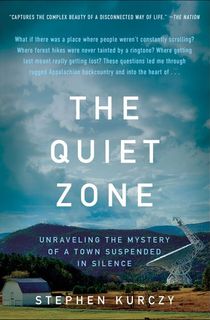
The Quiet Zone
Award-winning journalist Stephen Kurczy moved to Green Bank, West Virginia to investigate whether the “Quiet Zone” is the idyllic village it seems to be or if it’s a complex cover-up. The town itself is devoid of WiFi and frequency-emitting devices that could disturb the Green Bank Observatory’s deep space equipment. Kurczy lived like any other resident of the “Quiet Zone,” taking part in town activities and attending church, documenting a cast of characters including conspiracy theorists, neo-Nazis, and ordinary folks striving to maintain the simple life.
From the last tech-free town in America, Kurczy questions whether that “simple life” is the ideal or if it exists at all.

Reconstructing Appalachia
This collection of essays on the Reconstruction and post-Reconstruction eras in Appalachia bridges a gap in historical literature, exploring post-Civil War events and implications across Georgia, Kentucky, North Carolina, Tennessee, West Virginia, and Pennsylvania. The essays engage in discussions of racial prejudice and reconciliation, the heritage and traditions of the region, the struggling local economies, the legacy of Unionists and Confederates, and the skewed perceptions of identity, both within and from outside of Appalachia. Collectively, these essays expose the repercussions of the Civil War and resulting societal evolution on a marginalized region at the forefront of the divide.


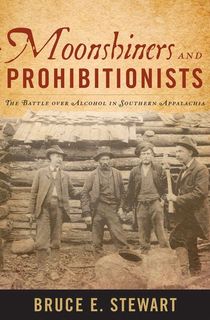
Moonshiners and Prohibitionists
Caught in the transition from a rural to an urban-industrial economy, Appalachia faced a particular struggle in the early 1900s: Prohibition. Manufacturing, selling, and buying alcohol had been part of daily life for many Appalachians, and those integral activities were banned.
Dr. Bruce Stewart, professor of United States and Appalachian History, traces the social tensions in Appalachia through the period of industrialization and Prohibition, cataloging and analyzing the relationship of bootleggers, temperance organizations, and policymakers, as well as the resulting discords throughout western North Carolina and southern Appalachia. Stewart examines the now-romanticized image of the bootleggers, the hillbilly stereotype, and the lore surrounding them.
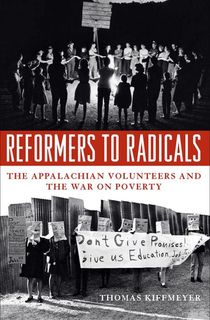
Reformers to Radicals
In 1964, a group called the Appalachian Volunteers took up President Kennedy’s call for citizens to rebuild America. Thomas Kiffmeyer chronicles a group that seemed to be on the noble mission of eliminating poverty in Appalachia, documenting their efforts in restoring dilapidated schools and homes, providing education and job training, and relieving the local economies. The group’s mission, though, was not unified, and it was often overshadowed by the group’s radicalized anti-war rhetoric and infighting.
The AVs eventually alienated not only the governments that had initially provided funding, but also the people in Appalachia themselves. The group disbanded in 1970, but Kiffmeyer immortalizes them as a group of well-intentioned young Americans heeding a call for reform.

Rx Appalachia
Recent attention on Appalachia has centered around the opioid epidemic and the related rise in rates of overdose deaths, hepatitis C, and HIV infection. While there has been significant media coverage on opioid overprescription and abuse and a rise in related fiction (such as the 2021 miniseries Dopesick and the 2022 novel Demon Copperhead), actual studies on rural opioid use are nowhere to be found.
Leslie-Marie Buer documents the epidemic and its ravaging effects on Appalachian communities, particularly for women and families marginalized under generational systems of oppression, using narratives from Appalachian women who either use or have used drugs to question gendered inequalities in opioid prescription and substance abuse treatment.
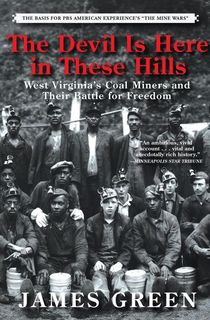
The Devil Is Here in These Hills
In the late 19th century, West Virginia had become the prime source for quality coal, and new railroads allowed coal mining companies to move further into the West Virginian wilderness. They built mines and constructed company towns for the miners and their families, which led to even boys as young as 10 years old working in the mines.
The inherently dangerous mining conditions led to a widespread push for unionization. This fraught effort led to company retaliation, skirmishes in the company towns, and, eventually, an all-out armed conflict. Labor historian James Green provides an extensively researched account in what has been noted as the definitive book on this chapter in the fight for freedom in America.
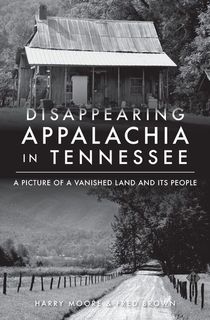
Disappearing Appalachia in Tennessee
Disappearing Appalachia in Tennessee is as much a love letter to Appalachia as it is an attempt to record the region’s rich and complex history through its landscape before it disappears for good. This book is an exploration and catalog of the people and culture that create the unique character of Appalachia.
Fred Brown and Harry Moore make a record Tennessee’s Appalachia through visits to Hogskin and Richland Valles, driving past aging general stores, one-room schools, iconic steepled churches, and 18th century-style barns. They collect stories from residents who remember the older Appalachia, before electricity and national parks, preserving the image of Appalachian Americana.
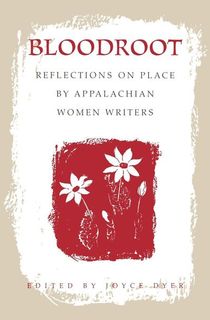
Bloodroot
In Bloodroot, Joyce Dyer has collected a colorful and diverse set of poems, essays, memoir pieces, letters, and stories from 35 Appalachian women writers. They write of an appreciation to their Appalachian home, of the inspiration in the courage of the woman who came before them and built that landscape and society, and of the attachment to the land of the Appalachian hills and their beauty.
The variety of perspectives broadens the understanding of what Appalachia is and what it represents, explored through nuanced and poignant writing, challenging stereotypes of the region, particularly about women.


